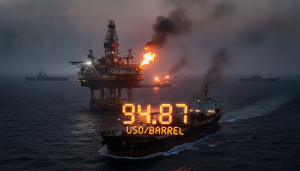
Geopolitical Tensions Rock Energy Markets: Hormuz Dispute Enters Critical Phase
Global energy markets remain on edge as Iran has formally delivered its response to the latest U.S. proposal, a diplomatic overture designed to de-escalate the ten-week-long conflict severely impacting vital shipping lanes. This protracted standoff has not only disrupted the free flow of crude oil and liquefied natural gas (LNG) but has also introduced significant volatility and risk premiums into energy investment portfolios worldwide. While Tehran’s state-run IRNA news agency confirmed the submission, specific details regarding Iran’s stance on the proposal, which reportedly involves reopening the Strait of Hormuz in exchange for Washington easing its blockade on Iranian ports within a month, remain undisclosed.
The conflict, ignited by U.S.-Israeli strikes on Iranian targets in late February, has cast a long shadow over the region’s energy infrastructure. Despite an official ceasefire declared on April 8, the security environment across the Gulf remains highly precarious. Recent incidents, including a drone strike that temporarily set a cargo vessel ablaze off the coast of Qatar over the past weekend, along with reports from the UAE and Kuwait of successfully intercepting hostile drones, underscore the persistent dangers to maritime commerce. Furthermore, Iran has issued stern warnings to the UK and France, cautioning that any increased naval activity in the Strait of Hormuz would provoke a “decisive and immediate response,” escalating concerns over military entanglement in this critical waterway.
The Unsettling Grip of the Hormuz Choke Point
The Strait of Hormuz, a narrow passage connecting the Persian Gulf with the open ocean, is an indispensable artery for global energy supply. Prior to the recent conflict, approximately one-fifth of the world’s total oil and LNG supplies transited through this strategic choke point daily. The ongoing hostilities have drastically constrained shipping activity, leading to a significant bottleneck in global energy distribution. Although some resolute cargo vessels continue to navigate the region, the heightened risks and operational complexities have kept crude and LNG flows far below pre-conflict levels, creating substantial uncertainty for energy consumers and investors alike.
The implications of this sustained disruption are profound. Saudi Aramco’s CEO, Amin Nasser, recently issued a sobering warning, indicating that even an immediate and complete reopening of the strait would likely not lead to market normalization for several months. More alarmingly, Nasser projected that prolonged shipping restrictions could extend global supply disruptions well into 2027, painting a bleak picture for long-term energy stability and pricing. This forecast emphasizes the deep-seated impact of the current geopolitical turmoil on the fundamental dynamics of oil and gas supply chains.
Market Adaptations and Diplomatic Undercurrents
Amidst the widespread shipping constraints, certain adaptive measures and diplomatic maneuvers offer glimpses of resilience and potential pathways forward. Ship-tracking data has revealed Qatar’s successful export of its first LNG cargo through the Strait of Hormuz since the conflict erupted. This shipment, reportedly bound for Pakistan, highlights the critical role played by nations like Pakistan in mediating discussions between Washington and Tehran, potentially offering a conduit for future de-escalation. Similarly, market intelligence confirms that major regional producers, including Saudi Aramco and ADNOC, have continued to move limited crude cargoes through Hormuz, while Saudi Arabia has strategically redirected a portion of its crude exports via secure Red Sea pipeline routes, mitigating some of the immediate supply risks.
The financial markets have reacted with characteristic volatility to these fluctuating developments. Brent crude, a key global benchmark, settled near $101 a barrel on Friday, following a notable weekly decline of approximately 6%. This price movement reflects the constant tug-of-war between optimistic signals from diplomatic talks and the enduring threats to maritime security, underscoring the speculative nature of energy trading in the current environment. Investors are keenly watching every pronouncement and incident, attempting to gauge the trajectory of future oil and gas prices.
U.S. Priorities and the Path Forward for Energy Investors
Adding another layer to the complex geopolitical calculus, U.S. Energy Secretary Chris Wright recently indicated a strategic shift in Washington’s priorities. Wright signaled on Sunday that securing the reopening of the Strait of Hormuz may now take precedence over an immediate, comprehensive resolution of Iran’s nuclear program. This suggests a potential willingness by the U.S. to pursue an interim agreement focused on maritime safety and energy flow, an approach that could offer a temporary reprieve for global energy markets. For investors, this implies a near-term focus on operational stability in the Gulf, rather than the broader, more intractable issues surrounding Iran’s nuclear ambitions.
Navigating this intricate landscape demands acute awareness from energy investors. The ongoing tensions, combined with the strategic importance of the Strait of Hormuz, guarantee continued price volatility and supply chain vulnerabilities. While diplomatic efforts offer a glimmer of hope for de-escalation and a potential return to more stable shipping, the long-term warnings from industry leaders like Saudi Aramco’s CEO remind us that the structural impacts on global energy markets could be felt for years. Prudent investment strategies in the oil and gas sector must therefore account for sustained geopolitical risk, potential supply disruptions, and the critical interplay between diplomatic progress and on-the-ground security realities in the Middle East.