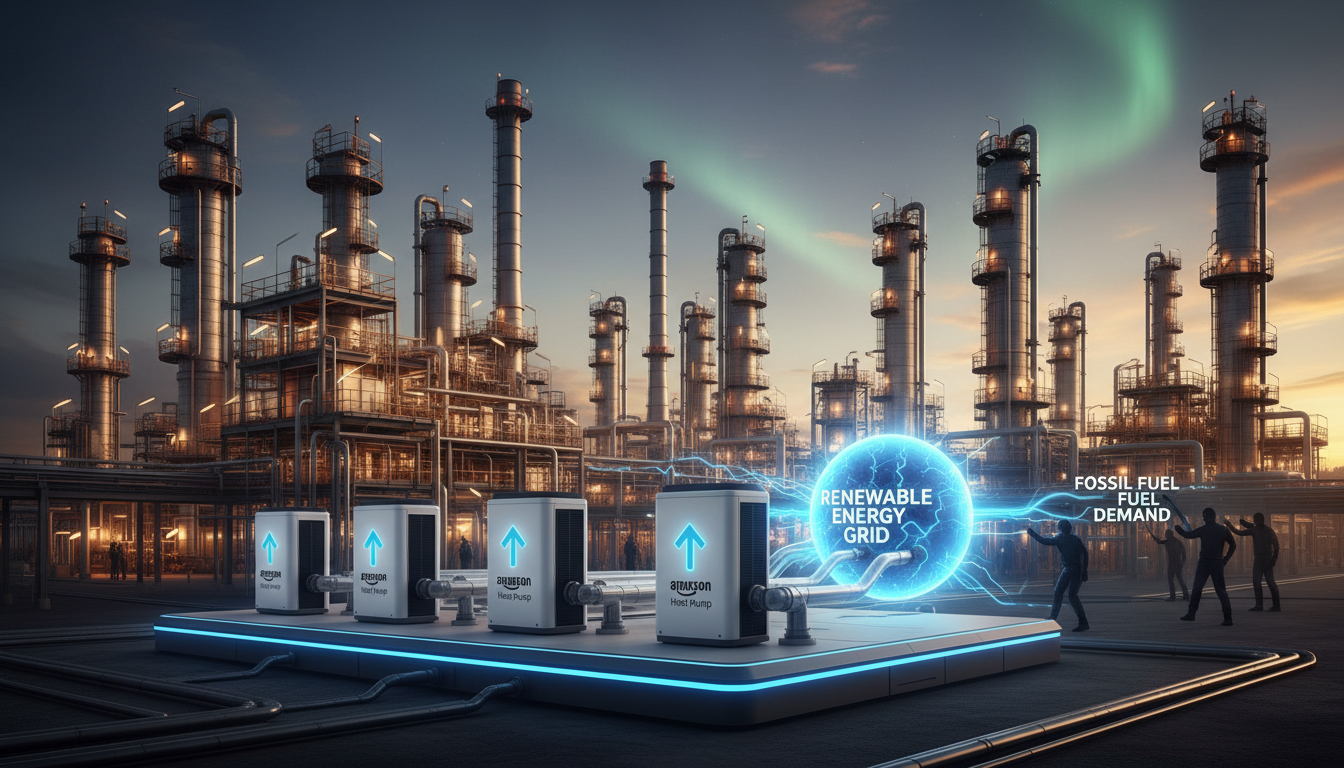
In a significant move signalling the accelerating shift towards energy-efficient operational models, Amazon has committed to a broader deployment of Transaera’s innovative rooftop heating, ventilation, and air conditioning (HVAC) technology. This decision follows a highly successful six-month field trial at one of the retail giant’s extensive logistics facilities, showcasing consistent and substantial energy savings. For oil and gas investors, this development underscores the growing demand for solutions that reduce energy intensity in commercial real estate, directly influencing long-term energy consumption patterns and the broader energy transition landscape.
Amazon Scales High-Efficiency HVAC in Decarbonization Push
The collaboration between Amazon and Boston-based Transaera marks a crucial step in integrating high-efficiency cooling systems into Amazon’s vast global building network, encompassing logistics centres, warehouses, and various operational sites. This strategic commercial deployment extends beyond a mere technological upgrade; it represents a tangible commitment by Amazon towards achieving its ambitious Climate Pledge target of reaching net-zero carbon emissions by 2040. The successful trial, conducted under challenging hot and humid conditions where traditional commercial air conditioning systems typically struggle with energy efficiency, validated Transaera’s system performance and its ability to significantly curtail energy usage.
Independent third-party analysis confirmed the impressive efficiency benefits, paving the way for a multi-year commercial agreement. Under this expanded partnership, Transaera will integrate its advanced HVAC system into Amazon’s standard design solutions. Furthermore, to support Amazon’s extensive deployment requirements, Transaera has pledged to dedicate a portion of its U.S.-based manufacturing capacity, bolstering domestic advanced HVAC production capabilities. Asad Jafry, Director of Global Energy, Sustainability, and AGV at Amazon, highlighted the company’s ongoing pursuit of technologies that directly support its net-zero goals, affirming the transition from field trial to commercial readiness for this promising technology.
Transforming Commercial Cooling: A New Paradigm for Energy Savings
The commercial building sector confronts an escalating energy challenge, driven by increasing cooling demands, particularly in regions prone to high temperatures and humidity. Conventional rooftop HVAC systems often employ an energy-intensive process: they overcool air to remove humidity, then reheat it to achieve comfortable indoor temperatures. This method not only inflates operational costs but also places immense strain on energy grids, a critical consideration for energy markets and infrastructure investors.
Transaera’s innovative approach fundamentally rethinks this process. It leverages a novel class of solid desiccant materials, known as Metal Organic Frameworks (MOFs), to effectively strip moisture from the air *before* the cooling process begins. By intelligently separating dehumidification from cooling, the system drastically reduces the energy load typically carried by traditional packaged direct expansion systems. This separation is key to its performance, projecting energy savings of 40% compared to conventional direct expansion-only systems. Crucially for widespread commercial adoption, the technology is designed to seamlessly integrate within existing rooftop HVAC footprints, minimizing retrofitting complexities and capital expenditure.
Sorin Grama, CEO and Co-founder of Transaera, emphasized the significant impact this technology can have, noting that HVAC systems account for over one-third of total energy consumption in commercial buildings. He underlined the potential for substantial operational cost reductions, alongside improved indoor air quality and enhanced occupant comfort across a diverse range of commercial and industrial facilities. For investors, these improvements translate directly into higher asset value, reduced energy price exposure, and a more sustainable operational footprint.
HVAC Efficiency: A Growing Imperative for Corporate Bottom Lines
Transaera’s initial product offering, a Dedicated Outdoor Air System (DOAS), demonstrates remarkable efficiency, achieving more than double the current federal minimum efficiency standard for moisture removal. Moreover, the system functions as an advanced heat pump, capable of cooling, heating, and dehumidifying without any reliance on natural gas for reheating. This positions the technology squarely within the broader global movement towards building electrification, a pivotal strategy for companies aiming to drastically cut direct emissions originating from their real estate assets and daily operations. The implications for companies reliant on natural gas for heating are significant, pointing towards a future of reduced fossil fuel dependence in commercial climate control.
For large-scale operators like Amazon, embracing such technologies provides a practical and powerful lever for emissions reduction across their sprawling facility portfolio. From an investor’s vantage point, these developments highlight how operational technology advancements offer tangible pathways to achieving climate targets, moving beyond mere renewable energy procurement or carbon offsetting schemes. It speaks to a future where energy efficiency is not just an environmental aspiration but a core financial discipline, impacting quarterly earnings and long-term shareholder value.
Beyond its immediate operational benefits, the collaboration holds broader industrial policy significance. Transaera’s commitment to building a robust U.S.-based supply chain for advanced HVAC systems supports domestic manufacturing and fosters skilled job creation. In an era where companies are increasingly scrutinizing supply chain resilience, energy security, and climate-related risks, advanced HVAC systems are evolving from a facility management concern into a critical component of national infrastructure strategy.
Grama reinforced this sentiment, asserting that high-performance HVAC is no longer a niche innovation but is rapidly establishing itself as the new industry standard. This evolution delivers both environmental advantages and lasting economic returns. As global temperatures rise and humidity levels intensify across key markets, the demand for efficient cooling solutions will inevitably surge. Commercial building operators will increasingly prioritize systems that not only slash energy consumption but also safeguard occupant comfort and align seamlessly with aggressive electrification goals. Amazon’s expanded partnership with Transaera serves as a powerful indicator of a market where HVAC efficiency has become both an essential climate mitigation tool and a fundamental driver of financial performance, profoundly reshaping the energy landscape for commercial operations worldwide.


