Pioneering Green Shipping: A New Horizon for Maritime Investment
The global maritime industry, a cornerstone of international trade and a significant consumer of fossil fuels, stands on the cusp of a profound energy transition. A landmark initiative, backed by substantial European Union funding, is poised to launch two groundbreaking zero-emission sea-river container vessels, signaling a pivotal shift in how investors view future opportunities in sustainable logistics and clean energy infrastructure. This project not only introduces advanced vessel technology but also pioneers an innovative operational model designed to decarbonize a vital segment of European freight transport.
Scheduled for construction commencement in early 2027 and expected to enter service by 2029, these vessels are engineered from the keel up for unparalleled energy flexibility and environmental performance. Designed to navigate both open seas and inland waterways, they represent a significant step towards achieving net-zero emissions within the complex European supply chain. The strategic importance of this development for the broader energy and shipping sectors cannot be overstated, as it offers a tangible roadmap for reducing carbon footprints and creating new investment avenues in green maritime technology.
Modular Power: The Core of Zero-Emission Operations
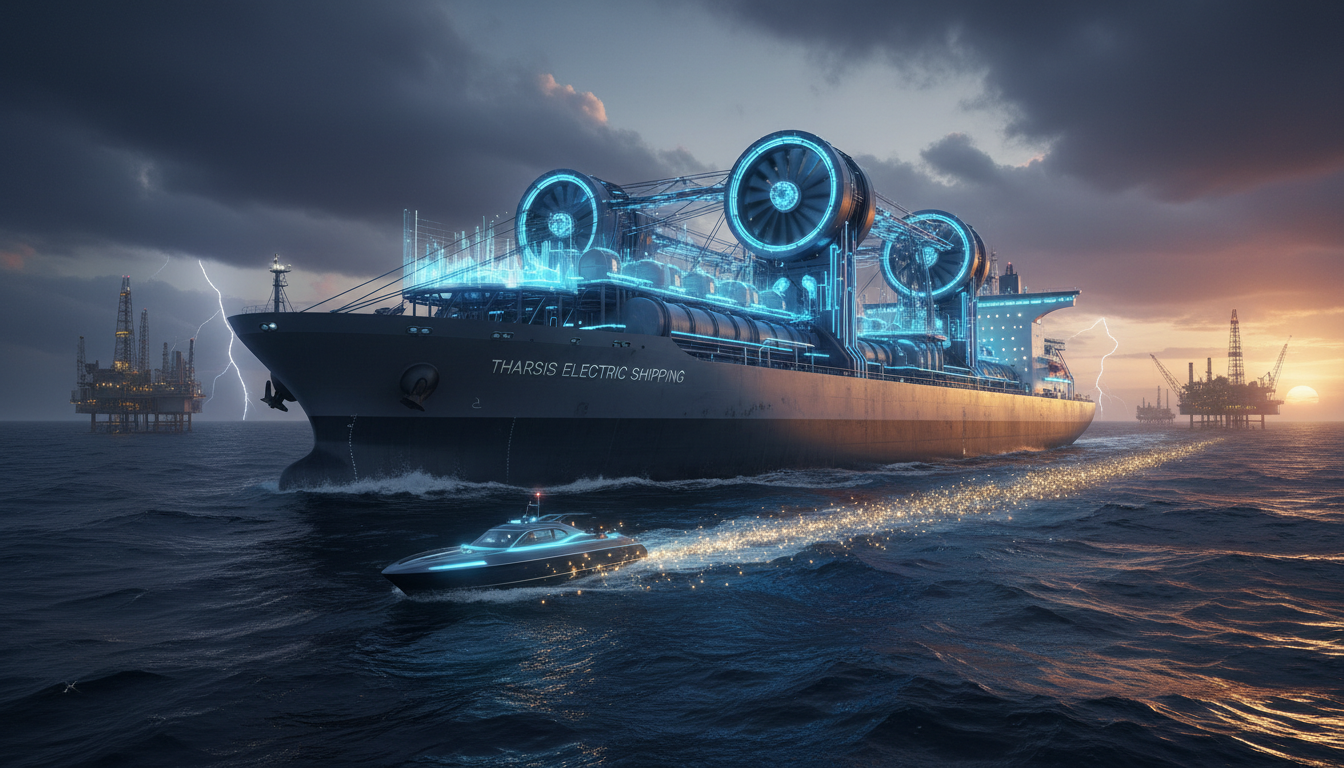
At the heart of this innovative maritime venture lies a sophisticated energy system centered around swappable battery containers. These purpose-built vessels will feature dedicated storage spaces in their bow and stern, accommodating a total of sixteen ISO-standard ‘energy containers.’ This modular design offers remarkable versatility, allowing for the integration of various energy carriers, including advanced batteries, hydrogen, or even ammonia, as these technologies mature and become commercially viable. This multi-fuel readiness provides a crucial hedge against future energy market volatility and technological shifts, making the vessels adaptable for decades to come.
Initially, the vessels will operate predominantly on advanced ZESpacks, specialized swappable battery units provided by Zero Emission Services. This operational strategy leverages an Energy- and Charging-as-a-Service (ECaaS) model, a concept gaining traction across various industrial sectors for its efficiency and scalability. Under this model, operators benefit from a continuous supply of charged batteries through rapid swaps at strategically located charging stations, effectively decoupling energy procurement from vessel ownership. This approach significantly reduces upfront capital expenditure for vessel operators and ensures uninterrupted zero-emission transit along their intended route between the Netherlands and the United Kingdom. The high-power energy transfer required for such rapid charging will be facilitated by advanced Megawatt Charging System (MCS) connectors, representing the cutting edge in maritime power infrastructure.
Beyond their primary battery power, the vessels will incorporate two biofuel generators for emergency power supply. This hybrid propulsion system offers an additional layer of reliability and operational security, ensuring continuous service even in unforeseen circumstances. For investors, this balanced approach to energy management – combining primary clean energy with a robust backup – underscores the project’s commitment to both sustainability and operational resilience, critical factors for long-term commercial success in the competitive maritime logistics space.
Strategic Market Niche: De-risking European Logistics
These vessels are specifically tailored for the sea-river transport market, a critical yet often overlooked segment of European logistics. This niche allows for direct, seamless cargo movement between major European seaports and inland terminals, eliminating the need for transshipment and significantly streamlining supply chains. Each vessel’s open container deck is designed to efficiently handle both 30- and 45-foot freight containers, boasting a substantial capacity of up to 378 TEU (Twenty-foot Equivalent Unit). This capacity positions them as a robust solution for a wide range of cargo needs, from consumer goods to industrial components.
The introduction of the first zero-emission container liner service in this specialized market segment is a game-changer. It not only addresses the growing demand for sustainable shipping solutions but also provides a competitive advantage for shippers looking to reduce their Scope 3 emissions and enhance their environmental, social, and governance (ESG) credentials. For investors eyeing the evolving landscape of European logistics, this project represents a de-risked opportunity to capitalize on regulatory pressures and corporate sustainability mandates. The inherent efficiency of direct sea-river transport, combined with zero-emission operation, offers a powerful value proposition in a market increasingly prioritizing speed, reliability, and ecological responsibility.
Catalyst for Change: EU Funding Fuels Innovation
The financial backing for this ambitious project underscores its strategic importance. A substantial grant of €21 million has been secured from the EU Innovation Fund, a key instrument designed to support pioneering low-carbon technologies across Europe. This significant public funding acts as a powerful catalyst, de-risking the initial stages of development and accelerating the commercialization of cutting-edge green maritime solutions. While the specific shipyard for construction remains undisclosed, the commitment to build these vessels entirely within the EU reinforces regional industrial capabilities and job creation within the bloc.
Jan Albert Bosma of Tharsis Ship Management articulated the profound impact of this support, stating, “This EU funding is a major milestone. It allows us to build, deploy, and operate these vessels, proving how innovative technologies like swappable energy containers and hybrid propulsion can decarbonise coastal and inland shipping in full commercial operations.” This statement highlights the dual objective of the funding: not only to enable the project itself but also to serve as a proof-of-concept for wider adoption of these sustainable technologies across the maritime sector. For financial market participants, this public investment signals a strong governmental commitment to the energy transition, providing confidence and potentially paving the way for further private capital inflows into similar green shipping initiatives.
Investor Outlook: Navigating the Future of Maritime Energy
This pioneering project offers compelling insights for investors across the energy, logistics, and technology sectors. For traditional oil and gas companies, it presents a clear signal of the accelerating demand for alternative fuels and energy infrastructure beyond hydrocarbons. Diversification into areas like hydrogen production, ammonia synthesis, advanced battery manufacturing, and charging network development will be crucial for long-term relevance.
For investors focused on ESG criteria, the initiative exemplifies a tangible investment in climate action, offering exposure to companies at the forefront of maritime decarbonization. The ECaaS model, in particular, could spawn new service-based revenue streams for energy providers and technology developers, moving beyond traditional asset ownership to a more flexible, subscription-like economy for power. As the global shipping industry aims to meet ambitious net-zero targets, projects like these will not remain outliers but will become the standard. The successful deployment and commercial operation of these zero-emission sea-river vessels will undoubtedly set a precedent, influencing future policy, attracting further capital, and ultimately reshaping the global maritime energy landscape for decades to come.