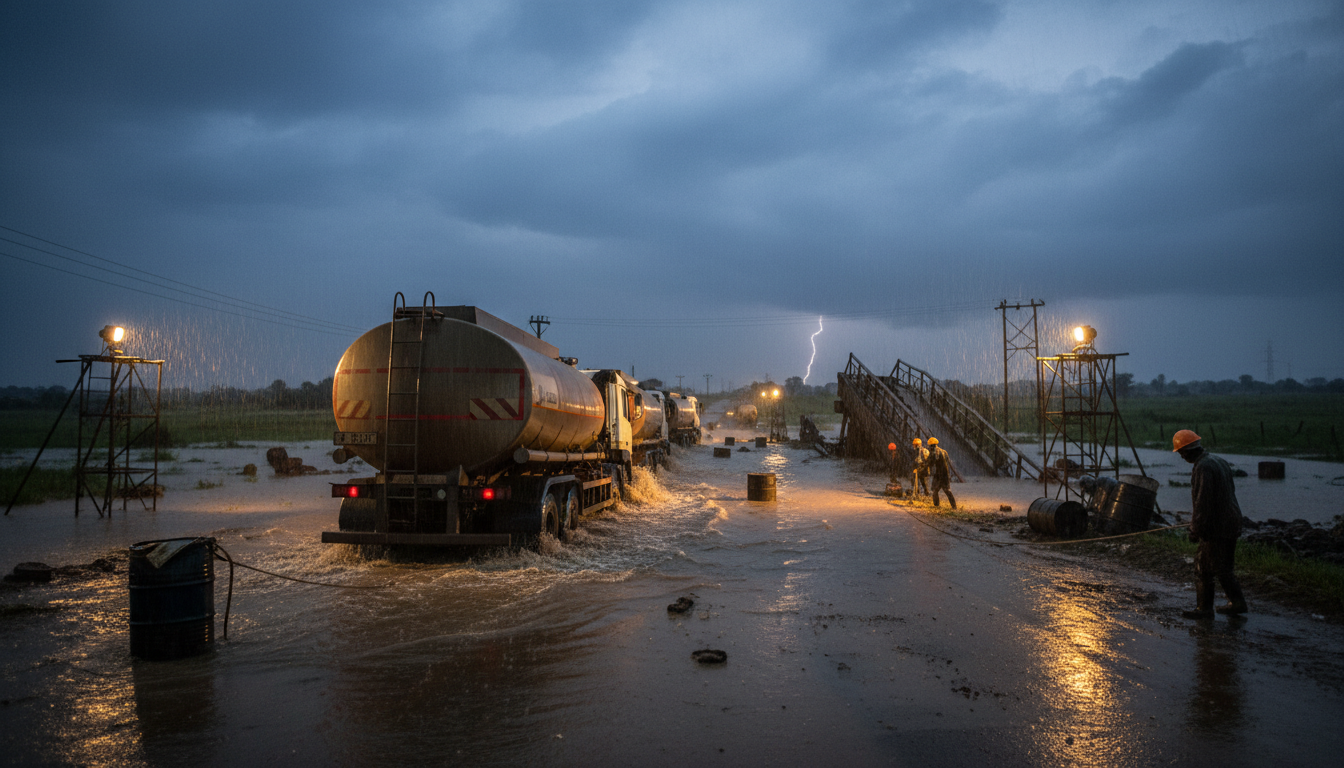
NAIROBI, Kenya – Catastrophic flooding across Kenya, triggered by relentless heavy rainfall since March, is sending ripples of concern through East Africa’s energy investment landscape. The human toll is stark, with 18 fatalities reported just last week, predominantly due to drowning, adding to the grim tally of over 100 deaths by the end of March. Beyond the immediate tragedy, this unfolding humanitarian crisis presents a significant operational and financial challenge for the region’s burgeoning oil and gas sector, threatening supply chain stability, infrastructure integrity, and overall investor confidence.
The scale of disruption is immense. Over 54,000 households nationwide have borne the brunt of the deluges, including 6,000 within the capital, Nairobi. This widespread displacement not only impacts local economies through lost productivity and damage but also strains national resources that could otherwise be directed towards critical energy infrastructure development or maintenance. Dozens of educational institutions and healthcare facilities are submerged, diverting essential services and personnel. More critically for the energy sector, 17 vital road networks have been rendered impassable. These arteries are crucial for the movement of refined petroleum products from coastal depots to interior markets, as well as for the transport of heavy equipment and personnel to exploration sites or ongoing energy projects across the nation.
Energy Infrastructure Under Strain: Hydroelectric and Logistics
The immediate impact on Kenya’s energy mix is particularly evident in its hydroelectric power generation. As water levels in the Tana and Athi rivers swell to alarming heights, threatening communities downstream and prompting evacuation calls, the country’s hydroelectric dams face unique challenges. While high water levels generally boost hydro capacity, extreme events introduce risks of dam integrity issues, controlled spillages, or grid instability. Any disruption to this significant source of national power could necessitate a greater reliance on thermal power generation, potentially increasing demand for imported fossil fuels and impacting the national energy budget.
Furthermore, the logistical gridlock imposed by cut-off roads reverberates directly through the oil and gas supply chain. Kenya serves as a vital transit hub for landlocked East African nations, with fuel and other commodities passing through its ports and overland routes. The Northern Corridor, a critical trade artery, is likely experiencing significant delays and increased costs due to diversions or complete halts in transport. For oil exploration and development projects, particularly those in remote or frontier regions, the inability to move equipment, personnel, or even conduct essential site assessments due to impassable terrain and mudslides – which have already forced thousands to evacuate from the western Rift Valley – translates directly into project delays and budget overruns. This situation underscores the intrinsic vulnerability of energy operations to severe climatic events, especially in regions with developing infrastructure.
Investor Confidence and Future Project Outlook
The persistent and enhanced rainfall, which the Kenya Meteorological Department forecasts to continue through the first two weeks of May, paints a grim picture for short-term recovery. For investors eyeing the East African energy landscape, such prolonged periods of instability introduce an elevated risk premium. While the region holds significant promise for new oil and gas discoveries, as well as renewable energy projects, recurring and severe climate-related events can erode confidence. Foreign direct investment hinges not just on resource potential but equally on operational stability, reliable logistics, and predictable regulatory environments.
Companies with existing assets or those contemplating major investments, such as in the Lamu Port South Sudan-Ethiopia Transport (LAPSSET) Corridor project which aims to create new infrastructure for oil export and regional trade, must now critically assess climate resilience in their financial models. The cost of reinforcing infrastructure against extreme weather, ensuring redundant supply routes, and factoring in potential operational downtime becomes a more prominent line item. This necessitates a strategic re-evaluation of long-term investment horizons, pushing operators to integrate robust environmental and social governance (ESG) frameworks that specifically address climate change adaptation and mitigation.
Economic Stability and Fiscal Implications
The widespread damage to agriculture, housing, and infrastructure will inevitably divert significant national resources towards relief and reconstruction efforts. This fiscal strain can impact the government’s capacity to allocate funds towards strategic energy projects, whether they involve upstream oil and gas development, expanding domestic refining capabilities, or accelerating the transition to renewable energy sources. A weakened national economy, suffering from agricultural losses and disrupted commerce, also translates into reduced consumer demand for refined products, potentially impacting downstream profitability for fuel distributors and marketers.
Ultimately, Kenya’s current battle against the floods serves as a potent reminder of the complex interplay between climate events, national development, and the global energy sector. For oil and gas investors, the situation underscores the necessity of factoring in climate risk as a core component of due diligence and operational planning in emerging markets. While the immediate focus remains on humanitarian aid and recovery, the long-term implications for East Africa’s energy future demand careful consideration and proactive strategies to build more resilient infrastructure and sustainable energy portfolios.