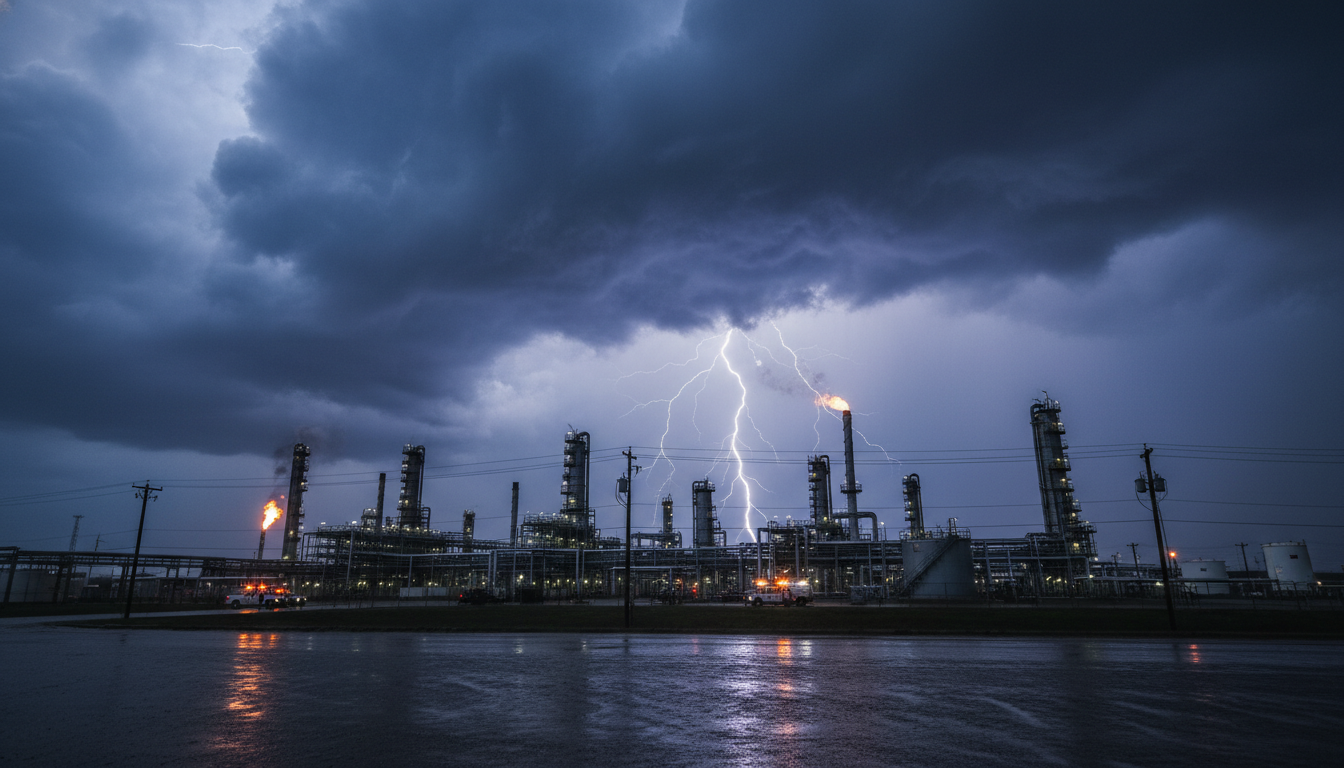
A series of intense storms has swept through the Midwest, bringing torrential rain, high winds, and the threat of tornadoes across a vast area, impacting over 64 million people. While the immediate focus remains on public safety and property damage, investors in the oil and gas sector must consider the potential ramifications for critical energy infrastructure spanning this vital region. From transportation networks to refining capabilities, the Midwest plays a pivotal role in the North American energy complex. Understanding how these weather events could ripple through supply chains and influence market dynamics is essential for informed investment decisions, especially given the current backdrop of elevated crude prices and ongoing market volatility.
Midwest Energy Infrastructure Under Pressure
The recent weather onslaught, characterized by rapid-moving systems, has placed significant stress on key operational areas for the energy sector. Reports indicate that parts of Kansas City, Missouri, experienced 3.2 inches of rain within a six-hour window, leading to widespread flooding and necessitating numerous vehicle rescues. Further south, northern Texas grappled with tornado-producing thunderstorms over the weekend, including an EF-2 tornado with peak winds of 135 mph in the Runaway Bay area and an EF-1 tornado at 105 mph in Springtown, causing substantial damage and blocking roadways with downed utilities. These incidents highlight the vulnerability of crucial infrastructure, including pipelines, storage facilities, and power grids, which are indispensable for moving crude oil, natural gas, and refined products across the country. The St. Louis region, identified at moderate risk for long-track tornadoes and large hail, represents another critical node for energy distribution, further intensifying concerns about potential disruptions to the flow of commodities and power generation.
Navigating Current Market Dynamics Amidst Weather Concerns
The immediate market reaction to such widespread weather events is often nuanced, reflecting a balance of existing supply-demand fundamentals and speculative fears of disruption. As of today, Brent crude trades at $110.72 per barrel, showing a modest increase of 0.29% within a day range of $110.49 to $112.43. Meanwhile, WTI crude stands at $104.59 per barrel, experiencing a slight dip of 0.46% with a day range between $104.38 and $106.65. Gasoline prices have seen a slight uptick, currently at $3.63 per gallon, up 0.55%. These daily movements occur against a backdrop of significant upward momentum in crude, with Brent having climbed by $12.34, or 12.4%, from $99.36 on April 13th to $111.70 on April 30th. This upward trend suggests a market already sensitive to supply concerns and robust demand. While direct, immediate impacts on production or refining capacity from the Midwest storms have yet to materialize widely, the potential for logistical bottlenecks, power outages affecting operations, or even temporary closures of critical facilities introduces an element of uncertainty that can influence intraday trading and investor sentiment, particularly in the refined products market where localized supply can be more acutely affected.
Investor Focus: Supply Resiliency and Price Outlook
Our proprietary reader intent data reveals a consistent theme among investors this week: a keen interest in the “2026 weekly trend for crude oil” and requests for a “base-case Brent price forecast for next quarter.” This underscores a focus on long-term stability and predictive analysis, even as immediate events unfold. The Midwest storms, while localized, serve as a stark reminder of the inherent volatility in energy markets driven by exogenous factors. Investors are not just tracking immediate price shifts but are evaluating the resilience of the entire supply chain. Potential disruptions to midstream operations—such as pipeline flows or storage tank access—could tighten regional supply and, if prolonged, impact national inventories. While the market has seen robust crude prices recently, any tangible supply interruption from weather events could exacerbate existing concerns about global supply stability, a sentiment also reflected in questions regarding OPEC+ production compliance. The ability of infrastructure operators to rapidly assess and repair any damage will be crucial in mitigating sustained market impacts and shaping the forward price trajectory.
Anticipating Future Market Signals Amidst Weather Uncertainty
Looking ahead, the interplay of ongoing weather concerns and scheduled market reports will be critical for investors. The Baker Hughes Rig Count, released on May 1st and again on May 8th, will provide insights into drilling activity and potential production trends, which could be indirectly influenced by storm-related operational hurdles. On May 2nd, the EIA Short-Term Energy Outlook will offer a broader perspective on supply, demand, and price forecasts. More immediate data points come from the API Weekly Crude Inventory on May 5th and 12th, followed by the EIA Weekly Petroleum Status Report on May 6th and 13th. These reports will detail crude oil and product inventories, refinery utilization, and demand metrics, offering a clearer picture of market balances. A significant event for global perspective is the IEA Oil Market Report on May 12th, which will provide a comprehensive global outlook. Any storm-related impacts on inventory builds or draws, refinery runs, or transportation logistics could introduce unexpected volatility into these highly anticipated reports, challenging existing forecasts and potentially shifting the consensus on crude oil’s near-term price trajectory. Investors should closely monitor these releases for any signs that recent weather events have translated into tangible shifts in energy fundamentals.


