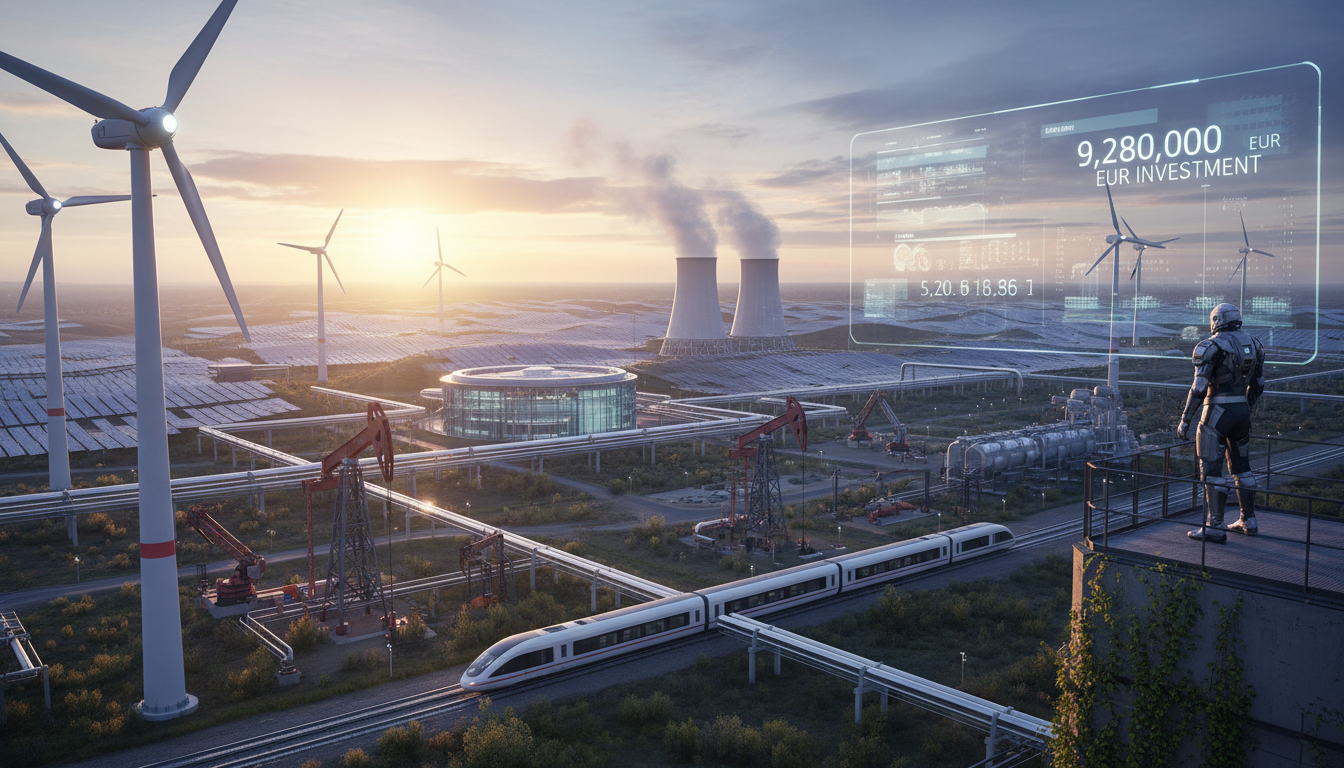
Germany Fuels Energy Transition with €8 Billion Climate Blitz, Reshaping Energy Investment Landscape
Germany is unleashing an ambitious €8 billion ($9.28 billion) climate action program, a 67-point blueprint designed to aggressively slash greenhouse gas emissions and dramatically reduce its reliance on volatile fossil fuel imports. This substantial financial commitment signals a decisive move to close a widening gap towards the nation’s critical 2030 climate targets, directly impacting the investment calculus across the European energy sector.
The comprehensive initiative arrives amidst heightened geopolitical instability and unpredictable fossil fuel markets, positioning climate action as a cornerstone of national energy security. Europe’s largest economy has committed to cutting greenhouse gas emissions by a formidable 65% from 1990 levels by 2030, with a longer-term vision of climate neutrality by 2045. However, progress to date has seen emissions fall by approximately 48%, highlighting a significant shortfall that demands immediate, structural intervention. This new program, integrating industrial policy, consumer incentives, and land-use strategies, reflects a strategic pivot towards holistic climate governance intrinsically linked with economic resilience.
Industrial Decarbonization: A New Investment Frontier
At the heart of Germany’s multi-pronged strategy lies a substantial uplift in support for low-carbon technologies across its industrial base, which remains a principal emitter in Europe. Policymakers are channeling resources towards electrification, efficiency enhancements, and pioneering cleaner production methodologies. This targeted approach aims to liberate heavy industry from its dependence on imported fossil fuels, creating considerable opportunities for investors in industrial green technologies, smart energy systems, and advanced manufacturing.
Concurrently, the program accelerates the deployment of renewable energy sources, with a particular emphasis on wind power. This move is paramount to Germany’s long-term energy strategy, promising faster permitting processes and expanded capacity to stabilize energy supply while simultaneously driving down emissions. For investors, this signifies a robust policy environment for large-scale renewable energy projects, grid infrastructure upgrades, and associated technology providers.
These initiatives are coupled with direct measures to curtail fossil fuel consumption. By the close of the decade, the government projects a reduction in natural gas use by nearly 7 billion cubic meters and a cut in petrol consumption by 4 billion liters. This forecast creates a clear imperative for energy executives: navigate a tightening regulatory landscape by aggressively transitioning operations and supply chains towards lower-carbon alternatives or risk significant exposure in a rapidly evolving market.
Transforming Mobility and Consumer Behavior
Germany is also intensifying its efforts to reshape consumer behavior, particularly within the transport sector, which has historically lagged in emissions reductions. The program expands schemes designed to accelerate electric vehicle (EV) adoption through a combination of financial incentives, strategic infrastructure investments, and regulatory harmonization. This reinforces the undeniable trajectory towards vehicle electrification, placing increased pressure on traditional automakers, fossil fuel suppliers, and investors to adapt to this profound market shift.
The push for widespread EV penetration opens significant avenues for investment in charging infrastructure, battery technology, rare earth minerals, and associated digital services. Companies that can innovate and scale solutions in these areas stand to benefit immensely from the government’s sustained backing and the growing consumer demand it aims to cultivate.
Holistic Approach: Nature-Based Solutions and Systemic Change
Beyond industrial and transport sector interventions, Germany’s plan incorporates nature-based solutions, including measures to fortify forests and enhance soil carbon storage capabilities. These initiatives underscore a burgeoning recognition within European policy frameworks that land use and natural capital play a vital role in achieving net-zero objectives. While perhaps smaller in scale than industrial decarbonization, these measures contribute meaningfully to overall emissions reductions and align with broader EU biodiversity and climate strategies, offering niche investment opportunities in ecological restoration and sustainable land management.
Quantified Impact and Policy Credibility: An Investor’s Perspective
Germany’s environment ministry estimates that this program will deliver more than 25 million tonnes of CO2 savings by 2030. While a substantial contribution, this figure also underscores the sheer scale of the remaining challenge. Environment Minister Carsten Schneider articulated the dual objective of the program, stating, “We are modernizing the economy, making society more resilient to crises, and helping nature so it can help us.” This framing positions climate action not merely as an environmental imperative but as a strategic defense against geopolitical and economic volatility.
The timing of this announcement is particularly noteworthy, coinciding with fresh disruptions to global energy flows linked to Middle East conflicts. This context reinforces the direct link between proactive climate policy and robust national security, elevating the strategic importance of energy transition investments.
Investment Implications for Global Energy Markets
For corporate leaders, institutional investors, and private equity funds, Germany’s latest policy offensive sharpens both risk and opportunity. Regulatory expectations are tightening considerably, especially for emissions-intensive sectors, while public funding and policy support are increasingly aligning with low-carbon investments. This creates a powerful pull for capital towards renewables, electrification infrastructure, green hydrogen, and advanced industrial decarbonization technologies.
The program also reflects a broader trend emerging across Europe: governments are transitioning from mere target-setting to concrete implementation, backed by significant fiscal commitments and sector-specific interventions. This provides enhanced visibility and stability for long-term capital allocation decisions, particularly in the energy, infrastructure, and industrial transformation sectors. As a global industrial powerhouse, Germany’s success or failure in closing its emissions gap will be closely scrutinized by international markets, profoundly influencing investor confidence in the pace and credibility of advanced economy climate transitions worldwide. Energy investors must adapt swiftly to these evolving market dynamics, prioritizing innovation and sustainable strategies to thrive in a decarbonizing global economy.


