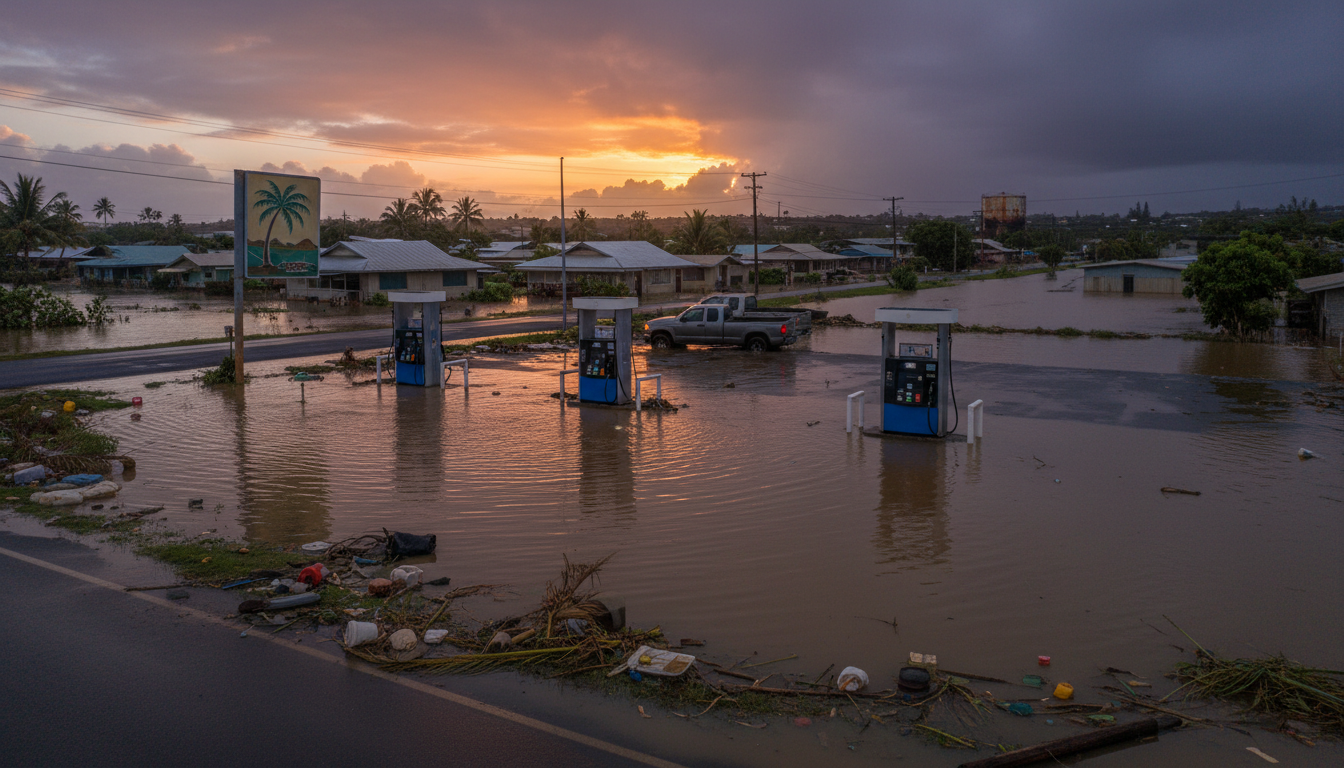
The recent severe flooding across Hawaii, culminating in widespread damage assessments in late March, offers a potent, albeit localized, case study for energy investors grappling with increasing climate volatility. While geographically distant from major hydrocarbon production basins, these events vividly underscore critical vulnerabilities within refined product supply chains, infrastructure resilience, and the dynamic shifts in regional energy demand. For astute investors, understanding how such climate-induced disruptions impact an island economy reliant on imported fuels provides crucial insights into managing risk and identifying opportunities in an increasingly unpredictable global energy landscape.
Localized Demand Shifts: Disruption, Then Recovery Surge
The immediate aftermath of natural disasters often presents a complex picture for energy demand. Initially, the severe flooding that inundated neighborhoods near downtown Honolulu and submerged properties in areas like Mokuleia, Haleiwa, and Waialua led to an abrupt suppression of typical fuel consumption. With roads impassable, businesses shuttered, and residents focused on immediate safety, gasoline and diesel demand for everyday commuting and commerce would have plummeted. However, this initial dip is quickly followed by a robust surge in demand driven by extensive recovery and rebuilding efforts. Cleanup crews, including local residents like Kaybri Jones and Anthony Scala, along along with numerous volunteers, have been mobilized to clear vast quantities of mud-covered debris, necessitating heavy machinery, pumps for dewatering, and increased transportation for supplies and personnel. This creates a localized, but significant, uptick in demand for specific refined products, particularly diesel for heavy equipment and gasoline for light vehicles facilitating the recovery.
Investors frequently ask about the immediate directional impact on oil prices. While such localized events rarely move global benchmarks like WTI or Brent, they can create significant regional price volatility for refined products. The experience in Hawaii highlights that a sudden, concentrated demand spike for diesel and gasoline, coupled with potential logistical bottlenecks, can lead to temporary shortages and higher pump prices in affected areas, even as global crude markets remain relatively stable.
Supply Chain Resilience: A Critical Island Challenge Amidst Broader Market Trends
Hawaii’s unique island geography makes it inherently dependent on imported refined petroleum products, including gasoline, diesel, and jet fuel. The integrity of its local energy infrastructure, particularly port facilities and internal distribution networks, is paramount. The recent severe flooding, which saw discolored water along the North Shore coastline in late March, raises concerns not only about environmental degradation but also potential impacts on marine traffic and port operations—vital conduits for energy imports. Any disruption to these channels translates directly into tangible risks for consistent fuel supply and increased operational costs for businesses on the ground.
As of today, Brent crude trades at $92.46, reflecting a modest daily decline of 0.84% within a range of $91.39-$94.21. WTI crude similarly stands at $88.72, down 1.06% for the day. Gasoline futures are at $3.1, down 0.96%. These figures represent global commodity trends, which have seen Brent retreat from $101.16 on April 1st to $94.09 on April 21st, a 7% decline. This broader market softening stands in stark contrast to the potential for severe localized price spikes and logistical premiums in regions like Hawaii, where supply chains are immediately threatened by extreme weather. For investors, this underscores the importance of scrutinizing the geographic concentration of assets and the resilience of refined product distribution networks, especially for companies operating in island nations or coastal regions vulnerable to climate events.
Future-Proofing Infrastructure: Insights from Upcoming Market Signals
The Hawaii floods serve as a stark reminder that energy infrastructure, even far from major production zones, faces escalating climate-related risks. For investors evaluating long-term exposure, understanding how energy companies are adapting to these challenges is critical. While upcoming market events like the EIA Weekly Petroleum Status Reports (April 22, April 29, May 6) and the Baker Hughes Rig Counts (April 24, May 1) will provide vital short-term supply and demand signals, the larger narrative of climate resilience continues to shape investment horizons.
The EIA Short-Term Energy Outlook, due on May 2nd, will offer a broader perspective on market fundamentals, but astute investors will be looking for any subtle shifts in outlook that acknowledge the increasing frequency and severity of weather-related disruptions. The cost of rebuilding and fortifying infrastructure against future events, such as upgrading port facilities or enhancing road networks, will inevitably factor into the long-term capital expenditure plans of energy companies involved in refining, logistics, and distribution. Companies demonstrating robust climate adaptation strategies and diversified logistical capabilities in vulnerable regions will likely garner increasing investor confidence, impacting valuations well into 2026 and beyond. This forward-looking approach is crucial for answering investor questions about the long-term price trajectory of oil and the performance of specific energy companies like Repsol, whose global assets could face similar localized, climate-driven pressures.
Investor Takeaways: Beyond the Barrel Price
The Hawaii floods provide invaluable lessons for energy investors looking beyond the daily fluctuations of crude oil prices. First, while global commodity markets may be influenced by geopolitical events or broad economic indicators, localized climate incidents can create disproportionate impacts on regional refined product markets and the companies operating within them. Second, supply chain resilience is paramount, especially for island economies heavily reliant on imports. Investors should assess the robustness of port infrastructure, storage facilities, and inland distribution networks of companies in their portfolios, particularly those with significant exposure to coastal or geographically isolated regions.
Finally, these events underscore the increasing financial materiality of climate risk. Companies that proactively invest in climate-resilient infrastructure, develop robust emergency response plans, and diversify their logistical capabilities will be better positioned to weather future storms, both literal and metaphorical. For investors asking about the future price of oil or the performance of specific energy stocks, a granular understanding of climate-related vulnerabilities and adaptation strategies has become as critical as traditional supply/demand analysis. Integrating proprietary data on market prices, event calendars, and reader intent allows investors to move beyond news headlines and derive actionable insights into these complex, evolving risks.


