The global energy landscape is undergoing a profound transformation, characterized by persistent price volatility and a shifting macroeconomic paradigm. For savvy investors, understanding the ripple effects of this environment beyond traditional oil and gas plays is crucial. One such ripple is increasingly pointing towards silver, a metal often overlooked by energy-focused portfolios. While the immediate focus remains on crude benchmarks and refining margins, a deeper analysis reveals how the very forces shaping the oil market – from geopolitical tensions to inflationary pressures and the escalating costs of production – are creating a unique and historically significant bullish scenario for silver, positioning it as a strategic hedge and growth opportunity in an era of elevated energy prices.
High Energy Costs Exacerbate Silver Supply Constraints
The foundational challenge for silver supply stems from geological realities and an inherently inelastic mining sector. Developing a new primary silver deposit is an arduous undertaking, typically requiring a staggering 15.7 years from discovery to first production. This extended timeline means that even today’s elevated silver prices, currently hovering around $84 per ounce, cannot stimulate an immediate supply response. Adding to this structural rigidity are declining ore grades, a natural consequence of decades of extraction where the most accessible and richest deposits have already been exploited. These factors alone present a formidable barrier to increasing output, but they are critically compounded by the prevailing energy environment.
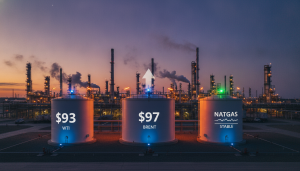
As of today, Brent Crude trades at $92.99 per barrel, reflecting a marginal dip of 0.27% within a day range of $92.57-$94.21. WTI Crude stands at $89.44, down 0.26%. While these figures are slightly below the $100+ mark seen recently, they remain significantly elevated compared to historical averages, maintaining substantial upward pressure on operational costs for miners globally. Fuel, electricity, and transportation are major line items in mining budgets, and sustained high energy prices directly erode profit margins for marginal producers, discouraging investment in new capacity or even the expansion of existing operations. This dynamic creates a vicious cycle: high oil prices drive up mining costs, further constraining an already inelastic supply, which in turn supports higher silver prices, yet without the ability to meaningfully increase production. The monumental $4.3 billion streaming deal announced in February, where the world’s largest diversified miner locked in silver production at a significant discount to spot, is a stark institutional affirmation of this supply scarcity and the perceived value of physical silver in a high-cost environment.
Incoming Demand Catalysts Point to a Structural Shift
While supply struggles to keep pace, silver demand is poised for significant expansion, driven by both traditional and emerging sectors. The macroeconomic backdrop has demonstrably shifted, moving from a “risk of stagflation” narrative to a clear “stagflation is here” reality. With energy prices remaining elevated and economic growth showing signs of softening, precious metals like silver traditionally gain appeal as inflation hedges and safe-haven assets. Beyond this broad macroeconomic push, several specific catalysts are on the near horizon.
In just 19 days, India’s SEBI reform is set to open an institutional channel into a nearly $1 trillion asset base, potentially unlocking a massive wave of capital into silver. This is not a speculative force but a scheduled regulatory change with a definitive date, promising to introduce a substantial new demand segment. Concurrently, the accelerating pace of technological innovation is creating unprecedented industrial demand. Artificial intelligence, for instance, is projected to drive an annual silver demand exceeding $700 billion, fueled by its use in electronics, data centers, and advanced computing infrastructure. Furthermore, the progression of solid-state battery technology, coupled with initiatives like the EU Digital Product Passport, will likely embed silver more deeply into future energy storage and consumer electronics, adding another layer of sustained industrial demand. This combination of institutional capital inflows and burgeoning industrial requirements is setting the stage for a demand surge that the current supply infrastructure is simply not equipped to meet, especially considering the six consecutive years of supply deficit already observed.
Navigating Energy’s Trajectory: Investor Focus on Oil’s Future
The interconnectivity between oil prices and the broader commodity complex, including precious metals like silver, is a constant subject of investor scrutiny. Our proprietary intent data indicates that investors are keenly focused on the direction of crude prices, with questions like “is WTI going up or down?” and “what do you predict the price of oil per barrel will be by end of 2026?” frequently surfacing. This highlights the critical role energy market dynamics play in shaping broader investment strategies.
The recent 14-day trend for Brent crude, which saw prices decline from $101.16 on April 1st to $94.09 by April 21st – a notable 7% drop – underscores the inherent volatility in the energy market. Yet, despite these short-term movements, the underlying structural support for elevated prices remains, driven by geopolitical instability, constrained upstream investment, and the ongoing global demand recovery. Investors should closely monitor upcoming energy events for insights into supply-demand balances and price direction. For instance, the EIA Weekly Petroleum Status Reports on April 22nd and April 29th, alongside the API Weekly Crude Inventory reports on April 28th and May 5th, will provide crucial data on U.S. crude stockpiles and refinery activity. Furthermore, the EIA Short-Term Energy Outlook on May 2nd will offer a forward-looking perspective on global supply, demand, and price projections, directly impacting the perceived inflation trajectory and, by extension, the appeal of precious metals. The Baker Hughes Rig Count on April 24th and May 1st will also offer insights into future production capacity. Persistent upward pressure on oil prices, or even sustained prices in the current range, will continue to fuel the stagflationary narrative that elevates silver’s investment profile.
Silver: A Strategic Play in a Disruptive Energy Era
The confluence of factors – an acutely inelastic supply, driven by geological realities and exacerbated by elevated energy costs, alongside a robust pipeline of institutional and industrial demand – paints a compelling picture for silver. The market is currently absorbing and consolidating after recent corrections, but it has yet to fully price in the activation of significant institutional capital, the full impact of sustained high oil prices on mining economics, or the complete transmission of energy-driven stagflation into precious metals demand. With critical catalysts like India’s SEBI reform just days away, the timeline for these forces to manifest is measured in weeks, not years. For investors accustomed to navigating the complexities of the oil and gas markets, recognizing silver’s unique position in this energy-disrupted economic environment offers a potent opportunity to diversify and potentially capture significant value. The structural supply deficit, coupled with an array of demand drivers, suggests that silver is not merely a beneficiary of market sentiment but a commodity poised for a fundamental revaluation.