The global energy landscape is currently defined by a potent combination of geopolitical instability and evolving monetary policy, creating a complex environment for investors. While headlines might focus on the daily gyrations of the market, our proprietary data reveals a deeper narrative: persistent tensions in the Middle East are providing a resilient floor for crude oil prices, even amidst short-term volatility, while simultaneously bolstering the U.S. Dollar as a premier safe-haven asset. This intricate interplay between energy markets, inflation expectations, and central bank actions demands a nuanced understanding from discerning investors.
Geopolitical Resilience in Crude Markets Amidst Volatility
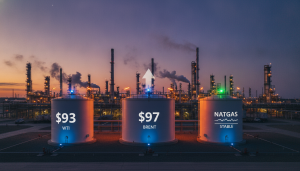
The specter of escalating tensions in the Middle East, particularly concerning the critical Strait of Hormuz, continues to be a dominant force in crude oil pricing. This vital shipping lane, integral to global energy supply, means that any perceived disruption sends immediate ripples through the market, driving inflationary concerns. As of today, Brent crude trades at $92.76, reflecting a marginal decline of 0.51% on the day, with WTI crude similarly down at $89.24. While these figures represent a slight daily consolidation, and Brent has pulled back approximately 7% from its April 1st high of $101.16, the overall price level remains remarkably elevated. This resilience is a direct consequence of the geopolitical risk premium embedded in current prices. Investors are keenly aware that a prolonged conflict or any direct disruption to supply chains could rapidly reignite a stronger rally, leading to what many analysts describe as a “toxic mix” of higher energy costs and decelerating global economic growth. This underlying tension provides a robust foundation for crude prices, limiting significant downside despite recent profit-taking.
The Dollar’s Ascent: A Reflection of Policy Shifts and Safe-Haven Demand
Beyond the direct impact on crude, geopolitical stress is a primary driver for the U.S. Dollar’s robust performance. The greenback traditionally acts as the world’s leading safe-haven currency during periods of heightened uncertainty, and the current global climate is no exception. This demand is further amplified by shifts in monetary policy expectations. The Federal Reserve, facing persistent inflationary pressures partly fueled by elevated energy costs, is now widely expected to delay its first rate cut until September. This revised timeline, echoed by institutions like Goldman Sachs, means higher for longer interest rates in the U.S., which in turn drives up Treasury yields, making dollar-denominated assets more attractive to global capital. Furthermore, many traders entered the year with a bearish outlook on the dollar, anticipating earlier and more frequent Fed rate cuts. As those expectations have been pushed out, extensive short-covering has added significant momentum to the dollar’s strength, creating a powerful feedback loop that reinforces its value against other major currencies.
Navigating Investor Concerns and Upcoming Market Catalysts
Our first-party reader intent data highlights a clear focus among investors: understanding the future direction of oil prices. Questions such as “is WTI going up or down?” and “what do you predict the price of oil per barrel will be by end of 2026?” underscore the pressing need for clarity in a volatile market. While precise predictions are challenging, our analysis suggests that the trajectory will be heavily influenced by upcoming data releases and geopolitical developments. Over the next two weeks, several key events will provide crucial insights: the EIA Weekly Petroleum Status Reports on April 22nd, April 29th, and May 6th, along with the API Weekly Crude Inventory reports on April 28th and May 5th, will offer granular detail on U.S. supply and demand dynamics. Additionally, the Baker Hughes Rig Count on April 24th and May 1st will indicate production trends, while the EIA Short-Term Energy Outlook on May 2nd will provide updated forecasts that could significantly sway sentiment. Investors will scrutinize these releases for any signs of tightening supply or demand shifts that could either validate or challenge the current risk premium.
Strategic Implications for Energy Investors
For investors operating in the oil and gas sector, the confluence of geopolitical tensions, a strong dollar, and evolving interest rate expectations presents both challenges and opportunities. The sustained elevated crude prices, even with recent daily consolidation, indicate resilience within the energy sector. Companies with strong balance sheets, robust production capabilities, and strategic assets are well-positioned to capitalize on this environment. However, the potential for a “toxic mix” of inflation and slower growth necessitates careful portfolio construction. A strong dollar can impact the revenues of international energy companies, while higher interest rates increase the cost of capital. Therefore, active risk management, including potential hedging strategies, becomes paramount. Focusing on firms with efficient operations, disciplined capital allocation, and a clear path to value creation will be essential. The current market dynamic underscores the importance of staying informed through proprietary data and forward-looking analysis to navigate what promises to be a continuously complex and rewarding investment landscape.