Close Menu
  • Home
  • Market News
    • Crude Oil Prices
    • Brent vs WTI
    • Futures & Trading
    • OPEC Announcements
  • Company & Corporate
    • Mergers & Acquisitions
    • Earnings Reports
    • Executive Moves
    • ESG & Sustainability
  • Geopolitical & Global
    • Middle East
    • North America
    • Europe & Russia
    • Asia & China
    • Latin America
  • Supply & Disruption
    • Pipeline Disruptions
    • Refinery Outages
    • Weather Events (hurricanes, floods)
    • Labor Strikes & Protest Movements
  • Policy & Regulation
    • U.S. Energy Policy
    • EU Carbon Targets
    • Emissions Regulations
    • International Trade & Sanctions
  • Tech
    • Energy Transition
    • Hydrogen & LNG
    • Carbon Capture
    • Battery / Storage Tech
  • ESG
    • Climate Commitments
    • Greenwashing News
    • Net-Zero Tracking
    • Institutional Divestments
  • Financial
    • Interest Rates Impact on Oil
    • Inflation + Demand
    • Oil & Stock Correlation
    • Investor Sentiment

Subscribe to Updates

Subscribe to our newsletter and never miss our latest news

Subscribe my Newsletter for New Posts & tips Let's stay updated!

What's Hot

EIA Sees Increase, Not Decrease in US Oil Inventories

March 11, 2026

FET launches remote ROV control station for subsea operations

March 11, 2026

HSBC Sustainable Finance Activity Tops $100 Billion in 2025

March 11, 2026
Facebook X (Twitter) Instagram Threads
Oil Market Cap – Global Oil & Energy News, Data & Analysis
  • Home
  • Market News
    • Crude Oil Prices
    • Brent vs WTI
    • Futures & Trading
    • OPEC Announcements
  • Company & Corporate
    • Mergers & Acquisitions
    • Earnings Reports
    • Executive Moves
    • ESG & Sustainability
  • Geopolitical & Global
    • Middle East
    • North America
    • Europe & Russia
    • Asia & China
    • Latin America
  • Supply & Disruption
    • Pipeline Disruptions
    • Refinery Outages
    • Weather Events (hurricanes, floods)
    • Labor Strikes & Protest Movements
  • Policy & Regulation
    • U.S. Energy Policy
    • EU Carbon Targets
    • Emissions Regulations
    • International Trade & Sanctions
  • Tech
    • Energy Transition
    • Hydrogen & LNG
    • Carbon Capture
    • Battery / Storage Tech
  • ESG
    • Climate Commitments
    • Greenwashing News
    • Net-Zero Tracking
    • Institutional Divestments
  • Financial
    • Interest Rates Impact on Oil
    • Inflation + Demand
    • Oil & Stock Correlation
    • Investor Sentiment
Oil Market Cap – Global Oil & Energy News, Data & Analysis
Home » ‘A sobering preview’: extreme heat now affects one in three people globally, study finds | Extreme heat
Climate Commitments

‘A sobering preview’: extreme heat now affects one in three people globally, study finds | Extreme heat

omc_adminBy omc_adminMarch 10, 2026No Comments4 Mins Read
Share
Facebook Twitter Pinterest Threads Bluesky Copy Link


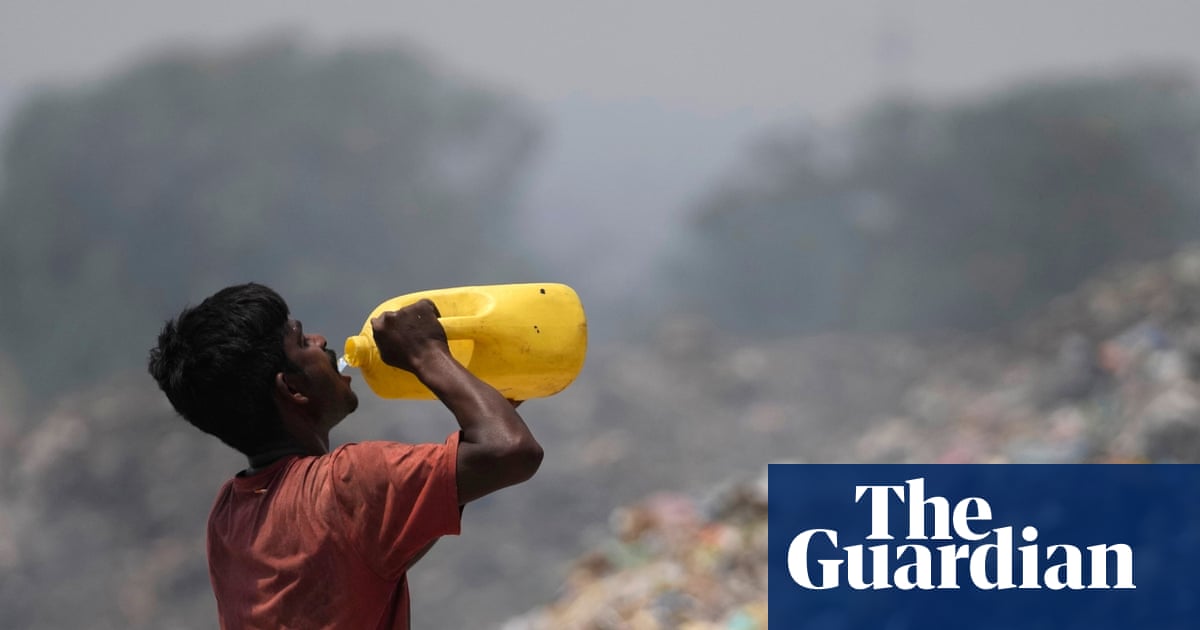
Climate breakdown is shrinking the amount of time that people can safely go about their lives, according to a study that shows a third of the world’s population now resides in areas where heat severely limits activity.

Rising temperatures, driven by the continued burning of fossil fuels, are making it difficult even for many young, healthy adults to do basic physical activities, such as housework or walking up stairs during daylight hours at the height of the summer, the report warns.

The limitations are greater for elderly people, who have less ability to sweat and thus control their body temperatures, according to the research, which combines physiological studies of heat tolerance with seven decades of global and regional data on population, temperatures and human development.

On average, the report finds that people over 65 now experience about 900 hours each year when heat severely restricts safe outdoor activity, compared with 600 hours in 1950. This is equivalent to more than a month of daytime hours.

Worst-affected are those in poorer countries or regions, even though they are far less responsible for climate breakdown than wealthy consumers whose lifestyles produce higher greenhouse gas emissions from the burning of gas, oil and coal. In some tropical and subtropical regions, heat restricts outdoor activity for older adults for between one-quarter and one-third of the year. The most severe challenges are found in south-west Asia (Bahrain, Qatar, Kuwait, the United Arab Emirates, Iraq, Oman), south Asia (Pakistan, Bangladesh, India) and parts of west Africa (Mauritania, Mali, Burkina Faso, Senegal, Djibouti and Niger).

A volunteer pours water on a man’s head during a May 2024 heatwave in Karachi, Pakistan. Photograph: Fareed Khan/AP

Within countries there are huge variations according to geography, income group and types of work. In India, limitations are most pronounced across the Indo-Gangetic Plain and eastern lowlands, and least evident in the Western Ghats and the Himalayan foothills. Meanwhile, in South America, people in the Amazon basin are far more vulnerable than in the Andean highlands. In many Gulf states, wealthy people can ease risks with air conditioning, while poorer migrant workers are exposed to dangerous levels of solar radiation on construction sites and while doing other outdoor jobs.

The study, which was led by scientists from the Nature Conservancy and published in the journal Environmental Research: Health on Tuesday, goes further than previous research on global heat risks by examining the social and physiological capacity to adapt to heat.

The authors measure “liveability” in different temperatures in METs, a unit of equivalent to the average energy expenditure of a human at rest. A manageable temperature is one in which people below 65 can perform up to 3.3 METs of activity – for example, sweeping a floor or walking at a moderate pace – for an extended period without heat stress, which means they can regulate their core body temperature at a steady state. By contrast, “unliveable limitations’” are found at hot locations during hours when human activity is restricted to 1.5 METs, which are primarily sedentary activities, such as lying down or sitting.

Stall owners sheltering from the heat at a bazaar on the banks of the river in Amazonia, Brazil, in 2019. Photograph: Miroslaw Nowaczyk/Alamy

To examine the vulnerability of different age groups, the researchers used measurements of sweat production and “skin wettedness” of individuals exposed for varying lengths of time in heat chambers.

They compared trends over time by comparing liveability limitations between the early (1950–1979) and later (1995–2024) periods of their datasets. This revealed that more and more people in an ever widening area of the world are suffering liveability limitations due to rising heat. By far the most severe restrictions came in the last year of the study, 2024.

The authors said the results showed the need for rapid action to reduce the primary sources of global heating: oil, gas and coal. They also called policymakers to direct resources to the worst-affected communities, age-groups and regions.

“Hundreds of millions of people can no longer safely go about their daily lives outside during the hottest parts of the year,” said Luke Parsons, lead author of the paper. “And those people are overwhelmingly in countries that have contributed least to the problem. Every fraction of a degree of additional warming will expand these impacts. 2024 gave us a sobering preview of what a 1.5C [above preindustrial levels] world could look like, and it should strengthen our collective resolve to avoid 2C or more.

“In the near term, investments in heat early warning systems, cooling infrastructure, and protections for older adults and outdoor workers in the most affected regions are urgent. However, these local investments are not substitutes for the fundamental need to limit global warming.”


Source link

Share. Facebook Twitter Pinterest Bluesky Threads Tumblr Telegram Email
omc_admin
  • Website

Related Posts

Australian governments subsidising fossil fuel use by more than $30,000 a minute, analysis finds | Fossil fuels

March 11, 2026

Toronto’s snow mountains: towering peaks that refuse to melt and leave a toxic trail | Canada

March 11, 2026

Reaching net zero by 2050 ‘cheaper for UK than one fossil fuel crisis’ | Climate crisis

March 11, 2026
Add A Comment
Leave A Reply Cancel Reply

Top Posts

Federal Reserve cuts key rate for first time this year

September 17, 202513 Views

Inflation or jobs: Federal Reserve officials are divided over competing concerns

August 14, 20259 Views

Cheap parcels from China will no longer be duty-free. Here’s what it means for buyers and sellers

May 1, 20259 Views
Don't Miss

FET launches remote ROV control station for subsea operations

By omc_adminMarch 11, 2026

(WO) — Forum Energy Technologies (FET) has introduced a new remote control station designed to…

Google.org Backs CDP AI Platform To Unlock $105 Billion In Climate Finance

March 11, 2026

War Creating Most Severe Energy Disruption Since 1970s

March 11, 2026

Operators push collaboration, digital tools and standardized designs to accelerate project delivery

March 11, 2026
Top Trending

HSBC Sustainable Finance Activity Tops $100 Billion in 2025

By omc_adminMarch 11, 2026

Australian governments subsidising fossil fuel use by more than $30,000 a minute, analysis finds | Fossil fuels

By omc_adminMarch 11, 2026

EU’s Von der Leyen Says Turning Away from Nuclear Energy was a “Strategic Mistake”

By omc_adminMarch 11, 2026
Most Popular

The 5 Best 65-Inch TVs of 2025

July 3, 202518 Views

AI’s Next Bottleneck Isn’t Just Chips — It’s the Power Grid: Goldman

November 14, 202514 Views

The Layoffs List of 2025: Meta, Microsoft, Block, and More

May 9, 202510 Views
Our Picks

Major 3D seismic survey planned offshore Guyana to de-risk exploration

March 11, 2026

EIA Boosts Brent Forecast in Wake of Iran Conflict

March 11, 2026

Repsol Focuses on US for Short-Term Upstream Growth

March 11, 2026

Subscribe to Updates

Subscribe to our newsletter and never miss our latest news

Subscribe my Newsletter for New Posts & tips Let's stay updated!

Facebook X (Twitter) Instagram Pinterest
  • Home
  • About Us
  • Advertise With Us
  • Contact Us
  • DMCA
  • Privacy Policy
  • Terms & Conditions
© 2026 oilmarketcap. Designed by oilmarketcap.

Type above and press Enter to search. Press Esc to cancel.