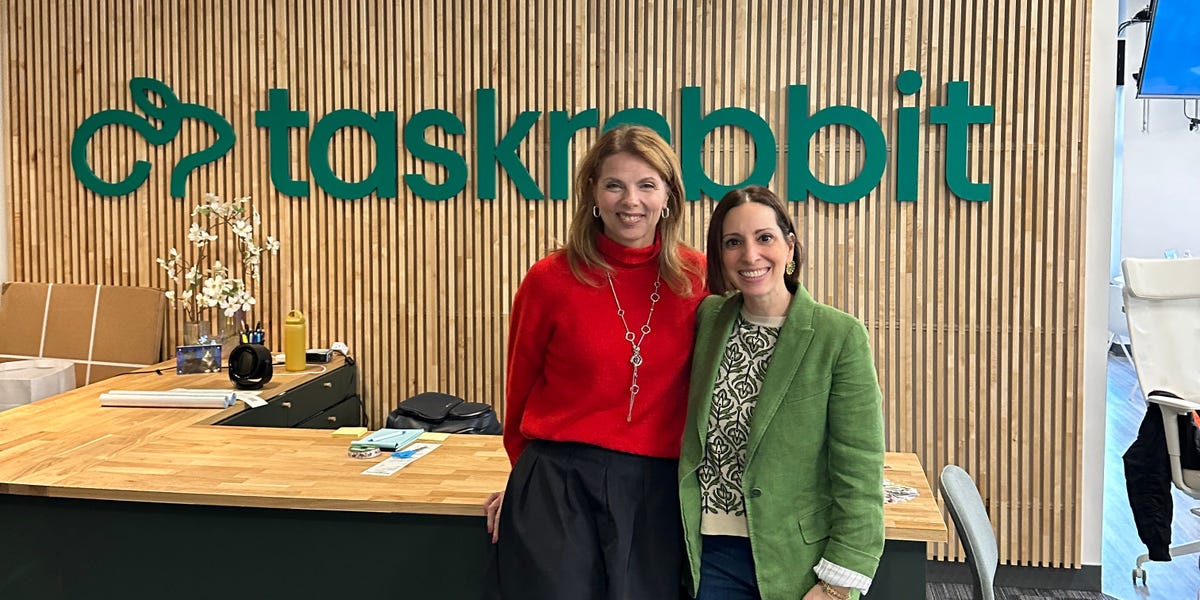
The relentless march of artificial intelligence continues to reshape industries, challenging long-held assumptions about labor markets and economic growth. While much of the investment discourse focuses on AI’s direct applications within the energy sector, an equally critical, albeit often overlooked, angle emerges from its broader impact on the global workforce. The CEO of Taskrabbit, Ania Smith, offers a compelling perspective: AI’s displacement of white-collar jobs is paradoxically fueling growth in the gig economy’s physical service sector, where tasks from mounting a TV to repairing appliances remain firmly in human hands. This seemingly distant trend carries significant implications for energy investors, signaling potential shifts in consumer behavior, transportation demand, and overall economic stability that directly influence crude oil and natural gas markets. Understanding these macroeconomic ripples is crucial for navigating the evolving investment landscape.
The AI-Driven Labor Shift and Energy Demand Implications
Ania Smith’s observation that AI is creating “infinite room for growth” in the trade and physical service sectors, as evidenced by Taskrabbit’s fivefold revenue increase over the past five years, highlights a profound economic realignment. As AI automates more administrative and analytical roles, a growing pool of individuals may seek opportunities in fields less susceptible to automation. This shift could manifest in several ways relevant to energy demand. Firstly, a more service-oriented economy, particularly one centered around local tasks like furniture assembly (a popular category for Taskrabbit, with IKEA accounting for nearly a quarter of its global business), could alter urban transportation patterns. While gig workers might increase local vehicle miles traveled, overall commuting patterns for a displaced white-collar workforce could decrease, presenting a complex demand picture for gasoline and diesel.
Secondly, the economic health of these new “taskers” and the broader workforce will dictate consumer spending power. If the transition to trade jobs is accompanied by stable or improving incomes, discretionary spending on goods and services, which require energy for production and delivery, could remain robust. Conversely, if AI-driven displacement leads to widespread underemployment or reduced purchasing power, it could dampen overall economic activity, subsequently curtailing industrial energy demand. Investors must consider how this evolving labor landscape, as exemplified by Taskrabbit’s robust growth since its 2008 founding and 2017 acquisition by IKEA, will shape the fundamental drivers of energy consumption.
Current Market Dynamics Amidst Shifting Economic Winds
Against this backdrop of evolving labor markets, the energy sector is currently experiencing its own set of movements. As of today, Brent crude trades at $92.61 per barrel, marking a 0.68% decrease on the day, with trading confined to a tight range between $92.57 and $94.21. WTI crude mirrors this sentiment, priced at $89.26 per barrel, down 0.46%, navigating a daily range of $88.76 to $90.71. This slight daily dip comes after a more significant correction over the past two weeks, with Brent crude falling from $101.16 on April 1st to $94.09 yesterday, representing a 7% decline. Gasoline prices, currently at $3.10 per gallon, are also down 0.96% for the day, signaling some easing at the pumps.
These price movements underscore a cautious market sentiment, potentially influenced by a combination of geopolitical factors, inventory levels, and the subtle but persistent economic uncertainties stemming from global macroeconomic shifts, including the long-term impact of AI on employment and consumer behavior. While the immediate drivers are often supply-demand balances, the underlying health and structure of the global economy, as hinted at by the Taskrabbit narrative, play a crucial role in determining the longer-term trajectory of energy prices. Investors should analyze these current market snapshots not in isolation, but as part of a larger, interconnected economic narrative.
Forward-Looking Catalysts and the Energy Sector’s Adaptability
To gain clearer insight into the energy market’s future direction, investors must closely monitor upcoming data releases and events. The EIA Weekly Petroleum Status Reports, scheduled for April 22nd, April 29th, and May 6th, will provide critical updates on crude oil and refined product inventories, refinery utilization rates, and demand indicators. These reports are essential for gauging the immediate health of the market and identifying any emerging supply-demand imbalances that could be influenced by evolving economic conditions.
Further granularity on upstream activity will come from the Baker Hughes Rig Count, set to be released on April 24th and May 1st. Changes in rig counts offer a leading indicator of future production trends, especially in North America. A sustained increase could signal producer confidence in higher prices and robust demand, while a contraction might suggest caution, particularly in light of recent price volatility. Perhaps most impactful for long-term strategic planning, the EIA Short-Term Energy Outlook (STEO) on May 2nd will offer comprehensive projections for supply, demand, and prices through 2027. This report will be particularly scrutinized for how it incorporates broader macroeconomic forecasts, including any anticipated impacts from technological disruption and labor market restructuring, providing a crucial benchmark for investor expectations.
Addressing Investor Concerns: Navigating AI’s Shadow on Oil Prices
Our proprietary reader intent data reveals a clear focus among investors on future price predictions, with questions like “Is WTI going up or down?” and “What do you predict the price of oil per barrel will be by end of 2026?” dominating recent inquiries. While predicting precise movements is inherently challenging, the broader economic context, including the AI-driven labor market shifts discussed, offers critical insights. The resilience of the gig economy, as seen with Taskrabbit’s impressive growth, suggests a potential floor for local transportation and service-related energy demand. However, the potential for AI to displace large numbers of white-collar workers could lead to a net reduction in overall economic output or shifts in consumption patterns that depress global demand for certain energy products, particularly jet fuel and industrial feedstock.
For WTI, maintaining support above $88.00 will be a near-term indicator of market strength. A sustained move beyond $90.00 would likely require clear evidence of robust global economic expansion or significant supply disruptions. Looking ahead to the end of 2026, the trajectory of oil prices will be a complex interplay of OPEC+ supply discipline, geopolitical flashpoints, and crucially, the evolving global economic landscape shaped by technological disruption. While pockets of growth like Taskrabbit offer optimism, the broader implications of AI on employment and economic stability could temper bullish forecasts. We foresee a challenging but potentially lucrative trading range for Brent between $85-$105 for much of 2026. The lower end of this range becomes more probable if AI-induced economic restructuring creates significant, widespread demand destruction that outweighs the localized growth seen in service sectors.


