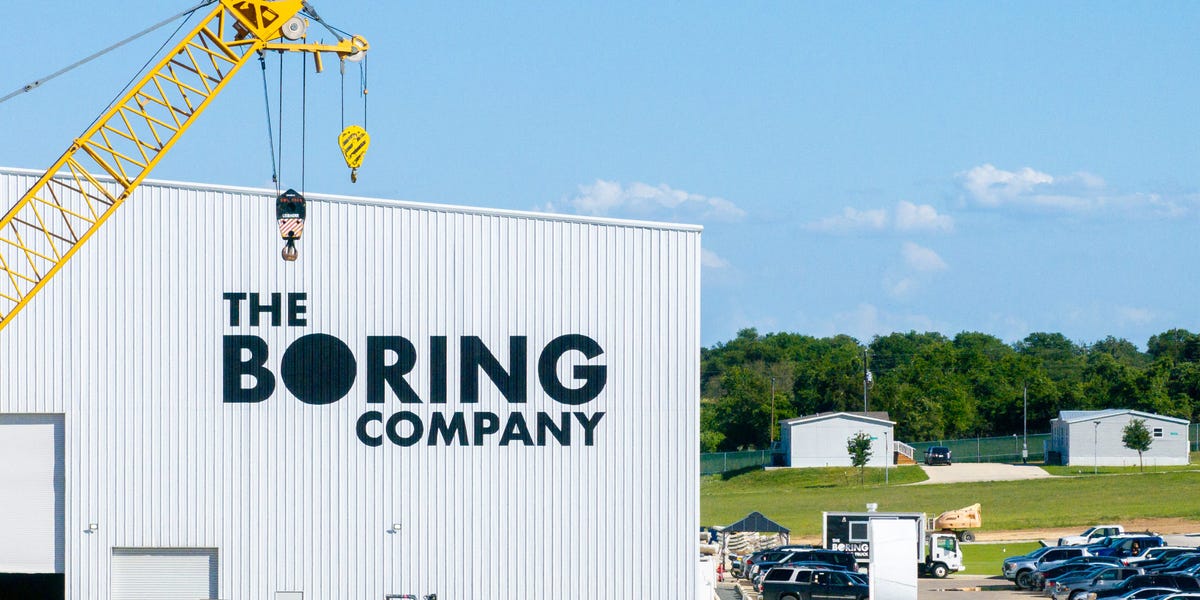
The Panama Canal, a foundational artery for global trade, continually demands investor attention, not just for its enduring strategic importance but for its adaptability to modern logistical challenges. While headlines often focus on geopolitical tensions or transit fees, a recent development highlights a new frontier in canal infrastructure: a proposed pedestrian tunnel under the waterway. Mayor Mayer Mizrachi of Panama City has championed this initiative, securing his city a finalist spot in The Boring Company’s ‘Tunnel Vision’ challenge. While a pedestrian tunnel might seem tangential to the colossal scale of oil and gas shipping, this project signals a broader commitment to efficiency, innovation, and long-term logistical resilience at a critical global chokepoint. For energy investors, understanding such infrastructure plays means recognizing how even seemingly small improvements can ripple through global supply chains, affecting everything from shipping costs to regional energy demand and geopolitical influence.
The Panama Canal’s Enduring Strategic Value and Modern Demands
The Panama Canal’s role in global trade is undeniable, facilitating the movement of an immense volume of goods, including significant quantities of crude oil, refined products, and liquefied natural gas (LNG) tankers. Its strategic position connecting the Atlantic and Pacific Oceans has historically made it a flashpoint for geopolitical interests. Panama’s recent withdrawal from China’s Belt and Road Initiative in February 2025, following prior U.S. concerns over Chinese influence and transit fees, underscores the ongoing geopolitical currents shaping the canal’s future. The proposed 0.6-mile pedestrian tunnel, envisioned by Mayor Mizrachi, serves as more than just a local amenity; it represents a conceptual leap towards integrating innovative subterranean infrastructure at a site of immense global significance. For investors frequently asking about the long-term trajectory of oil prices, such as “what do you predict the price of oil per barrel will be by end of 2026?”, the efficiency and stability of key trade routes like the Panama Canal are fundamental underpinnings. Enhanced logistical flow, even starting with a pedestrian tunnel and potentially expanding to other uses like freight or utilities, directly influences global supply chain costs, which in turn can impact landed energy prices and overall market stability over the long haul.
Navigating Current Market Headwinds and Infrastructure Catalysts
In the immediate market, energy prices reflect a nuanced global economic landscape. As of today, Brent crude trades at $92.77, reflecting a marginal dip of 0.5% within a daily range of $92.57-$94.21. WTI crude similarly stands at $89.24, down 0.48% for the day, oscillating between $88.76 and $90.71. Gasoline prices are also experiencing a slight pullback at $3.1, a 0.96% decrease. This recent softening in daily prices follows a notable trend: Brent crude has seen a 7% decline over the past two weeks, dropping from $101.16 on April 1st to $94.09 on April 21st. This broader market correction underscores global economic anxieties and the delicate balance of supply and demand. In this environment, infrastructure initiatives like the Panama Canal tunnel, even in their nascent stages, become critical signals for future resilience. By addressing potential bottlenecks and enhancing connectivity around vital trade arteries, such projects can mitigate future supply chain disruptions. For energy investors, who are constantly weighing immediate market movements against long-term operational efficiency, projects that promise to streamline global logistics are a positive, albeit long-term, catalyst against market volatility.
Beyond Pedestrians: The Future of Energy Logistics and The Boring Company’s Role
While the initial proposal for the Panama Canal tunnel is for pedestrian use, the broader implications of The Boring Company’s ‘Tunnel Vision’ challenge extend far beyond. The challenge explicitly offers tunnels for freight, water, utilities, or the “Loop” system, which utilizes Tesla vehicles for underground transport. The selection of Panama City as a finalist, announced following the March 23rd challenge outcome, opens the door to future phases that could profoundly impact energy logistics. Imagine a scenario where a network of subterranean tunnels could transport critical utilities, or even specialized freight, bypassing surface congestion and potential disruptions. For energy companies operating globally, particularly those involved in refining, distribution, or LNG shipping, the prospect of faster, more secure, and potentially more cost-effective transport solutions through innovative tunneling technology is compelling. This could transform how specific energy products are moved regionally, how pipelines are protected, or how energy-intensive infrastructure is powered. Investors asking questions like “How well do you think Repsol will end in April 2026?” are implicitly seeking insights into company performance amidst evolving market conditions and operational efficiency. Energy firms that can leverage or adapt to such advanced logistical infrastructure stand to gain a competitive edge, improving their operational resilience and potentially their market valuations.
Investment Outlook: Upcoming Data and Long-Term Infrastructure Plays
For energy investors, the confluence of ongoing market analysis and long-term infrastructure development creates a dynamic investment landscape. Investors are keenly awaiting crucial short-term market indicators, including the EIA Weekly Petroleum Status Report on April 22nd and April 29th, which will provide vital data on crude oil, gasoline, and distillate inventories. Complementing this, the Baker Hughes Rig Count on April 24th and May 1st will offer insights into upstream activity, while the EIA Short-Term Energy Outlook on May 2nd will project future supply-demand balances. These events are fundamental to understanding immediate market direction, directly addressing investor concerns like “is WTI going up or down?”
However, alongside these immediate data points, the long-term impact of infrastructure projects like the Panama Canal tunnel cannot be overlooked. While the tunnel project itself won’t immediately influence weekly inventory reports, it contributes to the overall efficiency and resilience of global trade routes. A more efficient canal means less transit time and reduced logistical risks, which over time can indirectly affect inventory levels by improving the speed and predictability of global energy flows. Investing in companies with exposure to critical trade infrastructure, or those adopting innovative logistical solutions, aligns with a forward-thinking strategy. The potential for The Boring Company’s technology to evolve beyond pedestrian use into a system for freight or utilities at such a crucial global nexus highlights a significant, albeit long-dated, investment theme: the continuous evolution of energy transport and logistics in a world increasingly focused on efficiency and decarbonization. Astute investors will monitor not only the weekly reports but also the progress of such foundational infrastructure projects, recognizing their cumulative impact on the global energy matrix.


