Despite a recent pledge from OPEC+ to boost crude output, the global oil market is bracing for significant volatility, primarily driven by escalating geopolitical tensions in the Middle East. As of today, Brent Crude trades at $93.92, showing a modest daily gain of 0.73% within a range of $93.52 to $94.21. WTI Crude is similarly impacted, currently at $90.48, up 0.9% today, trading between $89.71 and $90.70. While some analysts anticipated a sharp jump of $5-15 a barrel upon market reopening due to supply fears, the immediate price action reflects a complex interplay of factors, including a significant price correction over the past two weeks that may have already absorbed some risk premium. Investors are now navigating a landscape where a marginal supply increase from producers is overshadowed by the very real threat of major export disruptions.
The Strait of Hormuz: A Critical Chokepoint Under Threat
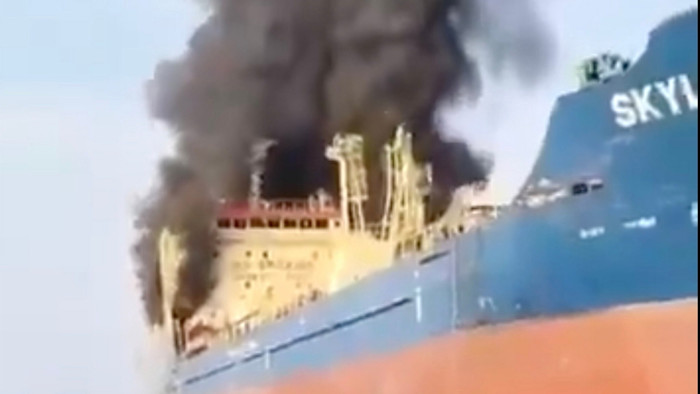
The Strait of Hormuz, a critical maritime chokepoint through which approximately one-fifth of the world’s daily oil and natural gas flows, has become the epicenter of this market anxiety. Recent reports of missile activity and direct hits on vessels near the Strait have brought maritime traffic to a near standstill. Ship-tracking data from our proprietary pipelines indicates dozens of tankers clustered at the entrance and exit, awaiting clarity on the security situation before attempting transit. This operational paralysis has immediate financial repercussions. Maritime security advisors are reportedly urging clients to avoid the area for at least the next 24-48 hours, leading to a surge in war-risk insurance premiums. Some insurers are reportedly unwilling to provide cover for vessels with affiliations to specific nations, effectively increasing the cost and complexity of Middle Eastern crude exports and creating logistical bottlenecks that could ripple through global supply chains.
OPEC+’s Modest Output Hike Versus Market Reality
Amidst this backdrop of heightened risk, OPEC+ announced an increase of 206,000 barrels per day (bpd) in production starting April. On the surface, this move might seem designed to soothe supply fears and stabilize prices. However, our analysis suggests this modest bump is largely symbolic and utterly insufficient to offset a major, sustained disruption in the Strait of Hormuz. If 20% of global supply is at risk, an additional 0.2% of global supply offers negligible comfort to a market grappling with existential supply threats. It’s important to contextualize the current market. Brent Crude, while up slightly today, has seen a substantial correction over the past two weeks, dropping from $118.35 on March 31st to $94.86 just yesterday – a nearly 20% decline. This prior downtrend suggests the market had, perhaps, de-risked somewhat or reacted to other supply/demand signals. The current geopolitical flare-up is now testing whether that previous correction was justified or if the market is poised for a rebound, pushing prices back towards recent highs. The consensus among analysts is that actual shipping flow status and regional de-escalation will be far more impactful than the marginal OPEC+ increase, which does little to alleviate the fundamental fear of lost barrels.
Investor Sentiment and Upcoming Market Catalysts
Many investors are keenly asking: ‘Is WTI going up or down?’ and ‘What do you predict the price of oil per barrel will be by end of 2026?’ The immediate trajectory for WTI, currently trading at $90.48, hinges heavily on the Strait of Hormuz situation. A sustained blockage or further escalation could easily see WTI push towards the $95-$100 range in the short term, as the market scrambles to account for lost supply. Looking ahead, several key events on our calendar will offer critical insights. The upcoming OPEC+ JMMC Meeting tomorrow, April 21st, will be closely watched for any further signals regarding production policy or emergency measures, though significant changes are unlikely so soon after a modest increase. More importantly, the EIA Weekly Petroleum Status Reports on April 22nd and April 29th will provide real-time data on crude inventories and refinery utilization, offering a clearer picture of immediate supply-demand balances amidst the geopolitical turbulence. Furthermore, the EIA Short-Term Energy Outlook on May 2nd will offer updated projections that could influence longer-term price expectations, helping investors refine their ‘end of 2026’ oil price predictions. Any shift in demand forecasts or supply estimates from this authoritative report, especially concerning global consumption growth or strategic reserve releases, will be highly scrutinized by the market.
Navigating Volatility: Investment Implications
For investors navigating this high-stakes environment, risk management is paramount. The current scenario underscores the importance of portfolio diversification and a keen eye on geopolitical developments. Companies with diversified global supply chains or those less reliant on Middle Eastern crude flows might prove more resilient to direct supply shocks. Integrated energy majors with robust refining and marketing capabilities could potentially absorb some of the upstream volatility, while pure-play exploration and production companies with significant exposure to regions outside the Gulf might find tailwinds. However, the broader market will remain extremely sensitive to any news from the Strait, making tactical positioning crucial. We advise investors to monitor shipping updates and official statements from regional powers as closely as fundamental supply-demand data. The unpredictability of geopolitical events means that swift, informed decisions, backed by real-time data, will be key to managing exposure and capitalizing on potential opportunities.