Policy Headwinds Challenge Offshore Wind, Reaffirming Traditional Energy Foundations
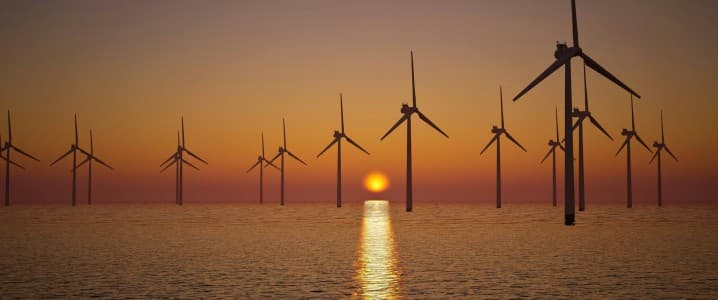
The energy investment landscape is rarely static, but recent developments in the U.S. offshore wind sector underscore a heightened level of policy-driven uncertainty that demands investor attention. A significant legal challenge has emerged as Ørsted, a global leader in offshore wind development, through its Revolution Wind LLC joint venture, has initiated legal action against the U.S. Department of the Interior. This move directly contests a December 22, 2025, lease suspension order issued by the Bureau of Ocean Energy Management (BOEM) that halted work on multiple projects, including Revolution Wind. For investors navigating a complex energy transition, this development highlights a critical divergence in risk profiles between nascent renewable technologies and the more established, albeit volatile, hydrocarbon sector. While the oil and gas market continues to respond to fundamental supply and demand dynamics, renewable projects face an additional layer of unpredictable regulatory and political intervention, creating a stark contrast in investment predictability.
Regulatory Reversals Cloud Offshore Wind Investment Prospects
The lawsuit filed by Revolution Wind LLC, a 50/50 venture with Global Infrastructure Partners’ Skyborn Renewables, directly challenges the U.S. Administration’s decision to pause five major offshore wind projects. This suspension, justified by Secretary of the Interior Doug Burgum citing national security concerns, impacts critical initiatives like Vineyard Wind 1, CVOW – Commercial, Sunrise Wind, Empire Wind 1, and Revolution Wind itself. The situation is particularly striking for Revolution Wind, which, despite having secured all necessary federal and state permits in 2023 after extensive reviews, is now 87% complete. All offshore foundations have been installed, along with 58 of its 65 wind turbines, representing a substantial capital commitment nearing completion. This abrupt halt, following a historical pattern of the Trump Administration’s critical stance on wind energy through stop-work orders and subsidy adjustments, sends a chilling signal to investors in large-scale renewable infrastructure. The uncertainty extends beyond Ørsted’s direct projects; Norway’s Equinor, for instance, has already suspended work on its Empire Wind 1 project following a similar stop-work order. For many long-term investors, the specter of policy reversal, even on advanced projects, introduces a significant and difficult-to-quantify risk premium that can deter capital allocation, potentially slowing the pace of the energy transition in crucial markets.
Market Dynamics: A Tale of Two Energy Sectors
While the offshore wind sector grapples with policy-induced paralysis, the traditional hydrocarbon markets exhibit their own set of dynamics, albeit driven by more conventional supply-demand fundamentals and geopolitical undercurrents. As of today, Brent Crude trades at $90.24, experiencing a modest daily decline of 0.21%, with its intraday range spanning $93.87 to $95.69. Similarly, WTI Crude stands at $86.68, down 0.85% for the day, having traded between $85.5 and $87.49. These figures mark a significant shift from the previous weeks, with Brent having declined by nearly 20% over the past fortnight, dropping from $118.35 on March 31st to $94.86 on April 20th. This notable correction of $23.49 highlights the market’s sensitivity to global economic indicators and evolving supply narratives. Meanwhile, gasoline prices remain relatively stable at $3.04. For oil and gas investors, this volatility, while considerable, is largely tied to identifiable factors like OPEC+ decisions, inventory levels, and global economic growth forecasts. In contrast, the policy risks now facing offshore wind introduce an entirely different dimension of uncertainty, where project viability can hinge on political shifts rather than market fundamentals, potentially making traditional energy plays appear comparatively more predictable, even amidst price swings.
Addressing Investor Concerns: Seeking Clarity Amidst Uncertainty
Our proprietary reader intent data reveals a consistent theme among investors this week: a palpable desire for clarity on market direction and future price trajectories. Questions like “Is WTI going up or down?” and “What do you predict the price of oil per barrel will be by end of 2026?” underscore a focus on fundamental price movements and long-term outlooks. This pursuit of predictability is precisely where the Ørsted lawsuit creates a significant challenge for the broader energy investment community. While traditional oil and gas markets offer a myriad of data points and historical precedents to inform price predictions, the political intervention in renewable energy projects introduces an opaque and highly subjective risk. The very act of a national security concern being invoked without detailed justification for projects nearing completion makes it exceedingly difficult for investors to model future cash flows or assess project viability. Even questions regarding specific company performance, such as “How well do you think Repsol will end in April 2026?”, are indirectly impacted, as major European energy players increasingly integrate renewable assets into their portfolios. The legal battle in Washington D.C. serves as a stark reminder that policy risk, unlike geopolitical supply disruptions or demand elasticity, can fundamentally erode the investment thesis in ways that are difficult to quantify or hedge against, prompting a re-evaluation of diversification strategies across the energy spectrum.
Upcoming Catalysts and Forward-Looking Analysis for Energy Investors
Looking ahead, the next two weeks present a series of critical, scheduled events that will undoubtedly shape the trajectory of traditional oil and gas markets, offering investors tangible data points to inform their strategies. The OPEC+ Joint Ministerial Monitoring Committee (JMMC) Meeting, scheduled for April 21st, stands as a primary catalyst, with markets keenly awaiting any indications regarding production quotas and compliance. Following this, the U.S. energy landscape will come into sharper focus with the EIA Weekly Petroleum Status Reports on April 22nd and April 29th, providing crucial insights into crude oil inventories, refinery activity, and demand trends. These will be complemented by the API Weekly Crude Inventory reports on April 28th and May 5th, offering an earlier glimpse into stock levels. Furthermore, the Baker Hughes Rig Count on April 24th and May 1st will shed light on North American drilling activity, a key indicator of future supply. Finally, the EIA Short-Term Energy Outlook on May 2nd will offer a comprehensive forecast for both crude oil and natural gas markets, extending through the coming quarters. These recurring, data-driven releases provide a framework for fundamental analysis, a stark contrast to the unpredictable and legally contested policy shifts now impacting the renewable sector. For investors seeking to allocate capital, the relative transparency and established mechanisms of traditional energy markets, driven by these upcoming events, offer a degree of analytical certainty that is currently elusive in certain segments of the rapidly evolving energy transition.


