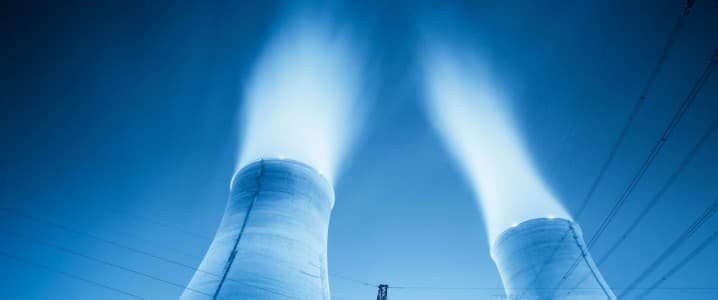
The prospect of Europe’s largest nuclear power plant, Zaporizhzhia, resuming operations 18 months after a theoretical end to the conflict in Ukraine is a critical development for global energy markets. While seemingly distant, this timeline, articulated by the plant’s Russian operating company, underscores the persistent geopolitical risks influencing energy supply and demand dynamics. For oil and gas investors, understanding the ripple effects of such long-term uncertainties on regional energy security, commodity prices, and broader market sentiment is paramount. This analysis delves into the implications of a protracted recovery for Zaporizhzhia, current market trends, upcoming catalysts, and how these factors shape investor strategy in an increasingly volatile landscape.
Geopolitical Headwinds and the Nuclear Energy Gap
The Zaporizhzhia nuclear power plant, a colossal 5.7 gigawatt (GW) facility, historically supplied approximately 20% of Ukraine’s electricity before falling under Russian control in early 2022. Its continued offline status, requiring external power for cooling to avert a nuclear incident, highlights the profound energy security challenges facing the region. The stated timeline of a mid-2027 restart, contingent on an immediate cessation of hostilities, suggests that its contribution to the European grid is off the table for the foreseeable future. This prolonged absence maintains a significant gap in the continent’s energy mix, implicitly increasing reliance on fossil fuels, particularly natural gas, to meet baseload demand. The International Atomic Energy Agency (IAEA) continues its vital work to restore crucial off-site power through repairs to the damaged 750 kV Dniprovska and 330 kV Ferosplavna-1 transmission lines, yet this only addresses immediate safety concerns, not power generation. The unconfirmed reports of discussions regarding joint management and even using the plant’s power for crypto mining further complicate the outlook, painting a picture of geopolitical maneuvering rather than a swift return to stable energy provision.
Crude Market Volatility Amidst Shifting Sands
The persistent geopolitical instability, exemplified by the Zaporizhzhia situation, contributes significantly to the underlying volatility observed in crude markets. As of today, Brent Crude trades at $90.35, experiencing a minor daily dip of 0.09% within a daily range of $93.87-$95.69. Similarly, WTI Crude is priced at $86.82, down 0.69% for the day, with a range of $85.5-$87.49. This recent softness follows a more substantial downturn over the past two weeks, where Brent plummeted from a high of $118.35 on March 31st to $94.86 just yesterday, representing a nearly 20% decline. Such sharp swings reflect a confluence of factors, including macroeconomic indicators, demand forecasts, and crucially, ongoing geopolitical tensions in key energy-producing and transit regions. The question “is WTI going up or down?” frequently asked by investors, underscores the pervasive uncertainty. While short-term movements are influenced by daily news flow, the long-term trajectory will be shaped by the interplay of supply discipline, global demand recovery, and the resolution – or perpetuation – of conflicts like that impacting Zaporizhzhia. The significant drop in Brent indicates that fears of demand destruction or robust supply are currently outweighing geopolitical risk premiums.
Investor Horizon: Navigating Upcoming Catalysts
For investors seeking to predict “what the price of oil per barrel will be by end of 2026,” a keen eye on upcoming market events is essential. The immediate future holds several critical data points that could shift market sentiment. Tomorrow, April 21st, the OPEC+ Joint Ministerial Monitoring Committee (JMMC) Meeting is scheduled. This gathering often provides early signals regarding the alliance’s production policy, which can have an immediate and significant impact on crude prices. Following this, the EIA Weekly Petroleum Status Reports on April 22nd and April 29th will offer crucial insights into U.S. crude inventories, refinery utilization, and product supplied, serving as key indicators of domestic demand and supply balances. The Baker Hughes Rig Count on April 24th and May 1st will further inform expectations for future U.S. production. These events occur against a backdrop where the absence of a major nuclear power source like Zaporizhzhia continues to subtly tighten global energy supplies and underscore the fragility of the energy grid, particularly in Europe. Savvy investors will integrate the outcomes of these scheduled events with a broader understanding of geopolitical dynamics to refine their outlook for crude prices and associated energy equities.
Long-Term Implications for Energy Infrastructure and Investment Strategy
The 18-month restart projection for Zaporizhzhia, coupled with its historical importance, forces a re-evaluation of long-term energy infrastructure investments. Even with a ceasefire, the substantial time required for repairs and recommissioning means that Europe and Ukraine will continue to operate with a significant nuclear capacity deficit well into the latter half of the decade. This prolonged absence puts sustained upward pressure on demand for alternative energy sources, including natural gas and, to a lesser extent, crude oil derivatives for power generation where feasible. For investors, this implies continued strategic importance for natural gas infrastructure, LNG import terminals, and projects that enhance energy diversification and resilience. The mention of potential crypto mining operations, though unconfirmed, highlights the speculative nature of assets in conflict zones and the diverse, sometimes unconventional, demands that can emerge. Investing in the energy sector today demands not just an understanding of traditional supply-demand fundamentals, but also a deep appreciation for geopolitical risk, the resilience of energy grids, and the timelines for restoring critical infrastructure after conflict. The mid-2027 target for Zaporizhzhia’s operational readiness means that for several years, the global energy system must adapt to its absence, a reality that will continue to shape investment decisions across the oil, gas, and broader energy complex.


