The global oil market received a crucial signal of stability this week as Iraq and the Kurdistan Regional Government (KRG) successfully extended their agreement for northern crude oil exports until March 2026. This development, occurring just ahead of the previous deal’s expiry, injects a much-needed dose of supply certainty into a market perpetually grappling with geopolitical risks and production fluctuations. For oil and gas investors, this isn’t merely a procedural extension; it’s a foundational element influencing the medium-term supply outlook and, consequently, price dynamics. Our analysis at OilMarketCap.com leverages proprietary data to dissect the implications of this renewed commitment, examining its impact on current market sentiment, investor expectations, and the broader energy calendar.
Solidifying Northern Iraqi Crude Flows Through March 2026
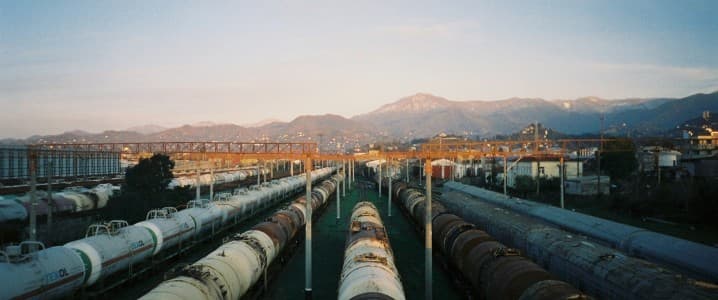
The agreement between Baghdad and Erbil, covering crude exports from Iraq’s northern region via the Iraq-Turkey pipeline to Ceyhan, secures a vital supply stream for the next two years. This extension effectively ensures the continuation of flows that only restarted on September 27th, after a protracted two-and-a-half-year halt stemming from disagreements over revenue distribution. Under the terms, KRG has committed to delivering approximately 190,000 barrels per day (bpd) of crude to Iraq’s State Oil Marketing Organization (SOMO) for international sale. An additional 50,000 bpd is allocated for local consumption within the Kurdistan Region, bringing the total committed throughput to a significant 240,000 bpd. Eight foreign companies operating in the region have already signed on to this framework, signaling widespread industry acceptance. While one major operator has reportedly expressed concerns regarding the repayment of outstanding debts under the prior deal, the broader consensus and commitment from the majority of companies underscore the operational viability and intent behind this extension. This continuity removes a significant overhang of potential supply disruption that could have otherwise materialized, offering clear operational visibility for operators and market participants alike through Q1 2026.
Market Response and Broader Supply Dynamics
Against a backdrop of recent market volatility, the certainty provided by the Iraq-Kurd extension offers a stabilizing force, albeit one that may exert slight downward pressure on crude prices by mitigating supply-side risk. As of today, Brent Crude trades at $90.03, reflecting a -0.44% shift, with a day range between $93.87 and $95.69. WTI Crude concurrently sits at $86.32, down -1.26%, fluctuating between $85.50 and $87.47. These figures represent a notable retreat from recent highs; our proprietary data indicates Brent has dropped sharply from $118.35 on March 31st to $94.86 on April 20th, a significant 19.8% decline in just three weeks. This downward trend, driven by broader macroeconomic concerns and a re-evaluation of demand forecasts, means the additional certainty from Iraq’s northern exports is likely to be viewed as an incremental bearish factor rather than a catalyst for a rebound. The consistent flow of approximately 240,000 bpd from Kurdistan contributes to the overall global supply picture, making it marginally more challenging for prices to sustain upward momentum without significant demand surges or other major supply disruptions.
Investor Focus: What Does This Mean for Your Portfolio?
Investors frequently inquire about the trajectory of crude prices, with questions such as “is WTI going up or down?” and “what do you predict the price of oil per barrel will be by end of 2026?” dominating our reader intent data. The Iraq-Kurd extension provides a partial answer to these critical queries. By ensuring sustained crude flows from a historically volatile region, the deal inherently reduces a key geopolitical premium from the oil price. While not a game-changer on its own, it contributes to a more predictable supply environment, which, ceteris paribus, tends to temper extreme price spikes. For investors, this means adjusting expectations for potential upside driven by supply interruptions originating from Northern Iraq. Companies with significant exposure to the region, particularly those that have signed the agreement, now have clearer operational runways, potentially improving their earnings predictability and investment attractiveness. However, the holdout of one major operator due to debt repayment concerns highlights that while the export pathway is clear, underlying commercial disputes can still introduce specific company-level risks that warrant careful due diligence.
Forward Outlook: Beyond the Immediate Impact
Looking ahead, the stability offered by the Iraq-Kurd deal will frame several key upcoming energy events on our calendar. The OPEC+ Joint Ministerial Monitoring Committee (JMMC) Meeting on April 21st will undoubtedly factor this consistent supply into their broader output policy discussions. While the 240,000 bpd is not a massive volume in the context of global supply, it represents a reliable, non-OPEC+ source that contributes to overall market balance. Investors should watch for any signals from OPEC+ regarding their production quotas, as a decision to maintain or even slightly increase output could reinforce the bearish sentiment if demand growth remains sluggish. Furthermore, the weekly EIA Petroleum Status Reports on April 22nd and April 29th, alongside the API Weekly Crude Inventory data on April 28th and May 5th, will be crucial for gauging how this sustained supply, combined with other global factors, impacts U.S. crude inventories. Finally, the EIA Short-Term Energy Outlook on May 2nd will offer a comprehensive forecast that will likely incorporate the implications of this extended agreement, providing investors with a more refined view of price expectations through 2026. The Baker Hughes Rig Count reports on April 24th and May 1st will also offer insights into future supply potential, though the immediate focus will remain on existing flows and geopolitical stability.


