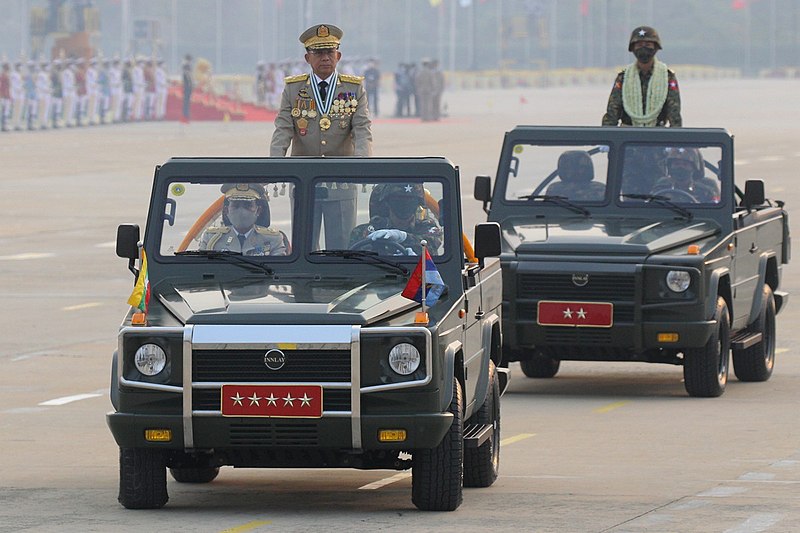
Myanmar’s political landscape is currently dominated by a military junta that seized power in 2021, and upcoming elections slated for late December are widely anticipated to cement their authoritarian rule. This consolidation of power is not merely a conventional political maneuver; it is significantly enhanced by the sophisticated deployment of artificial intelligence (AI) technologies. For oil and gas investors, this presents a unique and escalating layer of risk. The regime’s advanced capabilities in surveillance and information control fundamentally alter the operational environment, making it more opaque, unpredictable, and fraught with ethical considerations. Understanding this AI-powered authoritarianism is critical for any entity considering capital deployment in Myanmar’s energy sector, as it speaks directly to long-term stability, regulatory certainty, and the very security of assets.
The AI-Enhanced Grip on Power
The military junta in Naypyidaw has leveraged AI tools to a remarkable degree, transforming its capacity to suppress dissent and maintain control. Ostensibly deployed for crime prevention, AI-enhanced facial recognition systems are now pervasive in public spaces, enabling authorities to identify, track, and monitor individuals with unprecedented efficiency. These systems can scan faces in real-time, cross-referencing them against criminal databases and meticulously collecting data on movements and behaviors across cities, all without public knowledge or consent. This comprehensive surveillance compromises privacy and severely restricts the ability of citizens to engage in public protest without fear of immediate detection and reprisal. Furthermore, the regime utilizes AI solutions to monitor and decode private messages across online forums, effectively stifling digital activism and restricting the flow of information. For foreign oil and gas companies, this omnipresent digital and physical dragnet signifies a deeply controlled environment where the rule of law is subservient to regime security. Such a context introduces severe operational risks, from potential data security breaches for companies to the arbitrary targeting of local staff or partners, all under the guise of maintaining national security.
Global Market Volatility Meets Localized Authoritarian Risk
The situation in Myanmar, while specific, adds to a complex global energy market already grappling with significant volatility. Geopolitical instability in any producing region, however small, contributes to the overall risk premium factored into global crude prices. As of today, Brent crude trades at $91.87, reflecting a substantial daily decline of 7.57% and having seen a wide range from $86.08 to $98.97 within the day. Similarly, WTI crude has experienced a sharp drop to $84, down 7.86%, after trading between $78.97 and $90.34. This recent market movement follows a broader downward trend for Brent, which has fallen from $112.57 on March 27th to $98.57 just yesterday, marking a 12.4% decrease over 14 days. Such pronounced price swings underscore the market’s sensitivity to supply and demand signals, as well as geopolitical tensions. For oil and gas investment in high-risk zones like Myanmar, this global volatility is a critical backdrop. When global crude prices are under pressure, the economics of operating in a politically unstable and ethically compromised environment become even more challenging, demanding higher risk-adjusted returns that may simply not be achievable. The junta’s AI-powered entrenchment only solidifies the perception of long-term instability, making capital commitments increasingly difficult to justify in a fluctuating market.
Addressing Investor Concerns in a Repressive Climate
Our proprietary reader intent data reveals that investors are keenly focused on understanding the future trajectory of oil prices, with questions like “What do you predict the price of oil per barrel will be by end of 2026?” frequently surfacing. There is also significant interest in the specifics of global supply management, evidenced by inquiries such as “What are OPEC+ current production quotas?” While these macro-level concerns dominate the discourse, the micro-risks in specific jurisdictions like Myanmar are equally vital for portfolio construction and risk management. The junta’s AI-enhanced control creates an operating environment where regulatory decisions can be arbitrary, contracts potentially renegotiated under duress, and property rights vulnerable. Companies face heightened reputational risks due to their association with a regime accused of widespread human rights abuses facilitated by these very technologies. Investors must weigh the potential for future sanctions, divestment pressures, and the long-term viability of projects in a country where the social license to operate is severely eroded. The ability of the regime to track and suppress dissent with AI means that any local opposition to energy projects could be met with swift and severe force, escalating project risks beyond traditional parameters. For investors seeking long-term value, the ethical and operational complexities of navigating an AI-powered authoritarian state like Myanmar demand a level of scrutiny far exceeding conventional due diligence.
Navigating Future Uncertainties and Strategic Responses
Looking ahead, the next two weeks present several key events that will shape the global energy market, all while the unique risks in Myanmar continue to evolve. The OPEC+ Joint Ministerial Monitoring Committee (JMMC) meeting today, April 17th, followed by the full Ministerial Meeting tomorrow, April 18th, are pivotal. Decisions regarding production quotas will directly impact global supply levels and pricing stability, influencing the attractiveness of all investment opportunities, including those in frontier markets. Subsequent data releases, such as the API Weekly Crude Inventory on April 21st and 28th, the EIA Weekly Petroleum Status Report on April 22nd and 29th, and the Baker Hughes Rig Count on April 24th and May 1st, will provide further insights into demand trends and drilling activity. While these macro indicators offer a broad market compass, investors must simultaneously integrate the granular, yet profound, risks present in Myanmar. The junta’s sustained and AI-bolstered control implies that the current repressive environment is not a temporary phase but a deeply entrenched system. For oil and gas companies, this means future investment strategies in Myanmar must account for sustained political instability, potential international isolation, and the inherent ethical dilemmas of operating alongside an AI-enhanced authoritarian state. Prudent investment strategies will increasingly prioritize rigorous ESG (Environmental, Social, and Governance) assessments, robust scenario planning, and a clear understanding of exit strategies, given the unpredictable and technologically sophisticated nature of the regime’s control.
In conclusion, Myanmar’s oil and gas sector presents a high-stakes investment proposition, magnified by the military junta’s sophisticated application of artificial intelligence to consolidate power. This unique blend of political repression and technological enablement creates an unparalleled risk profile. From the omnipresent surveillance that stifles dissent to the potential for arbitrary governance and significant reputational damage, the challenges are formidable. For investors, integrating this deep understanding of AI-powered authoritarianism into their due diligence process is no longer an optional extra but an absolute necessity. The long-term viability and ethical standing of any energy project in Myanmar hinge on a realistic appraisal of these complex and evolving dynamics, making it one of the most challenging environments for capital deployment in the global energy landscape.