Electrification’s Long Shadow: Siemens’ Megawatt Charger and the Future of Oil Demand
The energy transition continues to accelerate, with technological advancements consistently pushing the boundaries of what’s possible in sustainable mobility. A recent development from Siemens, the introduction of its Sicharge Flex product family, particularly with its support for the new megawatt charging standard (MCS), represents a significant milestone. This innovation, capable of delivering power output up to 1.68 MW, is not merely an incremental improvement in EV charging; it targets the heavy-duty transport sector – a bastion of diesel consumption. For oil and gas investors, this signifies a tangible step towards the long-term erosion of crude demand, especially in the diesel market, forcing a re-evaluation of future growth trajectories and investment strategies.
The Megawatt Shift: Accelerating Heavy-Duty EV Adoption
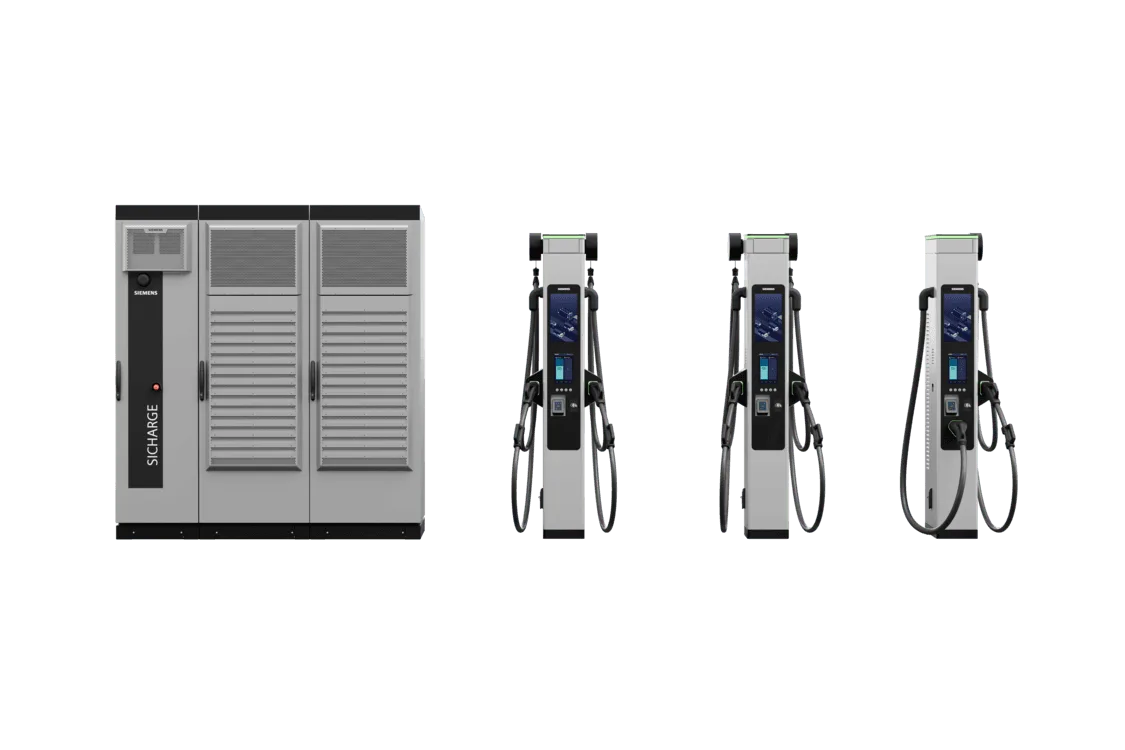
Siemens’ Sicharge Flex system is designed for the rigorous demands of electric trucks and buses, a segment where charging speed and power output are paramount to operational viability. The system’s impressive maximum output of 1.68 megawatts at 1,500 A significantly surpasses initial megawatt charging offerings from competitors. For instance, Alpitronic’s HYC1000 delivers 1 MW, while ABB and Kempower’s MCS stations achieve 1.2 MW, and Power Electronics’ unit provides 1.44 MW. This leading capability from Siemens means that once the necessary grid infrastructure and compatible vehicles become more widespread, the bottleneck of charging time for heavy-duty electric fleets could be dramatically reduced. While the full 1.68 MW for a single vehicle requires optimal conditions, the sheer capacity and flexible, decentralised architecture (dispensers up to 300 meters from the control cabinet) signal a serious commitment to electrifying long-haul and commercial transport. Such technological leaps underscore the structural shifts impacting global oil demand, even as near-term volatility dominates headlines. As of today, Brent Crude trades at $90.38, reflecting a significant daily drop of 9.07%, while WTI Crude mirrors this sentiment at $82.59, down 9.41%. These immediate price movements are driven by near-term supply/demand dynamics and macroeconomic factors, but the underlying current of electrification, exemplified by innovations like Sicharge Flex, continues to build long-term pressure on the commodity.
Investor Concerns and the Long-Term Price Outlook
The introduction of high-power charging solutions like Sicharge Flex directly feeds into the long-term demand concerns that occupy many investors. Indeed, investors are increasingly asking about the future trajectory of crude prices, with a common question circulating this week being “what do you predict the price of oil per barrel will be by end of 2026?” While immediate market factors dictate daily fluctuations, the strategic deployment of such advanced charging infrastructure points to a future where a significant portion of current diesel demand could be displaced. The 14-day Brent trend, which saw prices decline from $112.78 on March 30th to $90.38 by April 17th, illustrates how quickly market sentiment can shift, influenced by both geopolitical events and a growing awareness of these structural energy transitions. Markus Mildner, CEO eMobility, Siemens Smart Infrastructure, emphasized that Sicharge Flex “marks a significant milestone in our journey to build a comprehensive and sustainable E-Mobility ecosystem,” a vision that directly competes with the conventional fossil fuel ecosystem. Investors must weigh the potential for a continued decline in oil prices as these electrification trends mature, moving beyond passenger vehicles into the heavy-duty sector.
Navigating Near-Term Catalysts Amidst Structural Shifts
While the long-term demand picture is being reshaped by technologies like megawatt charging, the immediate future for crude prices remains highly sensitive to traditional supply-side signals. Investors are keenly awaiting the upcoming OPEC+ Meeting scheduled for April 19th. The outcome of this full ministerial meeting, particularly any adjustments to production quotas, will be critical in setting the tone for the market and addressing investor questions about OPEC+’s current production strategy. Following this, the API Weekly Crude Inventory reports on April 21st and 28th, along with the EIA Weekly Petroleum Status Reports on April 22nd and 29th, will provide crucial insights into short-term supply and demand balances in the U.S. market. Furthermore, the Baker Hughes Rig Count on April 24th and May 1st will offer an indication of future drilling activity. These near-term events will likely drive significant price movements in the coming weeks. For example, gasoline prices, which currently stand at $2.93 per gallon, down 5.18% today, are sensitive to both crude prices and refined product inventory levels reported in these weekly updates. Savvy investors must therefore maintain a dual perspective, understanding that while these immediate catalysts will dictate short-term trading opportunities, the structural demand pressures from electrification, spearheaded by innovations like Siemens’ Sicharge Flex, will increasingly define the long-term investment landscape for crude oil and its derivatives.
Strategic Implications for Oil & Gas Portfolios
For investors heavily exposed to traditional oil and gas, the rise of megawatt charging for heavy transport necessitates a proactive assessment of portfolio resilience. Companies with significant refining capacity geared towards diesel production, or those with upstream assets heavily reliant on sustained demand growth, face increasing headwinds. The strategic response could involve diversification into new energy ventures, investments in carbon capture technologies, or a sharper focus on capital efficiency and shareholder returns from existing, high-margin assets. Conversely, opportunities emerge in the infrastructure sector, particularly for companies involved in grid upgrades, renewable energy generation to power these charging networks, and manufacturing of the charging technology itself. The transition will not be linear, with existing challenges such as grid capacity and vehicle availability still needing to be overcome. However, the relentless pace of innovation, exemplified by Siemens’ leading position in megawatt charging, confirms that the direction of travel for global energy demand is firmly set towards decarbonization. Investors must continue to monitor both the immediate market dynamics and the profound, long-term technological shifts to position their portfolios effectively in this evolving energy landscape.