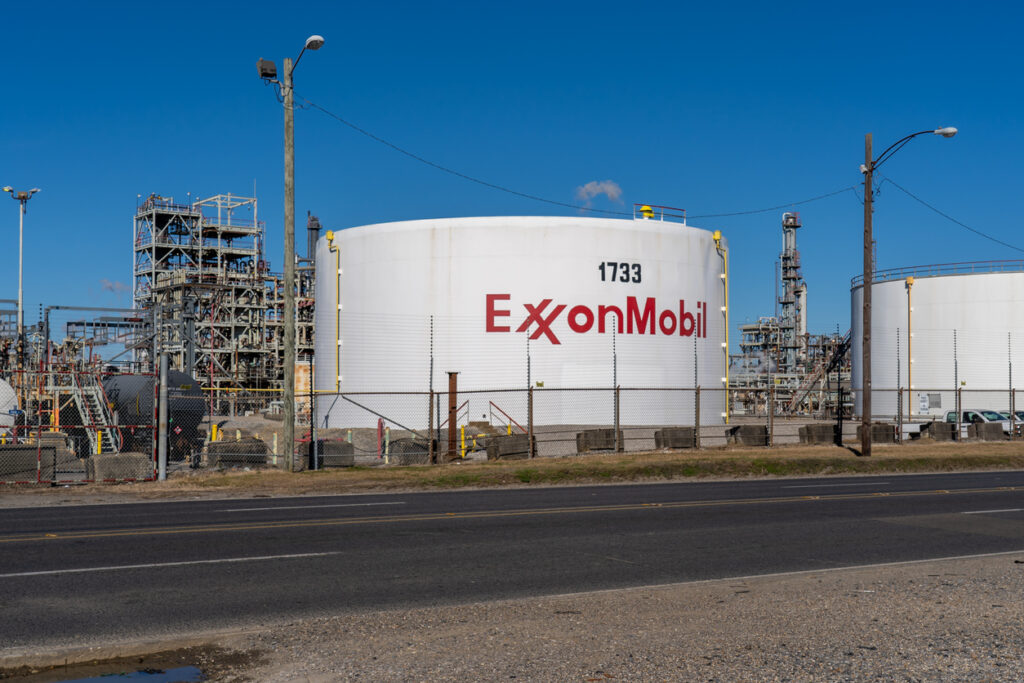
The global energy landscape is perpetually shaped by a complex interplay of market forces, geopolitical tensions, and regulatory shifts. For investors tracking major oil and gas players, the latest confrontation between a leading US energy giant and the European Union represents a significant flashpoint. This dispute over ambitious climate-focused legislation not only highlights the growing friction between economic blocs but also compels a deeper look into the operational risks and strategic realignments facing integrated energy companies with extensive global footprints. OilMarketCap.com’s proprietary data reveals a turbulent commodity market, making the regulatory uncertainties in Europe a critical factor for investor consideration.
ExxonMobil’s Decisive Stand Against EU Climate Mandates
At the heart of the current contention is the European Union’s Corporate Sustainability Due Diligence Directive (CSDDD), a landmark regulation adopted last year designed to enforce human rights and environmental standards across corporate supply chains. The directive, in its initial form, proposes stringent penalties for non-compliance, including a baseline fine equivalent to 5% of a company’s global turnover. For a behemoth like ExxonMobil, whose sales reached $339 billion last year, such a penalty translates to a staggering $16.95 billion – a sum CEO Darren Woods bluntly described as “bone-crushing.”
ExxonMobil is not merely seeking amendments to the CSDDD; its leadership demands the regulation’s complete revocation. This uncompromising stance stems from the company’s assertion that the law would effectively compel it to apply EU environmental standards to its worldwide operations, extending Brussels’ regulatory reach far beyond its borders. Furthermore, the company highlights a history of mounting regulatory burden in Europe, with Woods noting that the firm has divested, shut down, or exited nearly 19 operations due to what it perceives as business-stifling red tape. This proactive retreat, combined with the recent pause of a €100 million ($118 million) investment in European plastic recycling due to separate draft EU rules, underscores a strategic re-evaluation of the company’s commitment to the European market amidst an increasingly challenging regulatory environment.
Geopolitical Friction and US Diplomatic Pressure
The dispute has quickly escalated beyond a corporate-regulatory disagreement, evolving into a significant point of contention between Washington and Brussels. ExxonMobil’s CEO has taken the company’s concerns directly to US President Donald Trump and other administration officials involved in trade and EU policy. This direct engagement has prompted the US administration to raise CSDDD as a key issue in ongoing trade negotiations with the European bloc, underscoring the perceived threat to American companies operating internationally. The simmering tension is reflective of broader transatlantic trade and regulatory disagreements, with the US recently considering unprecedented sanctions against EU officials over unrelated tech legislation.
Adding another layer to this geopolitical dynamic, US lawmakers are actively seeking mechanisms to shield American enterprises from the extraterritorial implications of the CSDDD. Senator Bill Hagerty from Tennessee, for instance, introduced a bill in March specifically designed to defend US companies from being forced to comply with the directive. This legislative action from Washington signals a concerted effort to push back against what is viewed as overreaching European regulation, transforming a corporate grievance into a broader diplomatic and economic battleground. Investors should recognize this not just as a company-specific issue, but as an indicator of increasing regulatory balkanization that could impact global business models.
Market Volatility Meets Regulatory Headwinds
Amidst this unfolding regulatory drama, the broader energy market continues its dynamic shifts, creating a complex backdrop for investor decision-making. As of today, Brent crude trades at $98.17 per barrel, reflecting a 1.23% intraday dip, with prices oscillating within a range of $97.92 to $98.67. This daily fluctuation comes against a backdrop of significant price movement over the past month, with Brent retreating over 12% from $112.57 on March 27th to $98.57 on April 16th. Similarly, WTI crude is currently trading at $89.76, down 1.55%, within its daily range of $89.57-$90.26.
Our proprietary reader intent data reveals that investors are keenly focused on these price movements, frequently asking about current Brent crude prices and the underlying models driving these responses, alongside intense interest in OPEC+ production quotas. This indicates a strong desire for clarity on market fundamentals and pricing mechanisms. For energy majors like ExxonMobil, navigating such commodity price volatility is standard operating procedure. However, the added layer of regulatory uncertainty in a major economic region like Europe introduces a distinct and potentially severe risk factor that can complicate capital allocation strategies and impact long-term valuation. The decision to pause a significant European investment due to regulatory concerns serves as a tangible example of how these legislative headwinds can directly influence capital expenditure and strategic growth, even as global energy demand remains a key driver for investor outlook.
Navigating Upcoming Events and Future Investment Pathways
The coming weeks are poised to bring critical developments on both the market and regulatory fronts, demanding close attention from oil and gas investors. On the market side, the immediate focus includes the OPEC+ Joint Ministerial Monitoring Committee (JMMC) meeting today, April 17th, followed by the full Ministerial Meeting on April 18th. These gatherings are crucial for understanding potential shifts in supply strategy, which could significantly impact crude prices. Further insights into market balances will arrive with the API Weekly Crude Inventory report on April 21st and the EIA Weekly Petroleum Status Report on April 22nd, followed by the Baker Hughes Rig Count on April 24th, providing a pulse on North American production activity.
However, running in parallel with these fundamental market indicators are the equally critical developments concerning the EU’s CSDDD. EU countries and lawmakers are scheduled to begin negotiations on proposed changes to loosen the policy next month. This timeline is pivotal. The outcome of these negotiations will directly influence the regulatory environment for ExxonMobil and other global companies operating within or supplying to the European Union. Investors must consider whether the EU will significantly soften the directive, potentially alleviating some of ExxonMobil’s concerns, or if it will largely maintain its ambitious stance, further entrenching the current friction. The resolution, or lack thereof, will be a bellwether for how integrated energy companies approach future investments in the region, particularly those related to energy transition and sustainability initiatives, where regulatory clarity is paramount for long-term capital deployment. For investors, understanding this interplay of market fundamentals and regulatory evolution is key to positioning portfolios strategically in a dynamic global energy sector.