Market Volatility Meets Long-Term Clarity
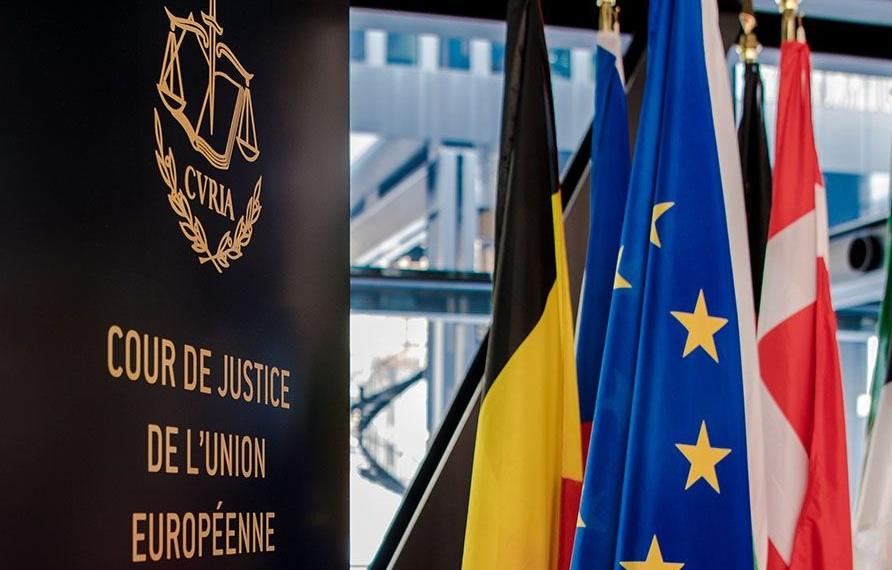
This week, crude markets have experienced significant downward pressure, with Brent Crude currently trading at $90.38, a sharp decline of 9.07% today, and WTI Crude at $82.59, down 9.41%. Over the past fortnight, Brent has fallen from $112.78 on March 30th to its current level, representing an 18.5% drop. This volatility underscores the unpredictable nature of global oil supply and demand dynamics, influenced by geopolitical tensions, economic forecasts, and inventory data. Amidst this short-term uncertainty for crude, the EU court’s decision on the Taxonomy offers a contrasting signal of long-term stability and investment direction, particularly for natural gas. By explicitly acknowledging that “certain economic activities in the fossil gas sectors can, under certain conditions, contribute substantially to climate change mitigation,” the ruling de-risks gas-related investments within the EU. This isn’t a free pass for all gas projects, but rather a green light for those meeting stringent environmental criteria, such as replacing higher-emitting fuels or supporting renewable integration. For integrated energy companies with substantial European gas portfolios, this translates into improved access to sustainable finance, potentially unlocking capital for critical transition infrastructure.
Strategic Investment Pathways and Upcoming Catalysts
The EU Taxonomy ruling has profound implications for investment strategy, particularly as the energy sector looks ahead to key events. While this weekend’s OPEC+ Joint Ministerial Monitoring Committee (JMMC) and Full Ministerial meetings on April 18th and 19th will undoubtedly dominate discussions around crude supply quotas and near-term market balances, the Taxonomy decision sets a long-term framework for gas demand within the EU. For investors, this clarity means that capital flows, traditionally hesitant due to regulatory ambiguity around gas, can now be channeled more confidently into projects that meet the Taxonomy’s “do no significant harm” criteria. This could include investments in gas-fired power plants designed for eventual hydrogen conversion, or infrastructure supporting cleaner gas extraction and transport. Looking further ahead, regular reports like the API Weekly Crude Inventory (due April 21st and April 28th) and the EIA Weekly Petroleum Status Report (April 22nd and April 29th) will continue to provide snapshots of the immediate supply-demand picture for oil. However, the Taxonomy ruling influences the structural demand for gas in the EU for years to come, potentially bolstering the investment case for European upstream gas producers and LNG importers, even as global oil markets react to OPEC+ decisions. The ability to label gas projects as “sustainable” significantly improves their attractiveness to a broader pool of capital, enhancing project viability and potentially accelerating the retirement of coal-fired generation.
Addressing Investor Concerns on Gas’s Future and Company Valuations
Our proprietary reader intent data reveals a consistent theme among investors this week: questions about the future trajectory of oil prices and the performance of major energy players. Specifically, investors are asking, “what do you predict the price of oil per barrel will be by end of 2026?” and “How well do you think Repsol will end in April 2026?” While the Taxonomy ruling directly concerns gas and nuclear, its implications for the broader energy mix indirectly impact oil. By legitimizing gas as a transition fuel, the EU ensures continued demand for natural gas, potentially alleviating some pressure on oil to fill immediate energy gaps. For companies like Repsol, which have significant integrated operations spanning oil, gas, and renewables, this ruling is a net positive. It provides regulatory certainty for their European gas assets and future investments. Projects that align with the Taxonomy’s strict conditions – focusing on climate change mitigation and adaptation without harming other environmental objectives – can now secure “green” financing, which is often cheaper and more abundant. This enhanced financial accessibility and regulatory endorsement can improve the valuation of companies with strong gas portfolios, particularly those actively investing in lower-emission gas production and infrastructure upgrades. Investors should view this as a clear signal that the EU sees a pathway for gas to contribute to its climate targets, creating a more stable, albeit conditional, investment environment.
The Nuance of “Under Certain Conditions” and Future Opportunities
The court’s decision hinges on the critical phrase “under certain conditions,” emphasizing that gas activities must meet specific thresholds to qualify as sustainable. This is not a carte blanche for all fossil gas projects but a strategic opening for those demonstrating a clear path to lower emissions. The EU Commission was “entitled to take the view that nuclear energy generation has near to zero greenhouse gas emissions and that there are currently no technologically and economically feasible low-carbon alternatives at a sufficient scale,” providing a clear rationale for its inclusion. For gas, the conditions typically involve stringent emission limits, a commitment to switch to renewable or low-carbon gases by a certain date, and a contribution to replacing higher-emitting alternatives like coal. This creates a powerful incentive for innovation in carbon capture, utilization, and storage (CCUS) technologies, as well as methane emission reduction across the gas value chain. Investors should therefore focus their due diligence on companies that are not just producing gas, but are actively investing in these mitigation technologies and demonstrating clear plans for decarbonization. The ruling essentially provides a regulatory framework for gas to act as a bridge fuel, offering a defined investment horizon and a pathway for capital towards projects that truly align with a pragmatic energy transition. This clarity on what constitutes “green” gas makes specific investments within the sector significantly more attractive.


