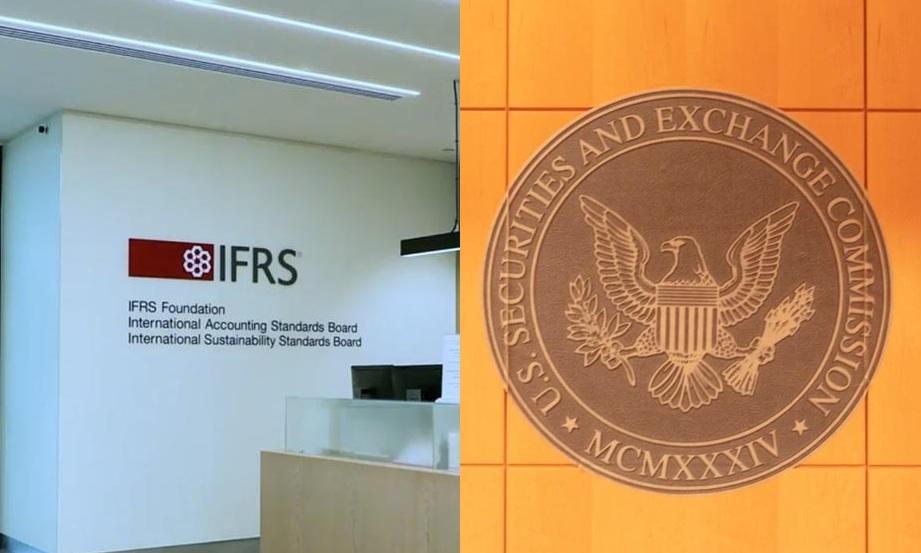
The U.S. Securities and Exchange Commission (SEC) has sent a significant ripple through global financial reporting, signaling a potential rollback of its long-standing acceptance of International Financial Reporting Standards (IFRS) for foreign companies listing in the U.S. This isn’t merely an accounting nuance; it’s a strategic move with profound implications for international oil and gas companies reliant on American capital markets and for investors navigating an increasingly complex regulatory landscape. The core of the SEC’s concern stems from the IFRS Foundation’s expanding mandate to include sustainability reporting through the International Sustainability Standards Board (ISSB), raising questions about the independence and funding of traditional accounting standards.
The SEC’s Stance: Independence, Funding, and ESG Standards
The recent warning from SEC Chair Paul Atkins underscores a growing divergence in global approaches to corporate sustainability reporting. Atkins, who supported the original 2007 SEC ruling allowing foreign issuers to file financial statements using IFRS without U.S. GAAP reconciliation, now expresses reservations. His primary concern centers on the IFRS Foundation’s establishment of the ISSB in 2021 and its subsequent release of inaugural sustainability (IFRS S1) and climate (IFRS S2) reporting standards in June 2023. The SEC’s original 2007 decision was predicated on the IASB’s (International Accounting Standards Board) standalone operation and its ability to secure stable funding. Atkins now explicitly warns that the IFRS Foundation’s expanded remit to fund both the IASB and the ISSB could divert focus and resources from its core responsibility of ensuring robust accounting standards. More pointedly, he cautioned against IFRS standards becoming a “backdoor to achieve political or social agendas,” echoing the broader pushback seen from the SEC against certain climate reporting mandates in recent years.
Market Volatility Meets Regulatory Uncertainty for Energy Investors
This regulatory tremor comes at a time when the energy market is already contending with significant volatility. As of today, Brent crude trades at $98.51, reflecting a 0.89% decline on the day, with a range between $97.92 and $98.67. Similarly, WTI crude has seen a 1.22% drop, settling at $90.06 within a $89.57-$90.26 daily range. This daily dip follows a more substantial trend: Brent prices have retreated by 12.4% over the past 14 days, falling from $112.57 on March 27th to $98.57 on April 16th. Such price movements are standard fare for energy investors, yet they are now compounded by a new layer of regulatory risk. For foreign oil and gas entities, the potential reintroduction of U.S. GAAP reconciliation requirements could significantly increase compliance costs, administrative burden, and potentially impact their cost of capital when accessing the vast U.S. equity and debt markets. This added uncertainty demands a re-evaluation of investment theses for companies with significant international exposure.
Investor Focus: Navigating New Compliance Horizons
Our proprietary reader intent data reveals that investors are consistently seeking clarity on core market fundamentals, such as current Brent crude prices and OPEC+ production quotas. While these questions remain paramount, the SEC’s warning introduces a critical new dimension to due diligence for energy investors. For those holding or considering positions in foreign-domiciled oil and gas companies, the question isn’t just about operational efficiency or geopolitical risk; it’s now about potential shifts in financial reporting frameworks. The prospect of diverging accounting standards – IFRS for global reporting and potentially U.S. GAAP for U.S. listings – presents a tangible challenge. Companies might need to run parallel accounting systems or face increased audit complexities. Investors will need to scrutinize balance sheets and income statements more closely for firms that may have to absorb these additional compliance costs, potentially impacting profitability and shareholder value. This regulatory divergence could also influence M&A strategies, making cross-border transactions more complicated.
Forward Outlook: Strategic Choices Amidst Calendar Events
The coming weeks are packed with events that will shape the near-term energy market. The Baker Hughes Rig Count is due today, April 17th, providing insights into drilling activity. Crucially, the OPEC+ JMMC meeting on April 18th, followed by the full Ministerial meeting on April 20th, will set the tone for global supply. These supply-side dynamics, alongside the API and EIA weekly inventory reports scheduled for April 21st and 22nd, respectively, will continue to drive price action. Against this backdrop, the SEC’s stance forces foreign oil and gas companies to contemplate significant strategic choices. Do they prioritize alignment with global ESG reporting frameworks like the ISSB standards, risking potential friction with U.S. capital market access? Or do they double down on U.S. GAAP compliance to maintain their foothold in American markets? This regulatory uncertainty could lead to a ‘wait and see’ approach for some, potentially slowing capital deployment or delaying IPOs and secondary offerings for international firms. For investors, understanding these strategic dilemmas will be key to identifying resilient opportunities in a market grappling with both fundamental shifts and evolving regulatory landscapes.


