The Seismic Shift in Sovereign Debt: Implications for Oil & Gas Investors
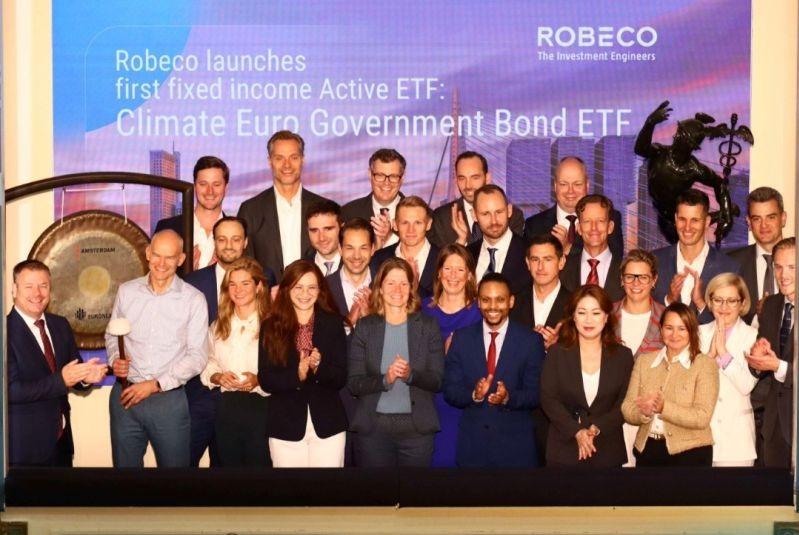
The recent launch of a new Climate Euro Government Bond ETF signals a profound evolution in global capital allocation, extending the climate transition narrative into the bedrock of sovereign fixed income. While traditional oil and gas investors often focus on commodity price volatility and supply-demand fundamentals, instruments like this ETF represent a significant, long-term force reshaping the investment landscape. By directing capital towards nations demonstrating ambitious and credible climate strategies, this new offering from a major asset manager doesn’t just cater to green preferences; it establishes a new benchmark for sovereign risk and return, with inescapable implications for countries heavily reliant on fossil fuel revenues and, by extension, the oil and gas sector itself. For energy investors, understanding this convergence of climate policy and financial markets is no longer optional; it is fundamental to navigating future opportunities and risks.
Capital Reallocation: A New Lens on Sovereign Climate Risk
This innovative ETF, by its very design, introduces a systematic mechanism for re-evaluating national financial health through a climate lens. Its methodology, developed in collaboration with leading index providers and financial institutions, adjusts country weights within its Euro government bond portfolio based on rigorous climate scores and green bond issuance. This means sovereign bonds are now being actively weighted by factors such as a nation’s emission targets, the efficacy of its climate policies—including carbon pricing mechanisms and fossil fuel phase-out plans—and concrete evidence of decarbonization progress. This isn’t merely about ethical investing; it’s about pricing climate-related opportunities and risks directly into sovereign debt. Countries that lag in their climate commitments or fail to issue sufficient green bonds may find their borrowing costs subtly but persistently increasing over time, indirectly pressuring their ability to fund projects, including those in the conventional energy sector. For oil and gas investors, this signifies a crucial shift: the financial viability of upstream, midstream, and downstream projects will increasingly be influenced not just by local economics, but by the climate standing of the host nation and its ability to attract global capital.
Navigating Volatility Amidst Structural Change
The long-term structural shifts driven by climate-aligned financial products exist in stark contrast to the immediate, often turbulent, realities of the commodity markets. As of today, Brent crude trades at $98.51 per barrel, reflecting a modest 0.89% decline on the day, with WTI crude settling at $90.06, down 1.22%. These daily fluctuations are part of a broader trend; Brent crude has shed a significant 12.4%, falling from $112.57 just two weeks ago. This recent price correction underscores the inherent volatility that oil and gas investors must continually manage. While factors such as global economic sentiment, geopolitical tensions, and inventory data drive these short-term movements, the emergence of climate-focused investment vehicles like the new Euro Government Bond ETF signals a deeper, more enduring force. Investors are increasingly faced with the dual challenge of optimizing positions for short-term commodity cycles while simultaneously positioning for a future where capital gravitates towards economies demonstrating robust climate transition pathways. Ignoring either dimension risks significant underperformance in a rapidly evolving energy landscape.
Policy Signals and the Investor’s Focus on Immediate Drivers
Our proprietary reader intent data reveals a clear and consistent focus among oil and gas investors on immediate market drivers: questions about current Brent crude prices, OPEC+ production quotas, and the underlying data sources powering our market insights are paramount. This vigilance is well-founded, particularly with critical events on the horizon. The upcoming OPEC+ Joint Ministerial Monitoring Committee (JMMC) meeting on April 18th, followed by the Full Ministerial meeting on April 20th, will be closely watched for any signals regarding production policy that could immediately impact supply and prices. Similarly, the routine Baker Hughes Rig Count on April 17th and 24th, alongside the API and EIA Weekly Crude Inventory reports on April 21st/22nd and April 28th/29th, provide vital snapshots of supply-side activity and demand health. However, while these events drive short-to-medium term trading strategies, the new Climate Euro Government Bond ETF introduces a new layer of policy influence. Its methodology, which systematically evaluates countries on climate legislation, carbon pricing, and fossil fuel phase-out, effectively translates national climate policy into financial attractiveness. This means that while investors are tracking OPEC+ quotas today, they must increasingly consider how sovereign climate commitments will shape global energy demand and investment flows in the years to come, influencing where future oil and gas capital can realistically be deployed.
The Dual Mandate for Modern Energy Investing
For the astute oil and gas investor, the introduction of this climate transition-focused government bond ETF is not a peripheral development; it is a clear signal of the evolving financial ecosystem. It underscores a growing conviction within the institutional investment community that climate risk is sovereign risk, and sovereign risk impacts all sectors, including energy. This creates a dual mandate for modern energy investing: on one hand, maintaining a keen focus on the immediate, data-driven fundamentals that move crude prices—monitoring Baker Hughes rig counts, tracking API and EIA inventory reports, and anticipating OPEC+ decisions. On the other, it necessitates a strategic awareness of the long-term capital reallocation trends, where sovereign nations are increasingly incentivized to decarbonize, thus potentially altering future demand trajectories for fossil fuels. Successful navigation of this complex landscape requires sophisticated analytics and a holistic view that integrates both the cyclical nature of commodity markets and the structural momentum of the global energy transition. Capital is actively being redirected, creating both significant headwinds and unique opportunities for those prepared to adapt.


