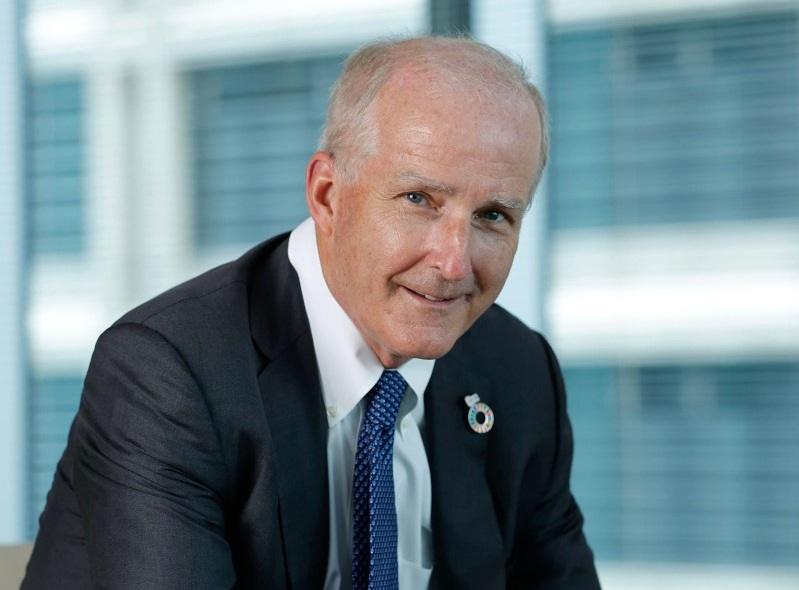
The energy investment landscape is in constant flux, but few leadership changes carry the weight of potential strategic redirection as the recent appointment of David Crane as CEO and Chairman of Generate Capital. This move positions the sustainable infrastructure powerhouse at a critical juncture, navigating both the accelerating demands of the energy transition and the inherent volatility of global commodity markets. With Crane’s extensive background in public energy companies and his recent tenure as Under Secretary for Infrastructure at the U.S. Department of Energy, investors are keenly analyzing how this leadership shift will impact Generate’s trajectory and, by extension, the broader sustainable investment space. The timing is particularly salient, as traditional energy markets grapple with significant price fluctuations, making the stability and long-term value proposition of sustainable assets more compelling than ever.
Navigating Volatility with a New Helm
Crane’s arrival at Generate Capital comes amidst a period of pronounced volatility in the traditional oil markets, a backdrop that underscores the strategic importance of stable, long-term infrastructure investments. As of today, Brent Crude is trading at $90.38 per barrel, marking a sharp 9.07% decline within the day’s range, which saw prices swing from $86.08 to $98.97. Similarly, WTI Crude has fallen to $82.59, down 9.41% on the day. This dramatic daily movement follows a significant 18.5% drop in Brent over the past two weeks alone, from $112.78 to $91.87. This kind of price instability in conventional energy sources naturally prompts investors to seek out assets with more predictable cash flows and insulation from geopolitical and supply-side shocks. Generate, under Crane’s leadership, is now better positioned to capitalize on this sentiment. His deep understanding of both private sector energy operations and public policy, forged during his time at the DOE, provides a unique lens through which to identify and de-risk sustainable infrastructure projects. This expertise is crucial for a firm that already owns and operates over 2,000 assets globally, spanning microgrids, electric vehicles, and advanced waste management systems, all designed to deliver consistent value regardless of crude oil’s daily gyrations.
Accelerating the Sustainable Infrastructure Mandate
Generate Capital was founded on the premise that combining operational expertise with investment acumen creates superior shareholder value while driving the energy transition forward. Crane’s appointment reinforces this core philosophy, as he explicitly cited Generate’s “operational excellence” and “uncompromising commitment to the energy transition” as key motivators for joining. With over $14 billion raised to date and a diverse portfolio touching power, mobility, waste, digital, water, agriculture, and industrial decarbonization, Generate has established itself as a formidable player. Crane’s mandate is clear: “maximizing value in our portfolio, investing in high performing assets, and building our credit business.” This strategic direction suggests a focus on optimizing existing assets for enhanced returns, a disciplined approach to new project selection, and strengthening financing capabilities. The latter, building out the credit business, is particularly noteworthy in the current capital environment, potentially unlocking further growth by enabling more flexible and robust funding for critical infrastructure projects, from smart meters to hydrogen vehicle infrastructure. His experience leading five publicly traded energy companies also suggests a sophisticated understanding of capital markets and investor expectations for growth and profitability.
Addressing Investor Queries Amidst Market Uncertainty
The current investor dialogue, as evidenced by proprietary intent data, reveals a strong focus on the future of traditional energy markets. Questions such as “What do you predict the price of oil per barrel will be by end of 2026?” and inquiries about OPEC+ production quotas highlight a widespread desire for clarity and stability in an often unpredictable sector. In this context, Generate Capital’s strategic positioning under David Crane offers a compelling counter-narrative. While traditional oil and gas investors grapple with forecasting commodity prices, sustainable infrastructure aims to provide more resilient, long-term returns driven by contractual agreements, regulatory support, and fundamental demand for essential services. Crane’s emphasis on “maximizing value in our portfolio” and “investing in high performing assets” directly addresses the need for predictable performance in an investment world hungry for clarity. For investors seeking diversification away from the inherent volatility of crude markets, firms like Generate, with their focus on tangible assets and operational efficiency across the energy transition spectrum, present an increasingly attractive option for portfolio stability and growth.
Forward Momentum: Policy, Projects, and Upcoming Catalysts
Looking ahead, Generate Capital’s strategy under David Crane will unfold against a backdrop of significant energy market events and evolving policy landscapes. The immediate horizon includes critical OPEC+ meetings, with the Joint Ministerial Monitoring Committee (JMMC) convening on April 18th, followed by the Full Ministerial meeting on April 19th. The outcomes of these discussions on production quotas could significantly impact global crude supply and, consequently, price stability, influencing the broader appetite for energy investments. Furthermore, weekly data releases such as the API Crude Inventory on April 21st and 28th, and the EIA Weekly Petroleum Status Report on April 22nd and 29th, will provide ongoing insights into U.S. supply-demand dynamics. These traditional energy market movements, while not directly impacting Generate’s operational assets, shape the macro investment environment. Crane, with his recent experience at the U.S. Department of Energy, is uniquely equipped to anticipate and navigate the interplay between policy, market sentiment, and the accelerated deployment of sustainable infrastructure. His leadership is poised to leverage both the ongoing technological advancements in areas like energy storage and smart grids, and the increasing global commitment to decarbonization, ensuring Generate remains a critical resource for partners, investors, and communities alike in this pivotal next phase of the energy transition.


