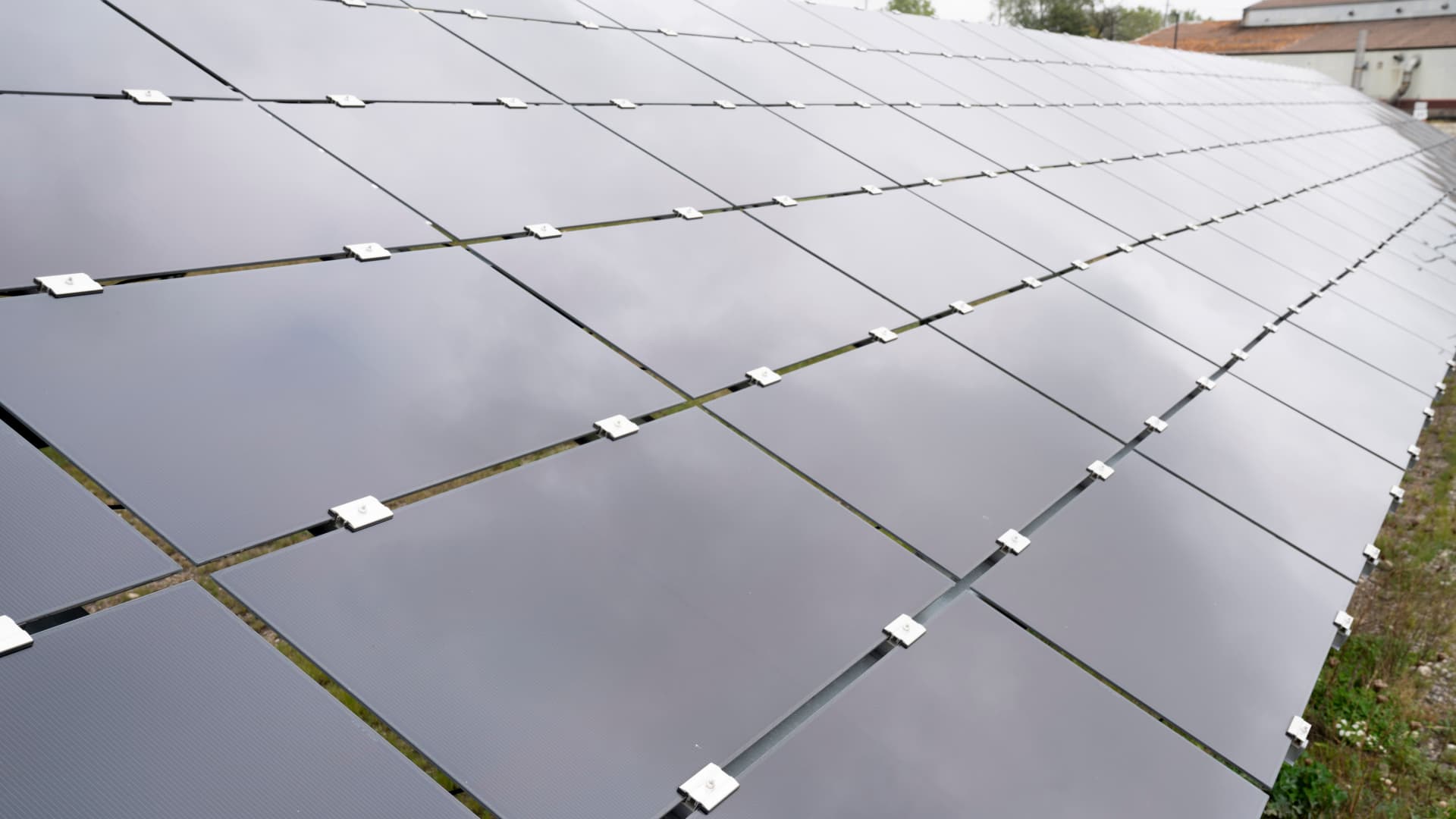
The energy investment landscape is rarely straightforward, and recent market dynamics underscore this complexity. While geopolitical tensions and supply-demand shifts continue to inject volatility into traditional oil markets, a fascinating counter-narrative is emerging within the renewable sector. Despite persistent political headwinds and a bearish sentiment that gripped renewables from 2021, solar power and its associated equities are not just surviving but thriving. Our proprietary market analysis reveals that underlying technology-driven demand and newfound policy clarity are propelling specific solar stocks to outperform, presenting a compelling case for investors seeking growth beyond conventional energy plays.
The AI Gold Rush Fuels Solar’s Ascent
The relentless expansion of artificial intelligence (AI) is proving to be an unexpected boon for the solar industry, positioning equipment manufacturers as the quintessential “picks and shovels” plays in this modern gold rush. AI data centers demand vast and ever-increasing amounts of electricity, and the tech sector’s preference for clean energy sources aligns perfectly with solar’s capabilities. Solar energy projects are often quicker and more cost-effective to deploy than other large-scale electricity generation methods, making them an ideal solution for powering these energy-hungry facilities. This fundamental, technology-driven demand is creating a robust tailwind for key players. For instance, First Solar and Nextracker, both prominent solar equipment manufacturers, are particularly well-positioned. First Solar has already seen its stock gain 14% this year, while Nextracker has surged more than 80%, demonstrating significant outperformance even amidst broader market skepticism towards renewables. This strong performance signals improving investor sentiment, which has been recovering since May as the market begins to recognize the undeniable economic and strategic advantages of solar in a power-hungry digital economy.
Policy Clarity Unlocks Domestic Manufacturing Advantage
For months, the specter of policy uncertainty loomed over the renewable energy sector, with investors fretting over the future of critical tax credits. However, that uncertainty has largely given way to clarity with the passage of the One Big Beautiful Bill Act (OBBB) in July. This legislative development has been a game-changer, largely de-risking the policy environment for solar investments. Critically, the OBBB Act maintained the manufacturing tax credits for solar equipment that were initially established, providing a significant advantage to companies with domestic production capabilities. This policy stability ensures that solar projects can qualify for investment and production credits through 2030, provided construction commences by July 2026. Moreover, the Foreign Entity of Concern (FEOC) provisions, which bar U.S. clean energy tax credits for companies linked to specific nations like China, have been deemed workable by analysts. This combination of sustained incentives and manageable compliance frameworks directly benefits U.S.-based manufacturers like First Solar and Nextracker, enhancing their competitive edge and fostering potential industry consolidation and product innovation.
Solar’s Resilience Amidst Broader Energy Volatility
While solar stocks demonstrate robust growth, it’s crucial to contextualize this performance within the broader energy market. As of today, Brent Crude trades at $90.38 per barrel, marking a significant daily decline of 9.07%, with a day range between $86.08 and $98.97. Similarly, WTI Crude is at $82.59, down 9.41% today, fluctuating between $78.97 and $90.34. Gasoline prices have also dipped to $2.93, a 5.18% decrease. This current market snapshot reflects considerable bearish pressure on traditional crude oil, extending a trend seen over the past fortnight where Brent has fallen from $112.78 on March 30th to $91.87 on April 17th. This substantial -$20.91 drop, or -18.5%, highlights the persistent volatility and geopolitical sensitivity inherent in fossil fuel markets. In stark contrast, solar’s performance, driven by fundamental demand for clean power and a more stable domestic policy environment, offers a compelling narrative of resilience. For investors grappling with the unpredictable swings of crude prices, solar equities present an opportunity for diversification and exposure to a growth segment whose drivers are largely distinct from the short-term supply-demand dynamics impacting traditional hydrocarbons.
Forward Outlook: Navigating Upcoming Events and Investor Insights
Our proprietary reader intent data offers a unique window into what our sophisticated investor base is currently contemplating. We’ve observed a strong focus on future price predictions, with many asking “what do you predict the price of oil per barrel will be by end of 2026?” and seeking clarity on “OPEC+ current production quotas?” These questions underscore the market’s ongoing preoccupation with crude oil supply dynamics, especially as we approach critical upcoming events. This weekend, the OPEC+ Joint Ministerial Monitoring Committee (JMMC) meets on April 18th, followed by the full OPEC+ Ministerial Meeting on April 19th. The outcomes of these gatherings will undoubtedly shape production policies and significantly influence crude price trajectories for the coming months, directly addressing our readers’ most pressing inquiries. Furthermore, the API Weekly Crude Inventory reports (April 21st, 28th) and the EIA Weekly Petroleum Status Reports (April 22nd, 29th), alongside the Baker Hughes Rig Counts (April 24th, May 1st), will provide crucial insights into immediate supply and demand balances within the traditional energy sector. While these events will dominate short-term oil & gas sentiment, the underlying growth drivers for solar, anchored in AI demand and stable policy frameworks, offer a distinct investment thesis. For those building a diversified energy portfolio, understanding the interplay between these diverging market forces is paramount, identifying opportunities where fundamental demand, rather than geopolitical flux, dictates long-term value.