The Floating Liquefied Natural Gas (FLNG) sector is on the cusp of a transformative growth phase, positioning itself as a pivotal solution in the global energy transition. Once viewed with skepticism due to early technical hurdles and significant cost overruns, FLNG technology has matured rapidly, demonstrating impressive reliability and increasingly competitive economics. Our analysis indicates that global FLNG capacity is projected to triple by 2030, reaching an estimated 42 million tonnes per annum (MMtpa) and expanding further to 55 MMtpa by 2035 – a nearly fourfold increase from the 14.1 MMtpa recorded in 2024. This dramatic expansion is not merely a forecast; it reflects a fundamental shift in how the industry approaches the monetization of natural gas, especially from challenging or remote reserves. For astute investors, understanding the drivers behind this surge and the evolving landscape of FLNG projects is crucial for identifying compelling opportunities in the coming decade.
FLNG’s Journey from Niche to Mainstream: Maturing Technology and Economics
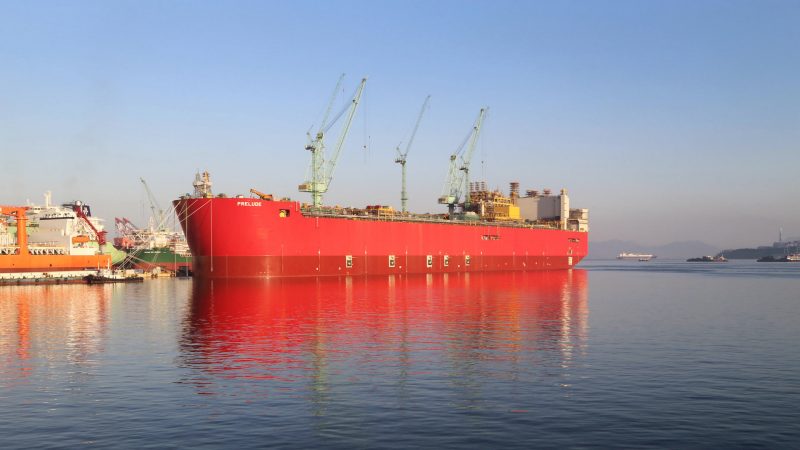
The narrative of FLNG has evolved significantly from its early, often problematic, beginnings. Initial projects, such as Shell’s Prelude, faced considerable challenges, marked by substantial cost overruns that pushed liquefaction capital expenditure to an exorbitant $2,114 per tonne. These “teething issues,” as they were often described, created a perception of FLNG as a high-risk, unproven technology. However, the sector has since undergone a remarkable transformation. Operators and engineers have gained invaluable experience, streamlining processes and optimizing designs. This learning curve has directly translated into improved operational performance and a dramatic reduction in project costs.
Current data underscores this maturation. FLNG terminals commissioned before 2024 achieved an average utilization rate of 86.5% throughout 2024 and maintained a robust 76% into 2025. These figures are now comparable to the performance of established global onshore LNG facilities, a testament to the technology’s newfound reliability and efficiency. Furthermore, capital expenditure per tonne for new FLNG developments has fallen sharply, aligning more closely with onshore alternatives. Proposed projects along the US Gulf Coast, for instance, now average around $1,054 per tonne for liquefaction. Even projects like Delfin FLNG in the US and Coral South FLNG in Mozambique, similar in scale, report competitive liquefaction costs of $1,134 per tonne and $1,062 per tonne, respectively. The most compelling cost reductions are seen in vessel conversion projects, where repurposing existing Moss-type LNG carriers has driven capex levels down to $640 per tonne for Tortue/Ahmeyim FLNG, $500 per tonne for Cameroon FLNG, and $630 per tonne for Southern Energy’s FLNG MK II. This diverse range of project types and their significantly improved economics highlight FLNG’s enhanced viability across various investment profiles.
Navigating Volatility: FLNG’s Appeal Amidst Broader Energy Market Trends
The broader energy market continues to present a complex picture for investors, marked by persistent volatility. As of today, Brent crude trades at $90.38 per barrel, representing a notable 9.07% decline within the day’s range of $86.08 to $98.97. This intraday swing follows a significant 14-day trend where Brent has shed over 18%, dropping from $112.78 on March 30th to $91.87 just yesterday. Similarly, WTI crude stands at $82.59, down 9.41% today, and gasoline prices have also seen a 5.18% dip to $2.93. Such fluctuations inevitably lead investors to question the stability of future energy prices, with our proprietary reader intent data revealing a consistent focus on predicting oil prices by the end of 2026 and understanding the implications of OPEC+ production quotas.
In this environment of price uncertainty for crude, the FLNG sector offers a compelling proposition within the natural gas value chain. The rising global demand for LNG, driven by energy security concerns and the transition away from higher-carbon fuels, provides a robust long-term demand floor. FLNG projects, by unlocking previously stranded gas reserves and offering flexible, quicker deployment compared to traditional onshore facilities, are uniquely positioned to capitalize on this demand. Their ability to adapt to shifting market dynamics and provide a stable supply source for gas markets can offer a degree of resilience against the broader volatility seen in crude markets. For investors seeking exposure to the growing natural gas economy with enhanced flexibility and increasingly de-risked technological profiles, FLNG represents a strategic entry point.
Upcoming Catalysts and Strategic Positioning for Growth
The FLNG sector’s projected growth trajectory is supported not only by technological advancements and market demand but also by a series of ongoing and upcoming events that shape the global energy landscape. Investors are keenly watching developments that could influence supply-demand balances and investment sentiment. The upcoming OPEC+ Joint Ministerial Monitoring Committee (JMMC) meeting on April 18th, followed by the full Ministerial Meeting on April 19th, will provide critical insights into global crude oil production policy. While primarily focused on oil, these decisions invariably ripple through the entire energy complex, influencing overall sentiment and the perceived attractiveness of capital-intensive projects across the board.
Furthermore, weekly data releases such as the API Crude Inventory reports (due April 21st and 28th) and the EIA Weekly Petroleum Status Reports (April 22nd and 29th) offer granular views into immediate supply-demand dynamics within the U.S. market, a key player in global LNG exports. Likewise, the Baker Hughes Rig Count (April 24th and May 1st) provides an early indicator of upstream activity and future production trends. For FLNG, these data points collectively inform decisions regarding new project sanctioning, particularly for those targeting export markets. The inherent flexibility of FLNG allows developers to respond more swiftly to these market signals, deploying assets where gas resources are abundant and demand is strong, without the extensive lead times and fixed infrastructure commitments of onshore alternatives. This agility, coupled with the proven ability to tap into challenging offshore reserves across Africa and Asia, positions FLNG as a high-growth segment capable of adapting to the evolving energy matrix and capturing market share in a dynamic global gas market.