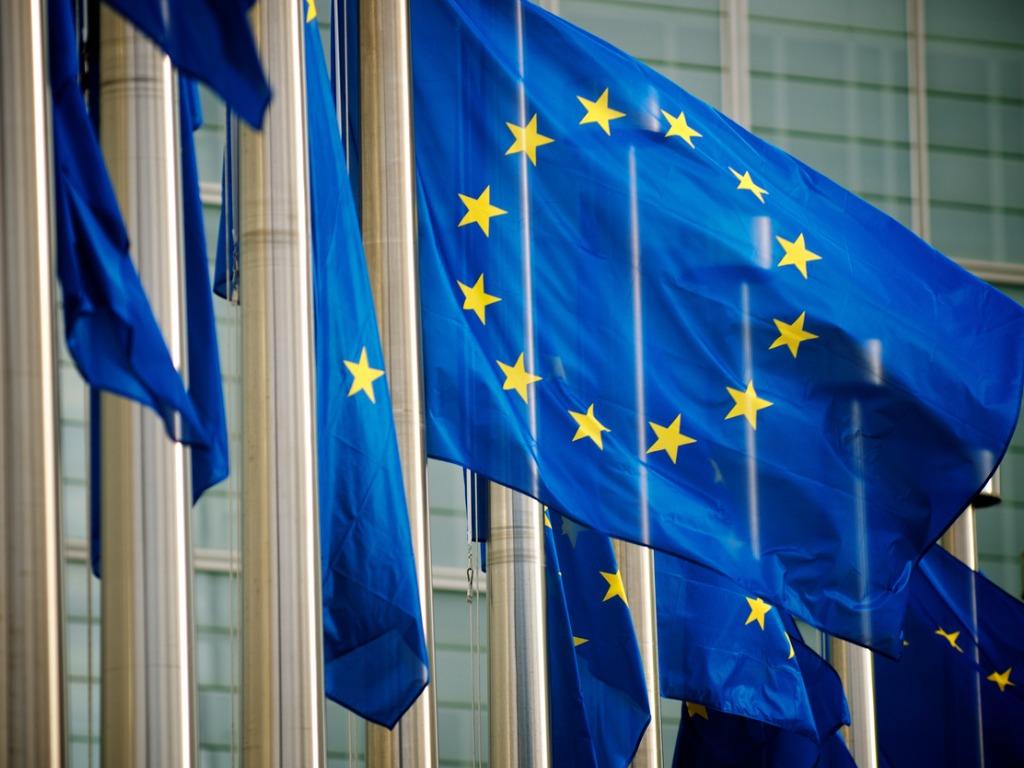
The European Union is engaged in a critical endeavor to reshape its industrial landscape, a move with profound implications for energy companies operating within its borders. At the heart of this initiative is a concerted push for regulatory simplification, spearheaded by the European Commission’s “Competitiveness Compass.” While global energy markets grapple with acute volatility, the EU’s internal policy shifts, such as the recently announced Call for Evidence for a new “environmental omnibus proposal,” demand close attention from investors. This analysis dives into the details of the EU’s evolving regulatory framework, assessing its potential impact on operational costs and investment strategies for the oil and gas sector, particularly against the backdrop of dynamic commodity prices and upcoming market catalysts.
EU’s Regulatory Reset: A Bid for Competitiveness
The European Commission’s “Competitiveness Compass” outlines an ambitious roadmap aimed at bolstering Europe’s productivity and global standing. A core tenet of this strategy is the significant reduction of administrative burdens for businesses, targeting at least a 25% cut for all companies and a more substantial 35% for Small and Medium-sized Enterprises (SMEs). This commitment has already manifested in initiatives like “Omnibus I,” launched in February 2025, which sought to streamline sustainability reporting and due diligence obligations across key directives such as the Corporate Sustainability Reporting Directive (CSRD), the Corporate Sustainability Due Diligence Directive (CSDDD), the Taxonomy Regulation, and the Carbon Border Adjustment Mechanism (CBAM).
The re-evaluation of these foundational sustainability frameworks, including discussions around raising company size thresholds for inclusion, signals the EU’s serious intent to alleviate compliance pressures. While Omnibus I faced scrutiny regarding its consultation process, the ongoing “new Call for Evidence” for an upcoming “environmental omnibus proposal” reinforces the sustained momentum behind this simplification drive. For energy companies, especially those with extensive European operations, these changes are not merely bureaucratic adjustments; they represent potential shifts in capital allocation, operational efficiency, and ultimately, profitability. Investors are keen to understand how these evolving regulations will impact the fundamental cost structures of companies like Repsol, for instance, which has significant European downstream and refining assets. The prospect of reduced reporting, monitoring, and auditing costs could free up capital for strategic investments or shareholder returns, directly influencing a company’s financial performance.
Navigating the New Environmental Omnibus: Impact on Industrial Emissions and Waste
The current “Call for Evidence” specifically targets areas crucial to heavy industry, including the circular economy, industrial emissions, and waste management. The Commission is exploring measures such as rationalizing reporting obligations under the Waste Framework Directive, harmonizing rules for extended producer responsibility (EPR) requirements, and streamlining environmental assessments to tackle permitting challenges. The stated objective is clear: to reduce administrative burdens and associated costs for companies without compromising environmental objectives. This delicate balancing act holds particular significance for the oil and gas sector, which is inherently involved in complex industrial processes, energy consumption, and byproduct management.
Refineries and petrochemical plants, for example, face stringent regulations concerning industrial emissions and waste. Any simplification that reduces the cost of compliance, permits, or reporting in these areas could directly improve their operating margins. Consider the harmonization of EPR rules; this could mean a more predictable and less fragmented regulatory landscape for companies managing packaging or other waste streams across multiple EU member states. For investors, monitoring the specifics of these proposals, which were initially targeted for adoption in Q4 2025 but remain an active area of input gathering, is paramount. The outcome will directly influence the operational expenditure and capital investment decisions of energy majors and independent producers with significant European footprints, influencing their long-term competitiveness in a market increasingly focused on both financial and environmental performance.
Market Volatility and Regulatory Certainty: An Investor’s Dual Challenge
The EU’s push for regulatory simplification unfolds against a backdrop of significant volatility in global commodity markets. As of today, Brent Crude trades at $90.38 per barrel, marking a sharp 9.07% decline in a single trading session, with its day range stretching from $86.08 to $98.97. Similarly, WTI Crude has fallen by 9.41% to $82.59, moving between $78.97 and $90.34. This dramatic price compression extends beyond crude, with gasoline prices also dropping 5.18% to $2.93. Looking at the broader trend, Brent has shed $20.91, or 18.5%, over the past 14 days, falling from $112.78 on March 30th to $91.87 on April 17th.
This acute market downturn highlights the precarious environment in which energy companies operate. For investors asking about the price of oil per barrel by the end of 2026, the current volatility underscores the challenge of long-term forecasting. In such a dynamic environment, regulatory certainty, or the promise of reduced administrative overhead, becomes an even more attractive proposition. Lower compliance costs in the EU could provide a much-needed buffer against fluctuating commodity prices, allowing companies to sustain profitability even during periods of price weakness. Conversely, prolonged uncertainty or unexpected burdens could exacerbate the impact of market dips. Therefore, while global supply and demand fundamentals drive price, the EU’s regulatory landscape significantly influences the profitability and investment attractiveness of companies exposed to it, acting as a crucial internal lever for performance.
Upcoming Catalysts and the Path Forward for EU Policy
The interplay between immediate market drivers and longer-term policy shifts creates a complex environment for energy investors. While the EU’s “environmental omnibus” proposals are still in their input-gathering phase, with original adoption targets for Q4 2025 now likely undergoing revision or extension, near-term events will continue to dictate market sentiment. This weekend, the OPEC+ Joint Ministerial Monitoring Committee (JMMC) meets, followed by the full Ministerial Meeting. These gatherings are critical for assessing global supply intentions, especially for investors keen on understanding OPEC+ current production quotas and their impact on global crude balances.
Beyond OPEC+, the coming days bring regular data releases that shape the market narrative: the API Weekly Crude Inventory report on Tuesday, April 21st, followed by the EIA Weekly Petroleum Status Report on Wednesday, April 22nd, and the Baker Hughes Rig Count on Friday, April 24th. These weekly indicators provide crucial insights into U.S. supply and demand dynamics, influencing short-term price movements. For energy companies navigating the EU’s regulatory evolution, the financial health derived from these immediate market reactions will directly impact their capacity to invest in compliance or take advantage of simplified frameworks. Investors must therefore monitor both the macro commodity environment and the granular details of EU policy development. The ongoing Call for Evidence indicates that the EU’s simplification agenda is a continuous process, and its final form will be a significant determinant of operational costs and investment appeal for European energy assets in the years to come.


