The global oil market recently experienced a sharp jolt, as geopolitical tensions in the Middle East threatened critical supply infrastructure, sending crude benchmarks surging. While the initial peak has receded, the underlying risks persist, keeping investors on edge. This analysis delves into the market’s reaction, the recalibration of risk premiums, and what upcoming catalysts mean for oil prices, drawing on our proprietary market insights and reader sentiment data to provide a comprehensive outlook for energy investors.
Geopolitical Flashpoints and Price Volatility
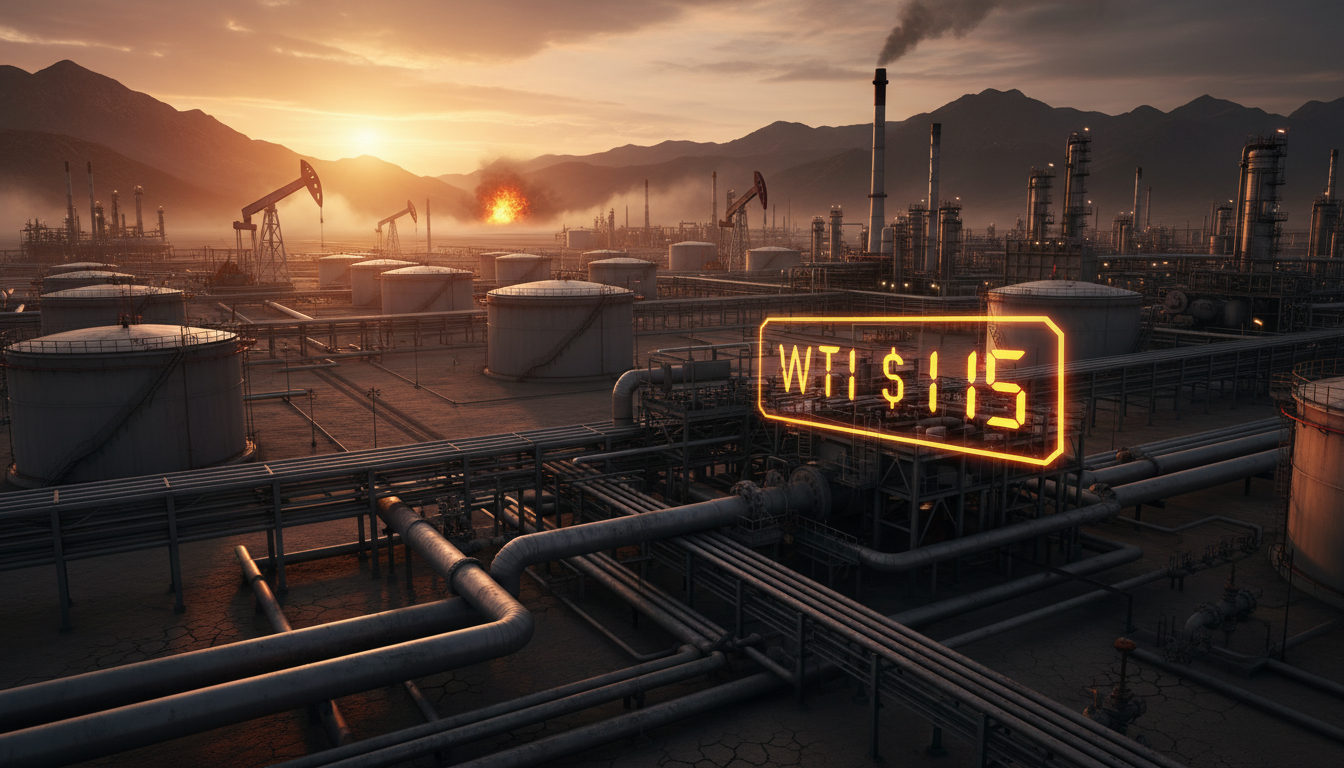
Recent reports of strikes targeting Iran’s Kharg Island, a pivotal export terminal responsible for an estimated 90% of the nation’s oil shipments, sent shockwaves through the market. Coupled with escalating rhetoric and threats of further infrastructure targeting by a US President, WTI crude briefly soared to levels not seen since the 2008 commodity supercycle, breaking past the $115 per barrel mark. This immediate price surge reflected acute fears of substantial supply disruption, moving direct escalation risk into core oil infrastructure.
However, the market’s initial, sharp reaction has since moderated. As of today, Brent Crude trades at $94.16, marking a +0.99% gain within a daily range of $91.39 to $94.86. Similarly, WTI Crude stands at $90.28, up +0.68% for the day, having moved between $87.64 and $91.41. This represents a notable pullback from the crisis-level pricing observed during the peak of the tensions. Our proprietary data indicates that Brent crude, for instance, has declined by $7.07, or 7%, from $101.16 on April 1st to $94.09 on April 21st. This recalibration suggests that while the market acknowledges the severe implications of an actual disruption, it is currently discounting the immediate likelihood of a widespread, sustained shutdown of Iranian exports. Nevertheless, the elevated current prices, still significantly higher than pre-crisis levels, embed a substantial geopolitical risk premium that demands close monitoring.
Decoding Investor Sentiment: Beyond the Headlines
Our first-party intent data from reader interactions reveals a clear focus from investors on navigating this turbulent environment. We’ve seen a surge in questions like, “Is WTI going up or down?” and “What do you predict the price of oil per barrel will be by end of 2026?” This highlights the pervasive uncertainty and the critical need for forward-looking analysis amidst such volatile conditions. The market’s current posture reflects a delicate balance: the immediate fear of a catastrophic supply loss has eased, but the underlying geopolitical friction remains a potent catalyst for future price swings.
Investors are grappling with how to price in not just the risk of actual supply outages, but also the ‘access risk’ – the potential for disruption to shipping lanes, particularly the Strait of Hormuz. With the Islamic Revolutionary Guards Corps (IRGC) issuing counter-threats targeting US and allied infrastructure across the region, and warning against concessions for neighboring states exporting through the Strait, the logistical challenges and potential for broader regional instability are heavily weighed. Unlike the 2008 supercycle, which was primarily demand and capacity driven, the current market dynamics are heavily influenced by access and infrastructure security, making the risk profile unique.
The Enduring Chokepoint: Strait of Hormuz Implications
The strategic importance of Kharg Island cannot be overstated. As the primary terminal for Iran’s oil exports, any sustained disruption there would remove a significant volume from the global supply. Even if flows were to find alternative routes, the severe constraints of moving through the Strait of Hormuz, which typically facilitates 20% of global oil flows, present an insurmountable bottleneck for alternative large-scale export operations. This concentration of risk in such a narrow maritime passage means that even perceived threats can trigger substantial market reactions.
The President’s deadline for Iran to agree to terms, coupled with explicit threats of strikes on additional infrastructure, including power plants and transport networks, underscores the potential for a cascading effect. Should these threats materialize, or if Iran were to act on its warnings to target regional infrastructure, the market would quickly revert to crisis pricing, potentially surpassing the recent peaks. The structural vulnerability of the global oil supply chain to disruptions in this region ensures that the Strait of Hormuz will remain a critical focus for investors, influencing commodity prices well beyond the immediate headlines.
Navigating Future Volatility: Upcoming Catalysts
For investors positioning themselves in the energy sector, understanding the upcoming calendar of events is crucial. While geopolitical tensions provide the overarching narrative, fundamental data releases will continue to shape short-term trading sentiment and provide insights into supply-demand balances. Over the next two weeks, we anticipate several key data points that could influence crude prices:
- On Wednesday, April 22nd, and again on April 29th and May 6th, the EIA Weekly Petroleum Status Report will provide critical updates on US crude oil inventories, refining activity, and product supplied. Unexpected draws or builds can significantly impact prices, especially in a supply-sensitive environment.
- The Baker Hughes Rig Count, due on Friday, April 24th, and again on May 1st, offers a snapshot of drilling activity, indicating future supply trends from North America.
- API Weekly Crude Inventory reports on Tuesday, April 28th, and May 5th, often serve as a precursor to the official EIA data, providing early signals to traders.
- Crucially, the EIA Short-Term Energy Outlook (STEO) on Saturday, May 2nd, will offer updated forecasts for supply, demand, and prices through 2026. This report will be particularly scrutinized by investors seeking answers to questions about the end-of-year oil price trajectory, offering a more comprehensive view of the agency’s expectations for global market dynamics, including the impact of ongoing geopolitical risks.
These events, against a backdrop of persistent geopolitical uncertainty, mean that oil prices are likely to remain highly reactive. Investors should continue to monitor these releases closely, as they will provide tangible data points to either confirm or challenge the market’s current pricing of risk and fundamental strength.


