The sentiment among U.S. oil investors and producers currently reflects a deep sense of unease, particularly within the crucial Texas energy landscape. Despite sporadic geopolitical flare-ups that briefly send crude prices skyward, the underlying market dynamics swiftly pull them back, leaving domestic exploration and production (E&P) companies grappling with challenging economics. This volatility, coupled with broader macroeconomic headwinds, is stifling the willingness of American drillers to significantly boost output, a critical factor for anyone monitoring the oil and gas investment space.
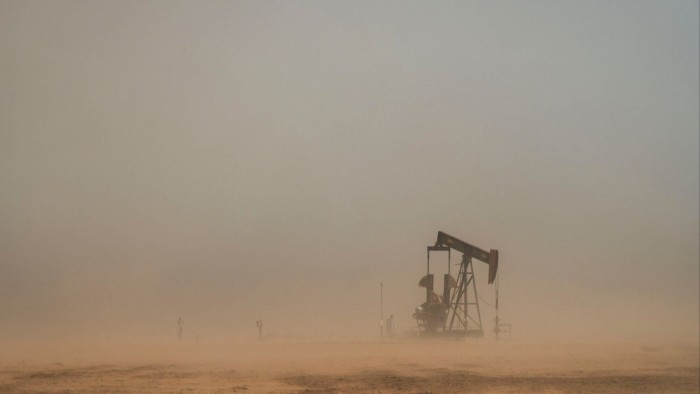
Texas, often considered the bellwether for U.S. energy, is central to this narrative. The state’s Permian Basin, a titan among global oil fields, alone contributes a staggering 51 percent of total American oil production. Thus, the prevailing mood in the Lone Star State directly dictates the trajectory of U.S. crude output and, consequently, global energy market stability. When Texas producers hesitate, the ripple effect is felt across the entire industry value chain, impacting investor confidence and energy stock performance.
Crude Price Swings Dampen Investor Enthusiasm
Recent geopolitical tensions in the Middle East provided a momentary surge in oil prices, offering a glimmer of hope for a sector hungry for sustained gains. West Texas Intermediate (WTI), the U.S. benchmark crude, briefly climbed to $75.14 per barrel during the height of the conflict. However, this rally proved ephemeral. Within less than a week, WTI futures retreated sharply, settling back into the mid-$60s per barrel range, essentially negating the earlier gains.
This rapid reversal highlights a fundamental challenge for oil and gas investors: market resilience to short-term supply shocks. The broader trend for crude prices has been decidedly downward this year, with WTI plunging more than 15 percent from its peak of $80.04 per barrel observed at the start of the year. Several potent factors contribute to this bearish pressure, including the lingering impact of global trade tariffs, a noticeable slowdown in worldwide economic growth, and the strategic decisions by OPEC+ nations to increase their production, adding more barrels to an already well-supplied market.
Savvy oil traders and market analysts demonstrated remarkable agility in processing geopolitical information, often leveraging open-source intelligence to quickly assess the true risk of a prolonged conflict. Their swift determination that the Middle Eastern escalation would be short-lived allowed them to capitalize on the initial price spike by selling into the rally, further contributing to the rapid price correction. This underscores the importance of real-time information and sophisticated market intelligence for navigating today’s volatile energy markets.
Business Conditions Deteriorate for E&P Firms
The impact of these lower, more volatile crude prices is directly translating into tougher operational and financial conditions for U.S. energy companies. Data from the Federal Reserve Bank of Dallas’s quarterly energy survey, a key barometer for the sector, painted a stark picture of declining business sentiment. The business activity index, a comprehensive measure of conditions across the bank’s extensive coverage area (encompassing Texas, southern New Mexico, and northern Louisiana, home to many of the nation’s most prolific oil and natural gas production zones), turned negative in the second quarter. It plummeted from a positive 3.8 in the first quarter to a concerning -8.1.
This negative reading indicates a contraction in overall business activity, signaling that more companies are experiencing worsening conditions than improving ones. For investors, this translates to potential headwinds for revenue growth, profitability, and ultimately, stock performance in the E&P sector.
Adding to the concern, executive uncertainty within the energy industry is on the rise. The Dallas Fed’s uncertainty index for the second quarter surged by four points, reaching 47.1. Such elevated uncertainty often leads to delayed investment decisions, reduced capital expenditure, and a cautious approach to drilling new wells, even when short-term price spikes might otherwise incentivize increased activity.
Policy Environment and Executive Frustration
The survey, conducted between June 18 and June 26, captured a prevailing sense of frustration among energy executives regarding the policy environment. One respondent candidly expressed the sentiment: “It’s hard to imagine how much worse policies and DC rhetoric could have been for US [exploration and production] companies.” This comment reflects a perception among industry leaders that domestic policies are not conducive to fostering a robust production environment.
Another executive highlighted a perceived disparity, noting, “We were promised by the administration a better environment for producers but were delivered a world that has benefited OPEC to the detriment of our domestic industry.” This sentiment underscores a belief that U.S. E&P companies face a less favorable operating landscape compared to their international counterparts, particularly those within the OPEC+ alliance. Such a perception can deter long-term investment in U.S. drilling projects, leading to stagnation in production growth despite the nation’s vast hydrocarbon resources.
For investors, these executive insights are crucial. They point to a challenging policy framework that, from the industry’s perspective, creates an uneven playing field. This can impact the attractiveness of U.S. energy stocks relative to other global energy investments, especially in an environment where OPEC+ continues to exert significant influence over supply dynamics.
Outlook for US Oil Production and Investment
The combination of volatile crude prices, a slowdown in global economic activity, increased production from major international players, and a perceived unfavorable domestic policy environment creates a complex picture for U.S. oil production and investment. The reluctance of Permian Basin and other U.S. producers to significantly increase drilling activity, despite brief price rallies, is a rational response to these multifaceted pressures.
Investors in the oil and gas sector must closely monitor not only crude price movements but also the underlying sentiment and operational realities faced by E&P companies. The Dallas Fed’s survey provides a valuable snapshot of these challenges. Until a more stable price environment emerges, coupled with clearer, more supportive domestic policy signals, U.S. oil production growth may remain subdued. This scenario implies that while the U.S. remains a global energy powerhouse, the investment landscape for domestic E&P companies will likely continue to be characterized by caution and strategic restraint, demanding careful analysis from those allocating capital to energy stocks.