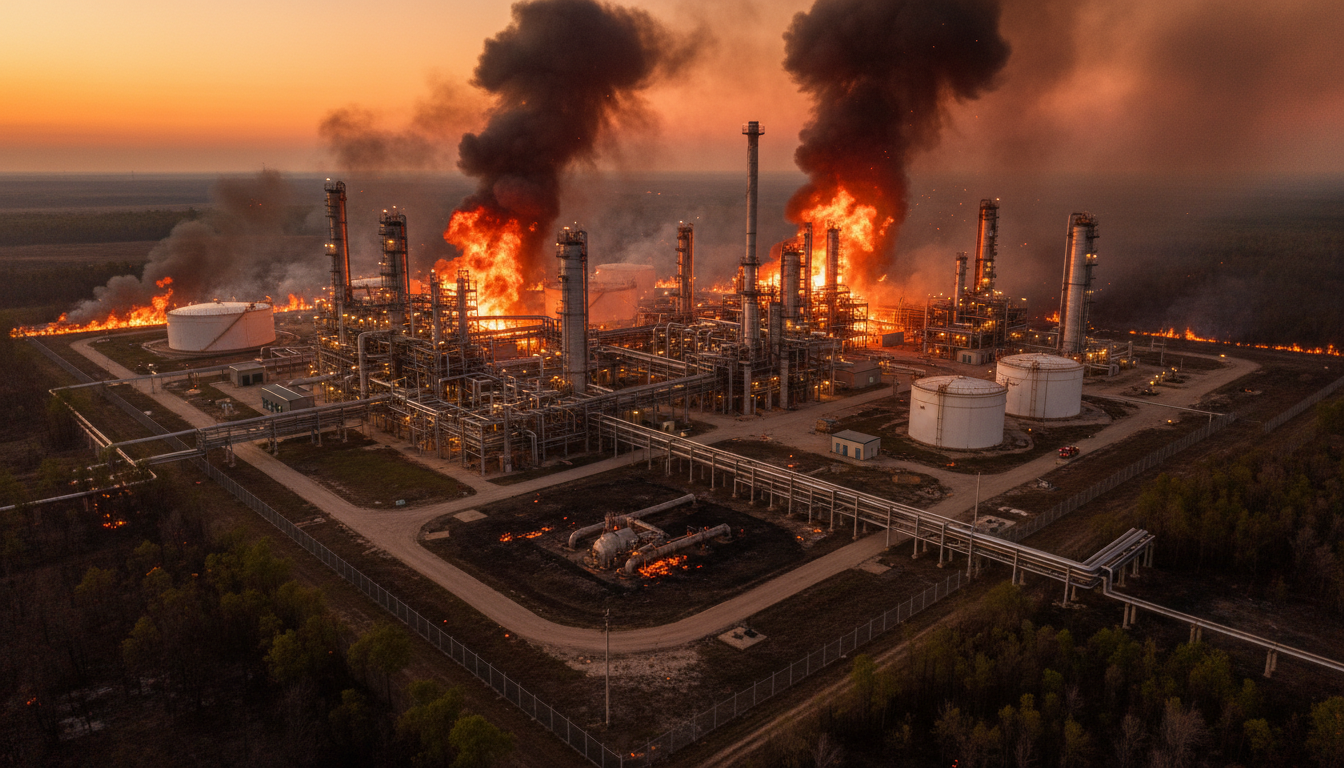
North American wildfires are no longer a seasonal concern confined to predictable windows; they represent a rapidly evolving, year-round threat that fundamentally reshapes the risk landscape for oil and gas investors. The alarming expansion of fire activity, both in duration and intensity, demands a critical re-evaluation of asset valuations, operational contingencies, and long-term investment strategies across the energy sector. This isn’t merely an environmental issue; it’s a direct challenge to the stability and profitability of energy infrastructure and commodity markets, compelling investors to factor in previously underestimated climate-related exposures.
Escalating Physical Risks to Energy Infrastructure
The transformation in wildfire behavior is stark and undeniable. Over the past five decades, weather conditions conducive to wildfires across North America have surged by an alarming 36%. This isn’t just about more fires; it’s about fires burning hotter and longer, with a critical shift in their daily cycle. What once offered a natural overnight reprieve—cooler temperatures and rising humidity aiding firefighting efforts—is now a less frequent occurrence. This phenomenon, highlighted by recent scientific analysis, amplifies operational challenges and financial exposures for companies with substantial land-based assets.
Regions critical to energy production and transmission are experiencing dramatic increases in potential burning hours. California, for instance, now faces an additional 550 hours conducive to fire activity compared to the mid-1970s. Even more concerning are parts of southwestern New Mexico and central Arizona, where researchers observed up to 2,000 more annual hours ripe for wildfires. This extended burn window, even without active fires, signals a growing hazard profile for critical energy assets, including pipelines, processing facilities, and transmission lines located in these vulnerable areas. Incidents like the devastating Lahaina inferno in 2023, igniting in the early hours, and similar patterns observed in Alberta’s Jasper fire in 2024 and Los Angeles fires of 2025, underscore the increased difficulty and danger for emergency crews, leading directly to higher suppression costs and prolonged business interruptions for affected energy companies.
Wildfire Risk and Market Volatility: A Current Snapshot
The financial implications of these escalating risks are complex, influencing everything from insurance premiums to potential supply disruptions. As of today, Brent Crude is trading at $101.5, showing a +3.07% gain, with WTI Crude at $92.65, up +3.32%. Gasoline prices also reflect this upward movement, currently at $3.24, an increase of +3.52%. While these daily gains reflect broader market dynamics, the underlying volatility remains a key concern for investors. Our proprietary data shows Brent crude experienced a -7% decline over the past 14 days, from $101.16 on April 1st to $94.09 on April 21st, highlighting the market’s susceptibility to various influencing factors. Major wildfire events in key producing or refining regions introduce an unpredictable element that could swiftly reverse positive trends or exacerbate downturns, leading to localized price spikes or broader supply chain disruptions. The prolonged fire season, now effectively adding 26 additional high-risk days annually over the last half-century, directly translates to extended periods of operational risk for sectors heavily invested in land-based assets, necessitating a fundamental re-evaluation of traditional risk models and operational contingencies.
Addressing Investor Concerns and Forward-Looking Analysis
Our proprietary reader intent data reveals a keen investor focus on market direction, with common queries such as “is WTI going up or down?” and “what do you predict the price of oil per barrel will be by end of 2026?” These questions underscore a desire for clarity amidst market uncertainty. Wildfires, with their increasing unpredictability and impact on physical infrastructure, introduce a significant variable into these price forecasts. Investors must now factor in the potential for climate-driven disruptions to influence near-term and long-term commodity prices.
Looking ahead, the next few weeks bring several critical data releases that could reflect the early impacts of these heightened risks. The EIA Weekly Petroleum Status Reports on April 22nd, April 29th, and May 6th, along with the API Weekly Crude Inventory reports on April 28th and May 5th, will provide crucial insights into supply and demand balances. Should a major fire event occur in a key production or refining hub, these reports could show unexpected inventory draws or shifts in refinery utilization, directly impacting market sentiment and prices. Furthermore, the Baker Hughes Rig Count on April 24th and May 1st will indicate drilling activity, which could be indirectly affected by operational logistics and permitting challenges in fire-prone regions. The EIA Short-Term Energy Outlook, due on May 2nd, will be particularly critical for its revised forecasts, as it represents an opportunity for the industry to integrate these escalating climate risks into official projections, providing a clearer roadmap for investors.
Strategic Resilience and Investment Opportunities
For discerning oil and gas investors, the escalating wildfire threat is not merely a liability but also a catalyst for strategic re-evaluation and potential investment opportunities. Companies that proactively invest in climate resilience will emerge as stronger, more stable players. This includes capital expenditure dedicated to hardening infrastructure, such as fire-resistant materials for pipelines and processing facilities, enhanced vegetation management protocols along rights-of-way, and the implementation of advanced monitoring systems. Furthermore, undergrounding critical transmission lines, where feasible, offers another layer of protection. Investors should scrutinize company balance sheets for these types of proactive investments, as they signal a commitment to operational continuity and long-term asset protection.
Beyond physical infrastructure, the financial sector is also adapting. Increased insurance premiums and the potential for asset write-downs in high-risk zones will necessitate more robust risk modeling. Companies demonstrating strong ESG frameworks that specifically address climate adaptation and operational resilience in fire-prone areas will likely be viewed more favorably. This includes diversified asset portfolios that reduce concentration risk in vulnerable regions. Ultimately, the companies that can effectively mitigate these evolving wildfire risks, ensuring stability in their operations and supply chains, will be best positioned to deliver consistent value to investors in an increasingly unpredictable energy landscape.


