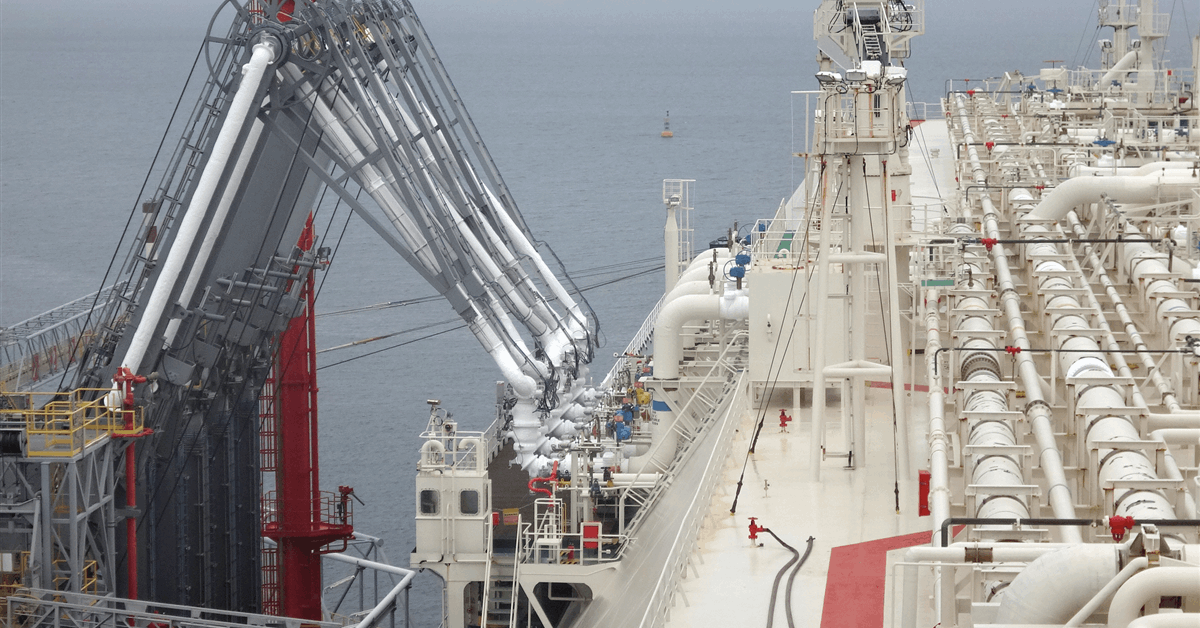
Golar LNG Ltd.’s Gimi floating liquefied natural gas (FLNG) vessel has officially commenced commercial operations, a pivotal moment for the Greater Tortue Ahmeyim (GTA) project and its stakeholders. This milestone triggers a crucial 20-year lease agreement with BP PLC, anchoring a significant long-term revenue stream for Golar and marking a critical de-risking event for the deepwater development off Mauritania and Senegal. After initial production began in February and the first cargo dispatched in April, the project is now ramping up to its contracted annual volumes, injecting fresh LNG supply into a hungry global market and solidifying the region’s role as a new energy exporter.
Gimi FLNG Achieves Commercial Operations, Unlocking Stable Cash Flows
The formal commercial operations date (COD) for the Gimi FLNG vessel signifies the commencement of a substantial 20-year charter agreement, providing Golar LNG with a robust and predictable revenue stream. This long-term contract offers significant financial visibility, a highly attractive attribute for investors in the often-volatile energy sector. The BP-operated Greater Tortue Ahmeyim project, situated in water depths up to 2,850 meters, successfully began onstream operations in January, with LNG production having ramped up to approximately 2.4 million tonnes per annum (mtpa). This figure represents about 90% of the Gimi’s 2.7 mtpa nameplate capacity and aligns with the annual contracted volumes.
Co-venturer Kosmos Energy confirmed the successful ramp-up, noting the dispatch of the second and third cargoes in May and June, with a fourth currently loading. A fifth cargo is anticipated at the start of the third quarter, leading Kosmos to project 3.5 gross cargoes for the second quarter alone. While the project faced delays from its original 2022 target, including a replacement of the subsea contractor, the achievement of COD effectively de-risks the operational phase. BP holds a 56% stake in GTA, with Kosmos Energy at 27%, Senegal’s Petrosen at 10%, and Mauritania’s SMH at 7%, all poised to benefit from these sustained production volumes and the associated cash generation.
Global LNG Dynamics and Investor Demand Signals
The successful launch of the Gimi FLNG comes at a time when global demand for liquefied natural gas remains robust, driven by energy security concerns and the ongoing push for cleaner burning fuels. Investors are actively scrutinizing the market for new supply sources, and the GTA project’s output provides a timely boost. Our proprietary data indicates that investor interest in Asian LNG spot prices remains high this week, reflecting the critical role the region plays in global LNG demand. New projects like GTA contribute directly to balancing the market and can influence price stability, though the long-term nature of Gimi’s contract insulates Golar from immediate spot price volatility.
As of today, Brent crude trades at $95.19, marking a 0.42% increase for the day, with a daily range between $91 and $96.89. This stands in contrast to a recent 14-day trend where Brent softened from $102.22 on March 25th to $93.22 on April 14th. Similarly, WTI crude is trading at $92.36, up 1.18% for the day. While LNG prices operate on distinct market fundamentals, sustained strength in crude oil generally underpins a positive sentiment across the broader energy sector, supporting investment in major infrastructure projects. The stability of long-term LNG contracts, however, offers a different risk profile compared to upstream crude producers, which is often attractive to investors seeking predictable returns amidst fluctuating commodity markets.
Golar’s Strategic Expansion Beyond Gimi: A Blueprint for Growth
Gimi’s commercial operation is not an isolated event but rather a catalyst for Golar’s broader strategic expansion in the FLNG space. Following the Gimi’s COD and the earlier announcement of two FLNG charters in Argentina, Golar is actively accelerating work on its next FLNG units. This includes the positive final investment decision (FID) for the Southern Energy project, which will see the redeployment of FLNG Hilli. Hilli, fully acquired by Golar last year, is currently deployed in Cameroon under a contract expiring in July 2026, and is now set for a new 20-year charter with Southern Energy SA (SESA) in Argentina, expected to commence operations in 2027.
Concurrently, Golar and its partners have secured definitive agreements for another 20-year charter for an MKII-design FLNG vessel, currently undergoing conversion in China. An FID for this unit is expected this year, with deployment targeted for 2028. These successive long-term contracts underscore Golar’s successful pure-play FLNG strategy, providing exceptional revenue visibility and cementing its leadership in the floating liquefaction segment. Investors are keenly watching how these future projects will contribute to Golar’s earnings trajectory, with the company effectively leveraging its existing fleet and conversion expertise to meet growing global LNG demand.
Forward Outlook: Upcoming Market Catalysts and Investor Concerns
Energy investors are constantly evaluating market signals to refine their outlooks, and the Gimi FLNG’s successful operation adds a layer of certainty to the global LNG supply picture. However, broader market dynamics will continue to influence investment decisions. Our proprietary data shows that many investors are currently asking for a base-case Brent price forecast for the next quarter, underscoring the importance of crude market stability in overall energy sector sentiment. The upcoming OPEC+ meetings, with the JMMC scheduled for April 18th and the Full Ministerial Meeting on April 20th, will be crucial. Any decisions regarding production policy could significantly impact crude prices and, by extension, the capital allocation strategies of integrated energy companies involved in both crude and gas.
Furthermore, weekly insights from the API Crude Inventory reports (April 21st, 28th) and the EIA Weekly Petroleum Status Reports (April 22nd, 29th) will offer granular data on crude and product balances, including gasoline, which currently trades at $3.01, up 1.35% for the day. These reports provide vital short-term indicators for supply and demand. Meanwhile, the Baker Hughes Rig Count updates on April 17th and April 24th will provide a real-time pulse on upstream drilling activity, hinting at future production trends. For investors in FLNG assets, while long-term contracts provide stability, these macro events shape the overall investment climate and the perceived risk/reward of deploying capital into the broader oil and gas sector.


