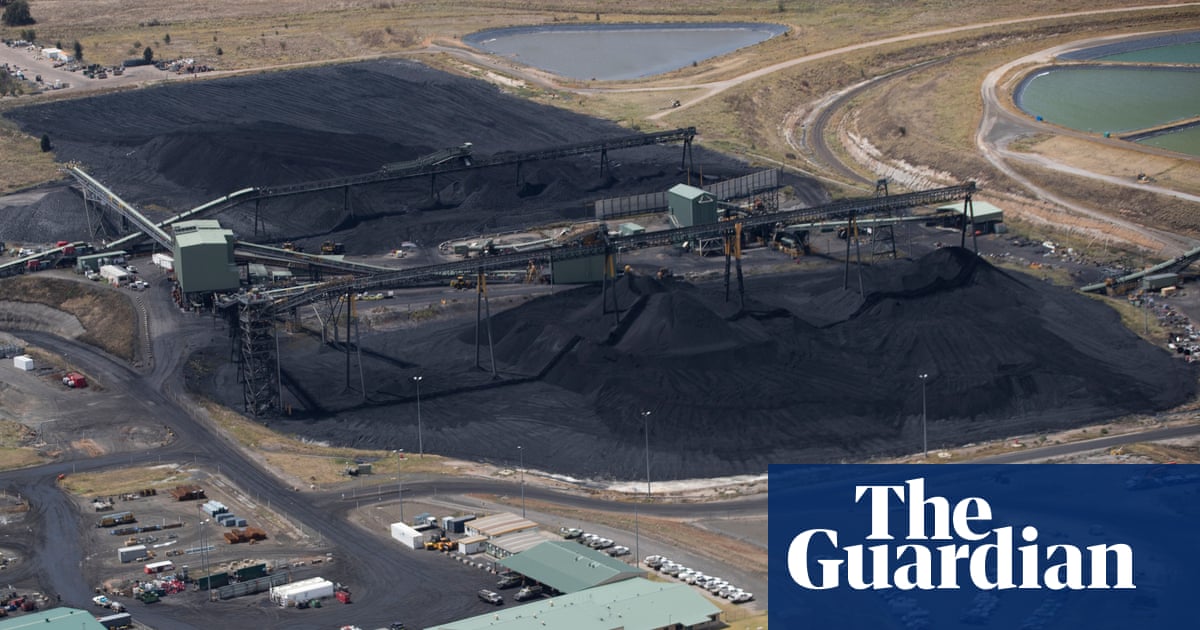
A recent, substantial investment by one of Australia’s largest superannuation funds into Whitehaven Coal has ignited a critical debate among energy investors and ESG advocates alike. AustralianSuper, a fund committed to achieving net-zero emissions by 2050, is reportedly on the cusp of becoming Whitehaven’s largest shareholder, holding an interest not seen in a decade. This move, following a public divestment from the company just six years prior, presents a compelling paradox for those navigating the complexities of the energy transition. For sophisticated oil and gas investors, this isn’t merely a headline; it’s a potent case study in the strategic rationale, financial implications, and reputational risks inherent in today’s evolving energy landscape. Our analysis delves into the fund’s justification, the broader market context, and what this signals for the future of fossil fuel investment.
The AustralianSuper Paradox: Re-engagement with Coal
AustralianSuper’s re-entry into Whitehaven Coal marks a significant strategic pivot, prompting questions about its long-term energy transition strategy. Recent disclosures indicate the fund now owns 70.9 million shares, representing 8.47% of the company’s total shares on issue, valued at approximately $395 million. This aggressive accumulation positions AustralianSuper as Whitehaven’s second-largest shareholder and, notably, signifies a holding nearly triple the combined shares of all other top 30 super funds in their default investment options. This scale of investment is particularly striking given the fund’s public divestment from Whitehaven in 2020, making its current interest the largest in the coal producer in over a decade. Shareholder advocacy groups have swiftly condemned the action, arguing it flies in the face of environmental, social, and governance (ESG) commitments and raises concerns about potential “greenwashing.” Investors must scrutinize whether this move is a calculated contrarian play on overlooked value or a significant misstep in a rapidly decarbonizing global economy.
Deconstructing the “Non-Linear Transition” Argument and Market Realities
AustralianSuper defends its investment by citing Whitehaven’s acquisition of metallurgical coal assets and the broader notion of a “non-linear” energy transition. The fund highlights that metallurgical coal is crucial for steelmaking, a critical component of global industrial growth, while acknowledging thermal coal’s role as a stabilizing source of electricity during the transition. This distinction between metallurgical and thermal coal is important; the former often faces less immediate pressure than the latter. However, the investment’s timing and scale must be viewed against the dynamic backdrop of the broader energy markets. As of today, Brent Crude trades at $95.01, reflecting a slight uptick of 0.23% within a day range of $91 to $96.89. This follows a notable decline of nearly 9% in Brent prices over the past two weeks, from $102.22 to $93.22. This volatility in the crude market underscores the complex, indeed non-linear, energy landscape that AustralianSuper cites. While crude oil and coal are distinct commodities, investor sentiment and capital allocation decisions are often influenced by the overall stability and perceived future of the fossil fuel complex. A fund betting big on coal in a period of crude price fluctuations signals a belief in specific, enduring demand drivers for certain fossil fuels, even as the global energy mix shifts.
Investor Sentiment and the ESG Crossroads
Our proprietary reader intent data reveals a keen focus among investors on forward-looking crude price forecasts, with many asking for a base-case Brent price forecast for the next quarter and the consensus 2026 Brent forecast. This indicates a strong desire for clarity amidst market uncertainty and a need to position portfolios effectively. Against this backdrop, AustralianSuper’s significant coal investment forces a re-evaluation of ESG metrics and diversification strategies within the broader energy sector. While investors are seeking guidance on traditional oil market movements, a major fund’s aggressive move into coal, especially by one with net-zero commitments, directly challenges the prevailing narrative of divestment from fossil fuels. The accusations of “greenwashing” from shareholder advocacy groups resonate strongly, as they highlight the tension between stated environmental goals and actual investment practices. This situation prompts investors to ask critical questions: How do we reconcile a fund’s public commitments with its investment actions? What does this imply for the credibility and effectiveness of ESG frameworks? And, more broadly, does this signal a growing divergence in how different funds approach the “transition” aspect of the energy transition, potentially identifying value where others see only risk?
Forward Implications: Upcoming Events and the Future of Fossil Fuel Investment
Looking ahead, the next two weeks are packed with critical energy market events that could further shape investor perspectives on the entire fossil fuel complex, including coal. The upcoming OPEC+ Joint Ministerial Monitoring Committee (JMMC) meeting on April 18th, followed by the Full Ministerial Meeting on April 20th, will be closely watched for any supply policy shifts that could impact global crude markets. Simultaneously, the routine Baker Hughes Rig Count reports on April 17th and April 24th, alongside the EIA Weekly Petroleum Status Report (April 22nd, April 29th) and API Weekly Crude Inventory data (April 21st, April 28th), will provide crucial insights into supply and demand dynamics in crude. While these events primarily focus on crude oil, their outcomes can have ripple effects across the entire energy investment landscape. A tightening crude market, for instance, might make all fossil fuel assets, including specific coal plays, appear more strategically valuable in terms of energy security. Conversely, a prolonged period of high inventories or demand concerns could intensify pressure on all fossil fuels, including coal. For investors, AustralianSuper’s move may represent a contrarian bet on the enduring, if shifting, role of certain fossil fuels within the global industrial framework, particularly as Chinese industrial demand for inputs like steel continues to influence global commodity markets. The coming weeks will provide further data points to assess the strategic wisdom of such a significant, long-term commitment to coal.


