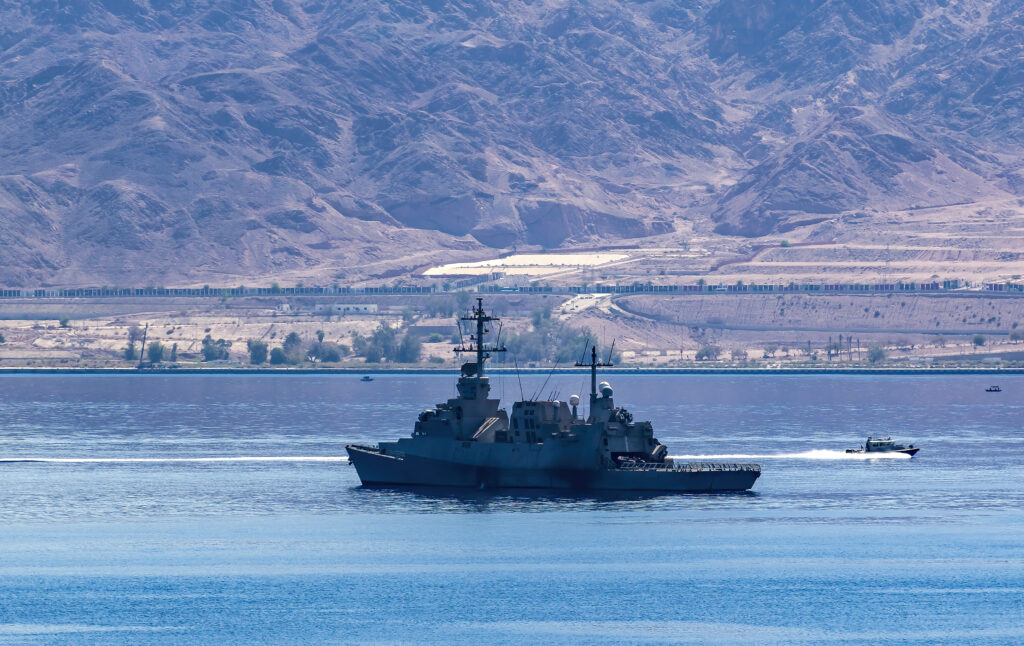
The global oil and gas market often finds itself navigating a complex interplay of supply fundamentals, demand dynamics, and geopolitical flashpoints. In recent days, the Middle East has once again commanded the world’s attention, with heightened tensions between Israel and Iran prompting fears of disruptions to critical energy arteries. Yet, despite these escalations, our proprietary data pipelines at OilMarketCap.com reveal a remarkably consistent picture where it matters most for global crude flows: the Strait of Hormuz. This stability, while a relief, presents a nuanced landscape for investors, influencing immediate price action and setting the stage for upcoming market catalysts.
Hormuz Stability Amidst Regional Volatility: A Supply Backbone Holds Firm
In the wake of recent geopolitical developments, the critical Strait of Hormuz has remained an unwavering conduit for global energy supplies. Our real-time vessel tracking data indicates that the seven-day rolling average for oil tankers exceeding 10,000 deadweight tons transiting the Strait has held steady at approximately 42 to 45 vessels. This consistent flow is further detailed by daily averages of 20-23 vessels entering the Persian Gulf and roughly 22 exiting, alongside stable transits for liquefied petroleum gas (8-10 vessels) and liquefied natural gas (6-8 vessels) carriers. This robust data points to the fundamental importance of the Strait, which accounts for over a quarter of the world’s oil shipments, and underscores Iran’s own vested interest in its uninterrupted operation for export revenue.
This operational resilience in the world’s most vital choke point stands in stark contrast to the volatility many might expect. As of today, Brent Crude trades at $90.38 per barrel, experiencing a notable decline of 9.07% within a day range of $86.08 to $98.97. Similarly, WTI Crude stands at $82.59, down 9.41% with a day range of $78.97 to $90.34. Gasoline prices have also dipped to $2.93, a 5.18% decrease. This downward pressure on prices is striking, especially when considering Brent crude has fallen from $112.78 on March 30th to $91.87 on April 17th, a significant 18.5% drop. The sustained, stable flow through Hormuz appears to be a key de-risking factor, preventing a geopolitical premium from fully materializing and instead allowing market participants to focus on broader supply-demand metrics.
Investor Sentiment and the Disconnect Between Risk and Price Action
Our first-party intent data reveals that investors are keenly focused on understanding the trajectory of oil prices, with questions such as “what do you predict the price of oil per barrel will be by end of 2026?” dominating recent inquiries. This directly reflects the market’s attempt to reconcile high geopolitical risk with falling crude prices. The stability of Hormuz flows, as evidenced by our data, offers a crucial part of the explanation. While the shipping industry remains on alert, the immediate concerns have eased, partly influenced by a perceived two-week window for potential U.S. military intervention, as noted by some reports. This temporary easing of immediate fears has allowed the market to unwind some of the earlier geopolitical premium.
However, the question of long-term price predictions remains complex. For investors evaluating the outlook for integrated oil and gas companies or specific players, the current environment suggests that supply disruptions are not the primary driver of price. Instead, factors like global economic growth, demand elasticity, and the decisions from major producers are taking precedence. The current price action, marked by significant intraday swings but an overall downward trend, indicates a market that is highly sensitive to news but ultimately anchored by the perception of stable crude supply lines.
Upcoming Catalysts: Navigating the Next Fortnight of Energy Events
The coming weeks are packed with critical events that will further shape crude price dynamics, irrespective of the ongoing calm in the Strait of Hormuz. Investors should mark their calendars for the upcoming OPEC+ meetings. The Joint Ministerial Monitoring Committee (JMMC) convenes tomorrow, April 18th, followed by the Full Ministerial meeting on April 19th. These meetings are pivotal, as our readers frequently ask, “What are OPEC+ current production quotas?” and expect insights into potential adjustments. Given the recent price declines and stable supply from the Middle East, the cartel’s stance on current production levels and compliance will be a major determinant of short-to-medium term market direction.
Beyond OPEC+, the market will closely scrutinize weekly inventory data. The American Petroleum Institute (API) will release its weekly crude inventory data on April 21st and 28th, followed by the more comprehensive EIA Weekly Petroleum Status Report on April 22nd and 29th. These reports offer crucial insights into U.S. supply and demand balances, refining activity, and storage levels. Concurrently, the Baker Hughes Rig Count on April 24th and May 1st will provide a barometer for future production trends from North American shale plays. The interplay of these scheduled events, coupled with any shifts in the geopolitical narrative, will provide the next set of definitive signals for crude prices, potentially clarifying the path forward for oil by the end of April and into May.
Strategic Implications for Oil & Gas Investors
For investors monitoring the oil and gas sector, the sustained stability of Hormuz flows mitigates immediate supply-side risks stemming from Middle East tensions. This scenario shifts the focus towards demand-side indicators and the strategic decisions of major producers. Companies with strong refining capabilities or those less exposed to volatile shipping lanes may find the current environment more predictable than those heavily reliant on specific, high-risk transit points. The significant daily price ranges we’ve observed ($86.08-$98.97 for Brent, $78.97-$90.34 for WTI) underscore that while the macro supply picture from Hormuz is stable, the market remains highly susceptible to shifts in demand sentiment or unexpected production adjustments.
Looking ahead, the market’s ability to absorb geopolitical noise without triggering a major supply shock through Hormuz could allow for a more fundamentally driven pricing environment. However, the delicate balance of interests in the region means vigilance is paramount. While short-term data may fluctuate due to factors like loading timings, weather, and even electronic interference on navigation signals, the overarching trend of steady commercial traffic through Hormuz remains a cornerstone of global energy supply. This stability, coupled with upcoming OPEC+ decisions and inventory reports, will be key to shaping the investment outlook for the remainder of 2026, influencing everything from upstream exploration budgets to downstream refining margins.