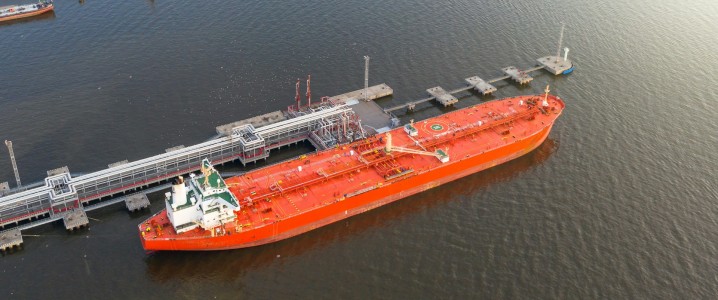
The global energy market finds itself once again at a critical juncture, with recent commentary from Shell’s chief executive, Wael Sawan, underscoring the escalating risks to Middle Eastern supply chains. His remarks highlight a growing imperative for extreme caution in tanker movements through a region already fraught with significant uncertainty. For investors, understanding these evolving dynamics — from explicit geopolitical tensions to insidious navigational hazards — is paramount to positioning portfolios effectively in the coming months.
Geopolitical Volatility and its Immediate Market Echoes
Wael Sawan’s candid assessment that Shell is exercising “very careful” oversight of its shipping operations in the Middle East speaks volumes about the palpable increase in perceived risk. The executive directly linked this heightened vigilance to the recent escalation in tensions between Israel and Iran, which has brought the critical Strait of Hormuz back into sharp focus. This choke point, described aptly as the “artery through which the world’s energy flows,” represents an irreplaceable conduit for a substantial portion of global oil and gas trade. Any disruption, however brief, carries the potential for immediate and severe consequences for global supply and prices.
Despite these grave warnings, the immediate market reaction has been complex. As of today, Brent crude trades at $90.38 per barrel, reflecting a notable 9.07% decline from its opening. Similarly, WTI crude has fallen by 9.41% to $82.59, with gasoline prices also seeing a significant dip. This sharp daily downturn follows an already pronounced downward trajectory for Brent, which has shed $20.91, or 18.5%, over the past two weeks, falling from $112.78 on March 30th to $91.87 just yesterday. The market’s relatively subdued response to the recent direct escalation, despite the CEO’s concerns, suggests that traders are currently holding back from fully pricing in a major supply disruption, perhaps awaiting concrete evidence of damage to critical oil infrastructure in Iran.
Beyond Direct Conflict: The Insidious Threat of Navigational Interference
While the specter of a direct closure of the Strait of Hormuz commands attention, Shell’s CEO also drew focus to a more subtle, yet equally disruptive, threat: electronic system interference impacting ship navigation. This less visible form of disruption can lead to dangerous operational hazards, as evidenced by a recent collision involving two tankers near the Strait of Hormuz, attributed by officials to a “navigational misjudgment.” Such incidents, whether accidental or stemming from deliberate interference, introduce an added layer of complexity and risk for maritime operators in the region.
For integrated energy giants like Shell, which maintain extensive operations across the Middle East, these non-kinetic risks translate directly into increased operational costs, insurance premiums, and potential delays. The requirement to be “very careful” with shipping implies rerouting, enhanced security measures, and a constant reassessment of risk, all of which impact the efficiency and profitability of transporting crude and refined products. This persistent backdrop of operational uncertainty creates a challenging environment for maintaining smooth, predictable supply chains, even in the absence of overt military conflict.
Investor Outlook: Navigating Price Trajectories and Upcoming Catalysts
The current confluence of geopolitical tension and price volatility is naturally prompting significant investor questions. We observe high interest in understanding the future trajectory of oil prices, with many investors actively seeking predictions for crude’s performance by the end of 2026. Furthermore, inquiries about OPEC+ production quotas signal a clear recognition that cartel actions remain a pivotal factor in balancing global supply and demand amidst this uncertainty.
Against this backdrop, the upcoming energy calendar holds particular significance. Investors will be closely monitoring the OPEC+ Joint Ministerial Monitoring Committee (JMMC) meeting scheduled for April 18th, followed immediately by the full Ministerial meeting on April 19th. These meetings are critical for assessing whether the alliance will adjust its production strategy in response to recent price declines and the heightened geopolitical risk. Any shift in quotas could significantly impact market sentiment and price stability. Beyond OPEC+, weekly data releases, such as the API Crude Inventory on April 21st and the EIA Weekly Petroleum Status Report on April 22nd, will provide crucial insights into short-term supply-demand balances in the U.S. Likewise, the Baker Hughes Rig Count on April 24th will offer an early indicator of future drilling activity. These scheduled events, when viewed through the lens of ongoing Middle East tensions, will be instrumental in shaping the market’s perception of future price direction and the performance outlook for energy companies.
Strategic Implications for Energy Portfolios
The insights from Shell’s CEO serve as a stark reminder that the Middle East remains a region of immense strategic importance and inherent volatility for the global energy sector. For investors, this translates into a need for robust risk assessment and a nuanced understanding of how geopolitical events, operational hazards, and market fundamentals intertwine. While the immediate market reaction to recent events has been tempered, the underlying risks to vital shipping lanes and energy infrastructure have undeniably increased. Companies with significant exposure to the region must demonstrate exceptional operational resilience and adaptability.
Moving forward, the ability of global energy markets to absorb shocks from the Middle East will depend on a delicate balance of geopolitical de-escalation, the effectiveness of mitigation strategies by major operators, and the responsiveness of key producers like OPEC+. For long-term investors in oil and gas, maintaining a diversified portfolio and focusing on companies with strong operational track records and geographical diversification remains a prudent strategy in this increasingly unpredictable environment.


