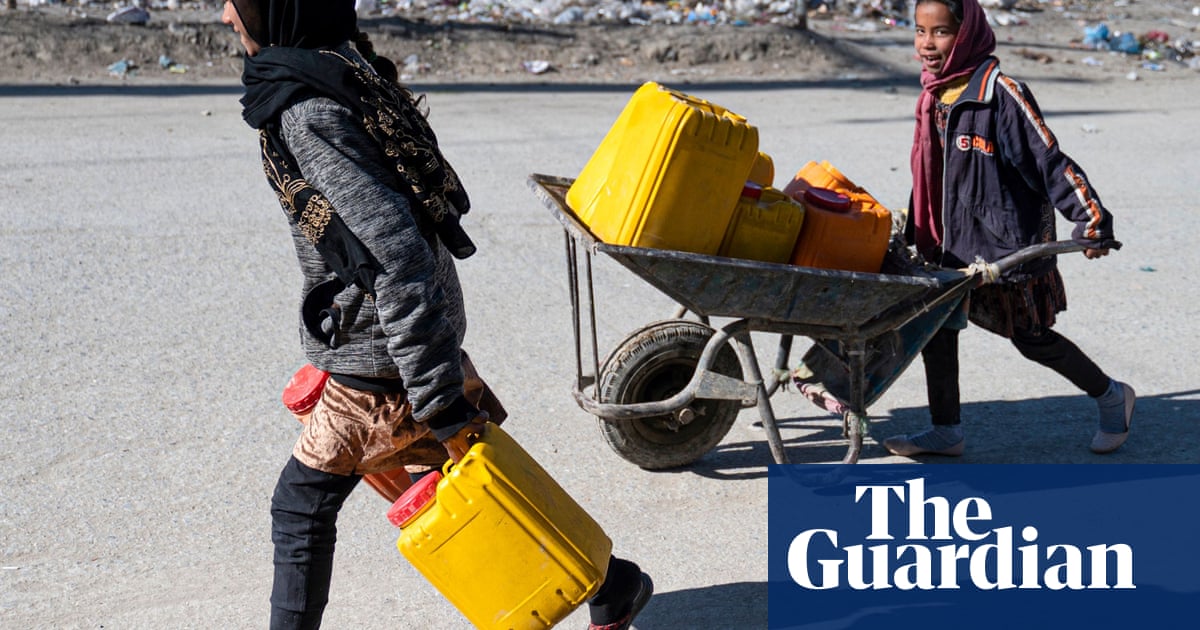
Kabul’s Looming Water Catastrophe: A New Geopolitical Flashpoint for Energy Markets
Kabul, a sprawling metropolis home to seven million people, faces an unprecedented humanitarian crisis that poses significant, yet often underestimated, geopolitical risks for global energy markets. Experts warn the Afghan capital could become the first modern city of its size to completely exhaust its water supply, a dire prediction with far-reaching implications for regional stability and, by extension, the hydrocarbon sector.
The severity of Kabul’s water scarcity is stark. Over the past decade, the city’s critical aquifers have seen their levels plummet by an alarming 30 meters. This rapid depletion is attributed to a confluence of factors, including unchecked urban expansion and the accelerating impacts of climate change. Compounding the issue, nearly half of the city’s boreholes – the primary conduit for potable water for residents – have already run dry. The current rate of water extraction in Kabul now outstrips the natural recharge rate by a staggering 44 million cubic meters annually, an unsustainable trajectory.
If these trends persist, forecasts indicate that Kabul’s entire aquifer system could be fully depleted as early as 2030, presenting an existential threat to its burgeoning population. Dayne Curry, country director for Mercy Corps Afghanistan, highlighted the inevitable consequences: “Without water, people are forced to abandon their homes. The international community’s failure to address Afghanistan’s water needs will only precipitate further migration and deepen the suffering of the Afghan populace.” This looming displacement crisis is a critical factor for energy investors to consider, as mass movements of people frequently destabilize regions and disrupt supply chains.
Economic Strain and Social Unrest Drive Instability
Beyond the sheer lack of water, contamination presents another pervasive challenge. A staggering 80% of Kabul’s groundwater is deemed unsafe for consumption, tainted by high concentrations of sewage, salinity, and arsenic. This dual crisis of scarcity and quality has transformed water access into a daily struggle for residents, impacting household economics profoundly. Many families now allocate up to 30% of their income solely to securing water, and over two-thirds have accumulated debt related to water acquisition. Nazifa, a teacher in Kabul’s Khair Khana district, underscores the hardship: “Afghanistan confronts numerous difficulties, but this water scarcity is among the most severe. Every household experiences hardship, especially those with limited income. Adequate, clean well water is simply unavailable.”
The crisis has also spawned a predatory market. Private enterprises are actively exploiting the situation by drilling new wells and extracting public groundwater resources, only to resell it to desperate city residents at exorbitant prices. Nazifa recounts the dramatic price hike: “We previously paid 500 afghanis (approximately £5.30) every ten days for tanker water. That same volume now costs us 1,000 afghanis. The situation has intensified over the past fortnight, and we fear further price escalations.” Such economic pressures and perceived profiteering are fertile ground for social unrest, which can quickly escalate into broader security concerns relevant to energy asset protection.
Governance Vacuum and Funding Gaps Exacerbate Crisis
Kabul’s population has exploded sevenfold since 2001, growing from less than one million to its current seven million inhabitants, placing immense strain on an already fragile infrastructure. This exponential growth, combined with decades of fragmented governance and a lack of effective regulatory frameworks, has significantly compounded the water crisis. The absence of a robust, centralized authority to manage this critical resource has allowed unsustainable practices to proliferate unchecked.
International efforts to mitigate the crisis are severely hampered by a significant funding shortfall and political impasses. In early 2025, the UN’s office for humanitarian affairs reported that its partners had received a mere $8.4 million of the $264 million required to implement planned water and sanitation programs in Afghanistan. Furthermore, a substantial $3 billion in international water and sanitation funding has been frozen since the Taliban’s return to power in August 2021. The situation has been further aggravated by the United States’ recent decision to cut over 80% of its USAID funding to the country. Dayne Curry accurately observes, “Everything here is profoundly reliant on aid. We can inject millions into short-term water fixes, but without sustainable, long-term solutions and proper governance, the problem will persist.”
Geopolitical Ripple Effects for Energy Investors
For investors monitoring global energy markets, the deepening water crisis in Kabul represents a potent, albeit indirect, geopolitical risk. A humanitarian catastrophe of this magnitude inevitably triggers mass migration, both internally within Afghanistan and externally into neighboring states. Such movements can overwhelm border regions, strain resources in host countries, and fuel existing ethnic or political tensions. This instability can easily spill over into critical energy-producing or transit nations in Central Asia and the Middle East.
The implications for hydrocarbon exploration, production, and transportation are considerable. Increased regional instability can lead to heightened security costs for energy projects, disrupt established supply chains, and deter foreign direct investment. Existing infrastructure, including pipelines and processing facilities, could become vulnerable to sabotage or conflict. Furthermore, the prospect of an enduring humanitarian crisis in Afghanistan could divert international attention and resources from other strategic priorities, potentially shifting geopolitical alignments and increasing the risk premium associated with energy assets in the broader region.
Energy market participants must therefore integrate water security risks into their comprehensive geopolitical assessments. The potential for a resource-driven conflict or widespread societal breakdown in a strategically important region like Afghanistan could introduce unforeseen volatility into global oil and gas prices, impact long-term project viability, and influence the calculus for energy security strategies worldwide. The crisis in Kabul is not merely a local humanitarian concern; it is a developing geopolitical flashpoint demanding close scrutiny from every sophisticated investor in the energy sector.


