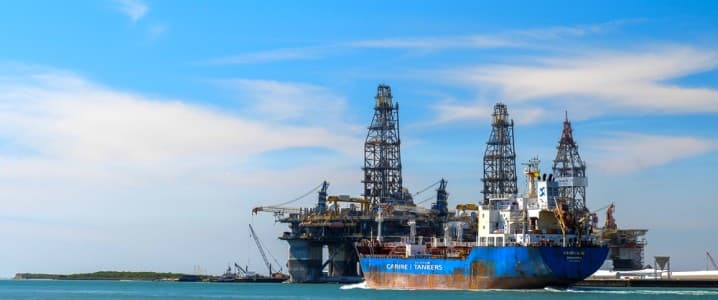
ExxonMobil’s recent deepwater exploration agreement with Trinidad and Tobago marks a significant strategic pivot, signaling the supermajor’s intent to replicate its phenomenal success in Guyana. This multi-billion dollar commitment underscores a renewed confidence in the Caribbean’s hydrocarbon potential, particularly as global energy markets navigate a complex blend of supply constraints and evolving demand dynamics. For investors tracking the long-term growth trajectories of integrated energy giants, this deal offers a compelling glimpse into ExxonMobil’s future upstream strategy and its calculated bets on high-impact exploration in proven, yet under-explored, basins.
Replicating the Guyana Playbook: A Strategic Bet
The sheer scale of ExxonMobil’s commitment in Trinidad and Tobago cannot be overstated. With potential investments reaching an astounding $21.7 billion, and an initial exploration area larger than the nation itself, this venture is a bold statement of strategic intent. The rationale is clear: proximity to the prolific Stabroek block in Guyana, where ExxonMobil has unlocked an estimated 11 billion barrels of reserves and rapidly scaled production to 900,000 barrels daily, targeting an impressive 1.7 million barrels of oil equivalent by 2030. The new Trinidadian exploration area, located northwest of Stabroek, offers the tantalizing prospect of a contiguous, super-sized Caribbean hydrocarbon province.
This isn’t ExxonMobil’s first foray into Trinidadian waters; the company had a presence until 2003, withdrawing after an unsuccessful exploration campaign. However, the energy landscape has dramatically shifted. The lessons learned from Guyana, coupled with advancements in seismic imaging and deepwater drilling technology, provide a stronger foundation for success this time around. The initial $42 million investment for two exploration wells, with the first expected to spud within six months following comprehensive seismic surveys, demonstrates a measured yet ambitious approach. Should exploration prove fruitful, development timelines could even accelerate beyond Guyana’s already impressive pace, potentially offering investors a faster return profile on this substantial long-term bet.
Trinidad’s Role in a Shifting Energy Landscape & Current Market Context
Trinidad and Tobago already stands as the Caribbean’s largest oil and gas producer and ranks 17th globally, with its industry projected to grow at a compound annual rate of 4.4% through 2030. This established infrastructure, a skilled workforce, and a supportive regulatory environment create a compelling backdrop for ExxonMobil’s return. The timing of this major exploration commitment also aligns with a robust, though volatile, global crude market, providing a strong economic incentive for such high-capital ventures.
As of today, Brent crude trades at $99.24 per barrel, reflecting a strong 4.54% increase within the day’s range of $94.42 to $99.84. WTI crude similarly saw a significant rise, hitting $91.03, up 3.29% for the session. This daily surge comes after a notable downturn; Brent crude had trended downwards by 12.4% over the past 14 days, falling from $108.01 on March 26th to $94.58 on April 15th. Such price movements underscore the market’s sensitivity to both short-term supply-demand balances and geopolitical developments. For a supermajor like ExxonMobil, committing to a multi-decade deepwater project amidst this volatility signals a powerful, long-term bullish outlook on global energy demand and the enduring necessity for conventional hydrocarbon supplies. The premium commanded by crude, alongside gasoline prices holding firm at $3.08 per gallon, provides the immediate capital and strategic impetus for ambitious exploration endeavors.
Investor Questions & Forward Outlook: What to Watch Next
Our proprietary reader intent data reveals a keen investor focus on long-term price trajectories, with many asking for a base-case Brent price forecast for the next quarter and the consensus 2026 Brent forecast. ExxonMobil’s Trinidad deal directly feeds into these broader discussions about future supply. A successful exploration campaign here would significantly bolster the company’s long-term production profile, adding to the formidable targets already set for Guyana and potentially reshaping expectations for ExxonMobil’s overall upstream growth.
Looking ahead, several key energy events on our calendar will shape the investment climate for projects like Trinidad. The upcoming OPEC+ meetings, including the Joint Ministerial Monitoring Committee (JMMC) on April 18th and the Full Ministerial Meeting on April 20th, will be critical. Any shifts in production quotas or strategic guidance from OPEC+ could directly influence crude prices and, consequently, the perceived economics of deepwater developments. Furthermore, the consistent stream of data from the Baker Hughes Rig Count (April 17th, April 24th), API Weekly Crude Inventory (April 21st, April 28th), and EIA Weekly Petroleum Status Reports (April 22nd, April 29th) will provide ongoing insights into North American production trends and inventory levels. While these reports focus on shorter-term dynamics, they contribute to the overall market sentiment that dictates capital allocation for major projects. A sustained period of inventory draws or robust demand signals would naturally lend more confidence to the long-term investment case for deepwater exploration in areas like Trinidad, reinforcing ExxonMobil’s strategic bet.
The Investment Horizon: Risk, Reward, and the Path Ahead
ExxonMobil’s return to Trinidad and Tobago is a calculated move, leveraging its unparalleled expertise in deepwater exploration and development gained from the Guyana success story. While the initial investment of $42 million is modest for a supermajor, the potential $21.7 billion commitment speaks volumes about the perceived prize. Deepwater exploration always carries inherent geological and operational risks, and the long lead times mean initial production is years away, requiring patience from investors.
However, the potential rewards are substantial: significant new reserves in a geopolitically stable basin, leveraging existing regional infrastructure, and diversifying a crucial part of ExxonMobil’s growth portfolio beyond Guyana. For investors, this deal represents a powerful long-term growth catalyst for ExxonMobil, positioning the company to capitalize on sustained global energy demand well into the next decade. Success in Trinidad would not only solidify ExxonMobil’s position as a dominant player in the Atlantic Basin but also re-establish Trinidad and Tobago as a premier destination for large-scale upstream investment, potentially attracting further interest from industry peers like BP, Shell, and Repsol, who already have a presence in the nation.


