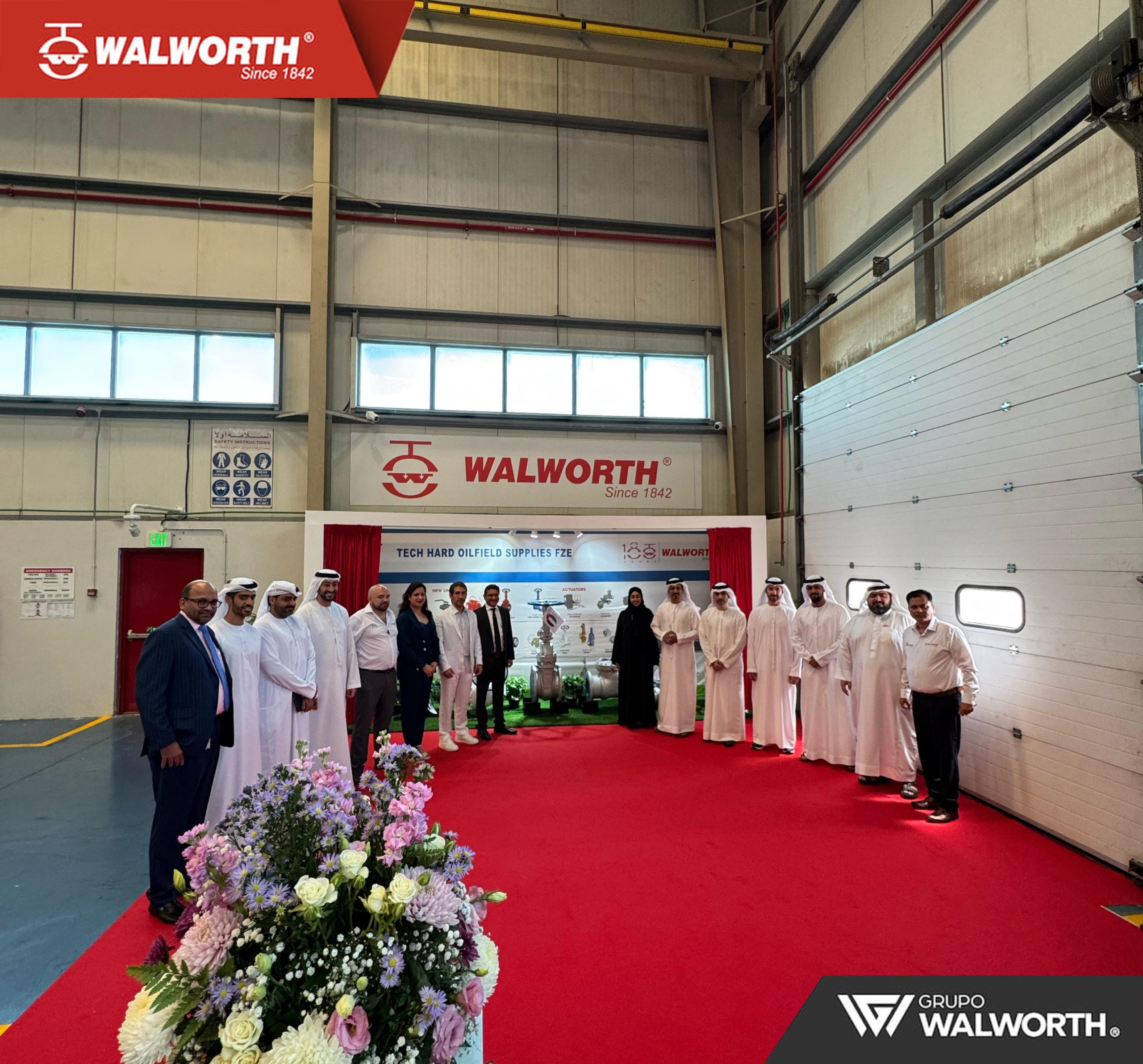
A significant strategic pivot is underway in the Middle East’s burgeoning energy sector, as Mexican industrial valve manufacturing giant Walworth formally inaugurates its cutting-edge production facility in Dubai, United Arab Emirates. This move transcends a mere expansion; it signifies a profound transformation from a purely commercial distribution model to a fully integrated manufacturing presence, signaling Walworth’s aggressive intent to cement its leadership and optimize its operational footprint within the world’s most vital hydrocarbon-producing region.
For over fifteen years, Walworth has leveraged Dubai as its strategic nexus for sales and distribution across the Middle East. However, the rapidly evolving global economic landscape, characterized by a pronounced trend towards nearshoring and increasingly stringent local content regulations mandated by national oil companies (NOCs) and major energy project developers, has necessitated a strategic re-evaluation. Dubai’s unparalleled geographical advantage, serving as a critical bridge between Eastern and Western markets, coupled with its highly developed logistics infrastructure, positions it as an ideal locale for localized, high-value manufacturing. Walworth’s proactive investment directly addresses these market dynamics, designed to capitalize on surging regional demand and rigorously adhere to local procurement mandates, which are becoming non-negotiable for securing major contracts.
Strategic Imperatives Driving Localized Production
The decision to establish a full-scale manufacturing hub in Dubai reflects several critical strategic imperatives. Firstly, the imperative for supply chain resilience has gained unprecedented importance in a post-pandemic world. Global disruptions highlighted the vulnerabilities of extended, complex supply chains. By manufacturing closer to its key clientele in the Gulf Cooperation Council (GCC) and broader Middle East & North Africa (MENA) regions, Walworth drastically reduces lead times, mitigates logistical risks, and enhances its responsiveness to customer needs. This agility is a significant competitive differentiator in a market where project timelines are often aggressive and operational continuity is paramount.
Secondly, the rising tide of local content requirements across major energy markets like Saudi Arabia, UAE, Qatar, and Oman cannot be overstated. National oil companies are increasingly prioritizing suppliers who contribute to the local economy through job creation, technology transfer, and domestic manufacturing. Walworth’s Dubai facility directly supports these national agendas, positioning the company as a preferred partner for critical infrastructure projects, from upstream exploration and production to midstream processing and downstream refining. This localized approach is not just about compliance; it’s about deep market integration and fostering long-term, mutually beneficial relationships with key stakeholders.
Thirdly, the Middle East continues to be the epicenter of global oil and gas investment, with significant capital expenditure earmarked for expanding production capacity, enhancing efficiency, and diversifying into new energy vectors like hydrogen and carbon capture. This sustained investment creates robust demand for high-quality, reliable industrial valves—the arterial components of any energy infrastructure. Walworth’s state-of-the-art facility is purpose-built to meet this demand, offering a comprehensive range of valves tailored to the region’s specific operational challenges, including high-pressure, high-temperature, and corrosive environments.
Operational Excellence and Market Impact
The new Dubai hub is far more than an assembly plant; it represents a comprehensive manufacturing ecosystem designed for precision and efficiency. While specific production capacities were not detailed, the “state-of-the-art” designation implies advanced machining, testing, and quality control capabilities. This allows Walworth to produce a wide array of critical valves, including gate, globe, check, ball, and butterfly valves, essential for various applications across the oil and gas value chain. Manufacturing these components locally means rigorous adherence to international standards like API, ASME, and ISO, while simultaneously customizing solutions to meet specific client specifications and regional environmental conditions.
From an investor perspective, this move signals Walworth’s commitment to optimizing its operational margins. By reducing reliance on international shipping and potentially mitigating import duties, the company can enhance its cost-effectiveness, translating into improved profitability and a stronger competitive pricing strategy. Furthermore, the ability to offer faster delivery and superior localized service—including rapid availability of spare parts and technical support—will undoubtedly bolster customer loyalty and expand Walworth’s market share against global competitors.
Investment Implications for the Energy Sector
For investors tracking the industrial components sector and the broader oil and gas supply chain, Walworth’s Dubai expansion offers compelling insights. It underscores the ongoing regionalization of manufacturing in critical energy sectors. Companies demonstrating agility and strategic foresight in adapting to evolving market demands, particularly those focused on localization and supply chain resilience, are likely to outperform.
Walworth’s proactive step positions it favorably within the Middle East’s multi-billion-dollar industrial valve market. As national oil companies continue their ambitious expansion plans—such as ADNOC’s drive to boost oil production capacity to 5 million barrels per day by 2027 and Saudi Aramco’s significant upstream and downstream investments—the demand for reliable valve technology will only intensify. Walworth’s localized production capability means it is now better equipped to bid for, secure, and execute contracts for these mega-projects, directly contributing to its top-line growth and long-term valuation.
Moreover, this investment reflects a deeper trend towards industrial diversification within the UAE itself. Dubai’s strategic vision to become a global industrial and logistics powerhouse is being realized through such high-value manufacturing investments. For investors, this signifies a robust and supportive business environment that encourages foreign direct investment and fosters long-term growth opportunities for companies willing to integrate deeply into the regional economy.
Looking Ahead: A Catalyst for Growth
Walworth’s new Dubai production facility is more than just a physical asset; it is a strategic catalyst designed to accelerate the company’s growth trajectory and reinforce its position as a global leader in industrial valve manufacturing. By embracing localized production, Walworth is not only meeting the immediate demands of a critical market but also building a resilient, agile, and deeply integrated operational model for the future. For financial market participants, this move solidifies Walworth’s standing as a forward-thinking entity poised to capture significant market share in one of the world’s most dynamic and capital-intensive energy regions, promising sustained value creation for stakeholders and a stronger, more efficient supply chain for the Middle East’s vital oil and gas industry.