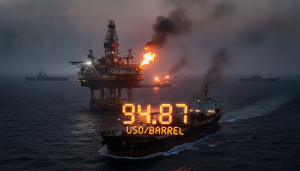
The global oil and gas markets are closely monitoring a pivotal development in the Middle East, as reports indicate a tentative agreement between the United States and Iran to extend a fragile ceasefire by 60 days. This diplomatic breakthrough reignites hopes for a de-escalation of the three-month conflict and potentially a broader resolution regarding Tehran’s nuclear ambitions. Investors are already reacting to the prospects of reduced geopolitical risk and a smoother flow of vital energy supplies, highlighting the direct impact of regional stability on commodity valuations.
Geopolitical Truce Signals Potential Market Shift
Confirmation of this proposed agreement, initially reported by Axios and subsequently corroborated by sources close to the negotiations, marks a significant moment. However, the deal’s finalization hinges on approval from President Donald Trump, underscoring its provisional nature. The extension of the truce would create a crucial window for continued, high-stakes discussions aimed at addressing core issues that have roiled energy markets for months.
Treasury Secretary Scott Bessent emphasized that while negotiations are active and ongoing, any definitive accord must meet specific U.S. objectives. These include the complete reopening of the strategically vital Strait of Hormuz, the secure transfer of Iran’s highly enriched uranium stockpile, and a comprehensive end to Tehran’s nuclear enrichment program. Bessent noted the intensive back-and-forth between negotiating teams, reflecting the complexity and sensitivity of the talks.
Since early April, a delicate calm has largely prevailed, punctuated by sporadic military incidents. President Trump reportedly requested additional time to review the details of the proposed agreement, indicating the careful consideration being given to its terms. Iranian officials have also expressed optimism, with Fada-Hossein Maleki, a member of Iran’s parliamentary commission for national security, acknowledging “significant progress” in the discussions, according to Iranian media outlets. This mutual signaling of progress suggests a genuine commitment from both sides to explore a diplomatic pathway.
Oil Prices React to Hormuz Reopening Prospects
The immediate market response to these positive diplomatic signals was palpable. Crude oil prices retreated, dipping towards the $95 per barrel mark, as traders began factoring in the possibility of improved access through the Strait of Hormuz. This critical waterway, a choke point for global energy trade, has been severely disrupted since hostilities flared in late February, contributing significantly to elevated energy prices worldwide. The prospect of its unrestricted flow offers a tangible easing of supply concerns for oil and gas investors.
The reported framework for the proposed agreement outlines a clear path for restoring normalcy to the Strait. It stipulates that shipping through Hormuz would be re-established without restrictions, a critical provision for global supply chains. Furthermore, Iran would commit to removing mines from the waterway within 30 days, a measure aimed at ensuring the safety and navigability of the route. This commitment directly addresses a major operational hurdle that has impacted vessel traffic and increased insurance premiums for tankers.
The Strait of Hormuz is an indispensable artery for global energy. It typically facilitates approximately one-fifth of the world’s total oil and liquefied natural gas (LNG) trade. Its disruption has not only constrained shipments from the Persian Gulf but has also exerted upward pressure on international energy prices, impacting consumers and industries globally. Clarification also emerged regarding potential transit fees; Secretary Bessent dismissed reports that Oman might impose tolls on vessels using the strait, confirming that Omani officials had assured Washington there were no such plans. This provides additional certainty for shipping costs, further alleviating investor anxiety.
Lingering Tensions and Economic Pressures
Despite the diplomatic strides, the underlying tensions in the region remain a concern for energy market participants. Recent overnight incidents served as a stark reminder of the fragile security situation. U.S. officials reported that American forces intercepted four Iranian drones targeting a commercial vessel and subsequently struck a launch site near Hormuz, characterizing these actions as defensive. In a rapid escalation, Iranian state media countered by reporting that Tehran had targeted the U.S. base involved in the operation. Such exchanges underscore the volatile environment and the potential for any miscalculation to derail peace efforts.
Washington has simultaneously intensified economic pressure on Tehran. This week, the U.S. Treasury Department imposed sanctions on Iran’s Persian Gulf Strait Authority. The Department accused this agency of exploiting the shipping disruptions by levying unwarranted fees and imposing arbitrary restrictions on vessels seeking passage through the vital waterway. This move by the U.S. aims to curb what it perceives as opportunistic behavior hindering global commerce.
Iran, for its part, has defended its new transit regulations, asserting their necessity for both security and environmental protection. The Islamic Revolutionary Guard Corps (IRGC) recently stated that 26 commercial vessels and oil tankers successfully transited the strait within the past 24 hours after obtaining necessary approvals from Iranian authorities. This highlights Iran’s continued operational control and its perspective on managing maritime traffic in the region, even amidst international scrutiny.
Investor Outlook: Key Unresolved Issues
While the ceasefire extension offers a glimmer of hope, several significant issues remain contentious and will dictate the long-term impact on global oil and gas markets. Foremost among these is the ultimate fate of Iran’s nuclear program, a complex geopolitical puzzle with far-reaching implications. Furthermore, negotiators are still debating the release of Iranian financial assets that have been frozen under U.S. sanctions. Iranian media reported that Tehran is demanding the full release of these blocked assets, estimated to be approximately $24 billion, a substantial sum that could significantly bolster its economy.
The successful resolution of these outstanding points will be paramount in transforming this tentative agreement into a comprehensive settlement. Such an outcome is crucial for not only restoring normal energy flows but also for instilling confidence in one of the world’s most critical oil shipping corridors. Investors will be keenly watching the progress of these ongoing discussions, as their outcome will undoubtedly shape the trajectory of global energy prices, supply chain stability, and geopolitical risk premiums for the foreseeable future. The stakes for the international oil and gas sector could not be higher.