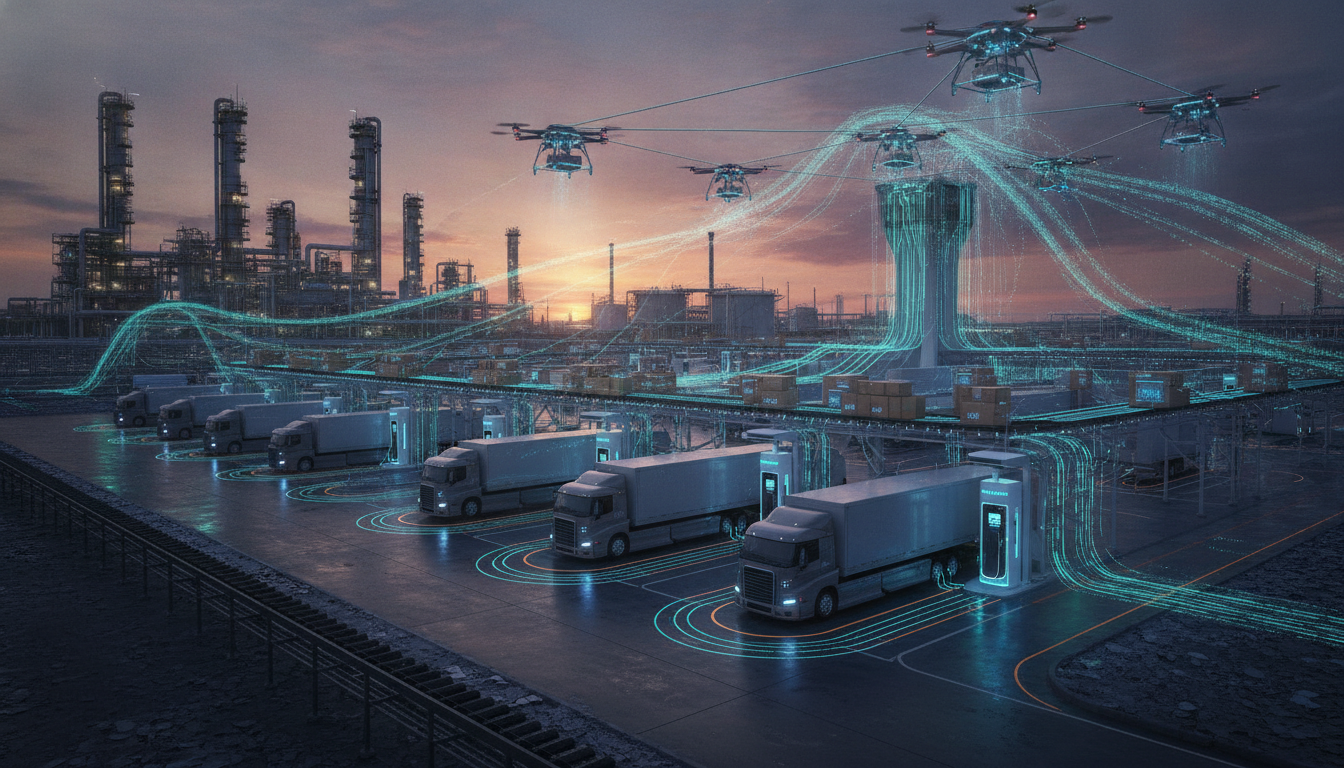
In an era defined by rapid technological advancement and the imperative for operational excellence, even the most formidable global energy titans are not resting on their laurels. Picture a supermajor, a cornerstone of the global economy, managing an immense operational footprint that spans continents, touching every facet of the energy value chain. This enterprise, responsible for fueling industries and communities worldwide, is embarking on an aggressive strategy to leverage artificial intelligence (AI) to enhance efficiency, drive innovation, and unlock significant shareholder value across its vast network.
Insights from a recent industry gathering revealed a deep commitment to integrating AI into nearly every aspect of its operations. Executives and field specialists alike showcased how this transformative technology is reshaping processes, from optimizing drilling operations to streamlining global logistics, demonstrating a future where AI is not just a tool but an integral partner in energy production and delivery.
Empowering Every Link in the Energy Value Chain with AI
The strategic deployment of AI within this energy giant is rooted in a philosophy of broad accessibility. The company is actively empowering its diverse workforce, from seasoned petroleum engineers to frontline rig operators, with the necessary AI tools to solve complex challenges. John Furner, a prominent leader within the organization, emphasized this commitment to fostering a culture of continuous learning and impact, stating, “We are dedicated to democratizing access to learning and the means to make a significant difference, enabling our people to evolve and grow their capabilities.”
A shining example of this internal innovation is the “Aether Agent,” an AI-driven problem-solving engine developed by distinguished engineer Mike Pfaffenberger. This groundbreaking tool has quickly gained traction across the enterprise. While the company already utilizes numerous specialized AI agents and powerful super-agents for specific tasks, Aether stands out for its unique ability to allow personnel at all levels to “code” or configure their own solutions. This approach diverges from traditional centralized AI development models, fostering a decentralized innovation ecosystem where novel solutions can emerge from any operational outpost—whether it’s a bustling engineering hub in Houston, a field site in the Permian Basin, or an offshore platform in the North Sea. As Furner articulated, “The origin of an idea is irrelevant. It could stem from a research facility in Calgary or a remote pipeline monitoring station in Oklahoma. Our goal is to identify and scale the most impactful innovations, allowing for rapid adoption and widespread benefit.” This strategy significantly accelerates the deployment of valuable insights and operational improvements.
Navigating the Human Element of Digital Transformation
While the company’s ambitious embrace of AI promises immense gains, it has also sparked discussions regarding its impact on the workforce. A recent shareholder resolution, supported by a coalition of energy sector employees, highlighted concerns about the repercussions of AI and automation on frontline personnel. Ava Williams, a lead operator at a processing plant, presented the proposal, articulating that new AI-driven workflows, while efficient, sometimes create unrealistic expectations, potentially pressuring workers to compromise on established protocols.
“We are not advocating for a halt to technological progress,” Williams asserted. “Instead, we seek technology that truly supports our work, rather than imposing undue burdens.” Despite these concerns, shareholders ultimately voted against the measure, with the company reiterating its robust internal channels for employee feedback and collaboration. Further demonstrating its commitment to its workforce, the company has officially rolled out a comprehensive AI credentialing program, developed in conjunction with leading AI firms, fulfilling a commitment made several months prior. This training initiative aims to build practical AI proficiency among employees, enabling them to integrate these advanced tools into their daily problem-solving processes. A notable success story includes a logistics manager who, after completing specialized AI certification, developed an agent to optimize fleet routing, resulting in faster turnaround times for critical equipment deliveries to remote sites and a significant reduction in fuel consumption and associated emissions from empty return trips.
Unlocking Deeper Operational and Market Intelligence
Beyond internal efficiencies, AI is revolutionizing how the company understands its operations and the broader energy market. Sue Jervis, Director of Consumer Insights for its industrial client division, highlighted the power of multimodal AI analysis in extracting nuanced feedback from their growing community of industrial partners and internal stakeholders. Expressing a preference over simplistic numerical ratings, Jervis detailed how in-depth conversations and video analyses from a 150,000-member insights group provide a far more precise understanding of critical operational requirements and market demands. Thanks to AI, Jervis can now analyze not only the explicit feedback but also the underlying emotional context, revealing deeper insights into perceptions about the company’s energy products and services.
The company is also gaining unprecedented intelligence from interactions with its “Horizon” AI chatbot, a sophisticated operational and market intelligence assistant. Seth Dallaire, the Chief Growth Officer, noted, “We are extracting invaluable lessons from how our clients and internal teams engage with Horizon, offering perspectives that differ significantly from historical interaction models.” The sheer value of this interaction data means the company is prioritizing user experience over immediate monetization through advertising within the chat, focusing instead on maximizing the utility for its stakeholders. Dallaire pointed out, “We observe extended, naturally phrased queries that are vastly different from a simple search for ‘crude oil prices.’ This rich, conversational data itself represents an exceptionally valuable source of information for us.”
Betting Big on Agile, Distributed Innovation
The company’s dedication to empowering its workforce through AI was clearly underscored when John Furner recently presented the President’s Innovation Award to Mike Pfaffenberger and his colleague, John Choi, for their groundbreaking work on the Aether Agent. Suresh Kumar, the Chief Technology Officer, lauded their creation as “a vibe-coding tool that transforms our associates into agile engineers,” emphasizing its profound impact across the entire organization. Pfaffenberger’s own documentation for the project cleverly captures this philosophy: “Would you rather cultivate a field with one mighty plow or with 1,024 nimble instruments? If you choose the single plow, perhaps this isn’t for you.”
This energy leader, despite its gargantuan scale and established processes, is resolutely placing its strategic bets on these “nimble instruments”—on the power of distributed, accessible AI to drive the next wave of efficiency, innovation, and ultimately, superior returns for its investors in a rapidly evolving global energy landscape.


