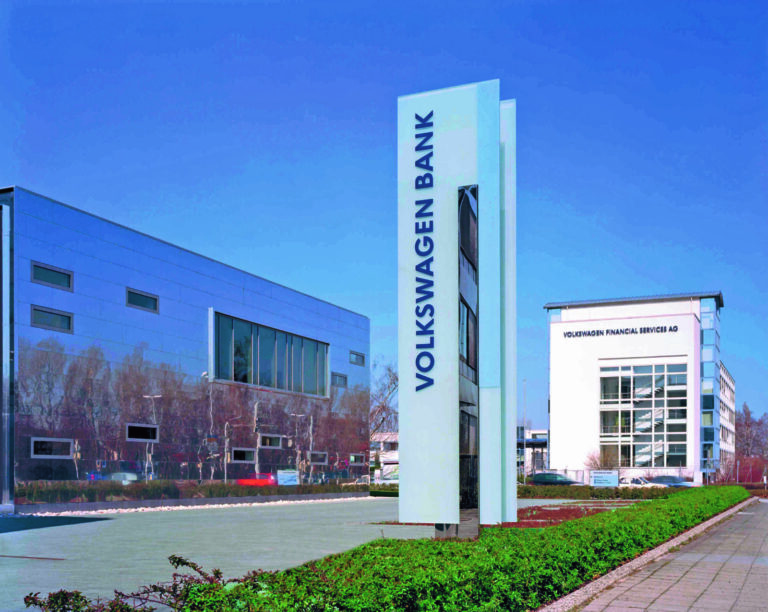
The recent successful issuance of Volkswagen Bank’s inaugural green bond, raising a substantial €1.5 billion, stands as a potent signal for the energy transition and, by extension, the future landscape of oil and gas investing. With investor demand soaring to over €6.6 billion across 3-year and 6-year tranches, the market has unequivocally endorsed Volkswagen’s strategy to exclusively finance battery electric vehicle (BEV) products. For oil and gas investors, this event is not merely a headline from the automotive sector; it’s a tangible manifestation of capital flowing towards electrification, directly impacting long-term oil demand projections and necessitating a critical re-evaluation of portfolio strategies in a rapidly evolving energy market.
The BEV Boom and its Long Shadow on Oil Demand
Volkswagen Bank’s debut green bond is more than a financing mechanism; it’s a commitment. By dedicating the €1.5 billion proceeds solely to BEV financing products across the Volkswagen Group’s extensive brand portfolio, the institution is putting its capital directly behind the global push for electrification. The overwhelming investor interest, with demand outstripping the offering by more than fourfold, underscores a deep market confidence in the BEV transition. This isn’t just about Volkswagen; it reflects a broader trend where significant capital is being mobilized to accelerate the adoption of electric vehicles worldwide. As more green bonds and sustainable finance initiatives emerge, directly funding EV manufacturing, infrastructure, and consumer adoption, the implications for fossil fuel consumption, particularly gasoline and diesel, become increasingly stark. Every electric vehicle sold represents a unit of future demand irrevocably lost to the oil market, signaling a gradual but persistent erosion of the automotive sector’s contribution to global crude demand.
Crude Markets Under Pressure: A Glimpse at the Present and Future
This long-term demand erosion narrative, amplified by events like the VW green bond, is playing out against a backdrop of significant near-term volatility in crude markets. As of today, Brent Crude trades at $90.38, reflecting a notable 9.07% decline from its daily open, having ranged between $86.08 and $98.97. Similarly, WTI Crude stands at $82.59, down 9.41% today, with its range from $78.97 to $90.34. This current downturn extends a broader trend: over the past 14 days, Brent has shed nearly 18.5%, falling from $112.78 on March 30th to $91.87 yesterday. Such sharp movements highlight the market’s sensitivity to both supply-side rhetoric and demand-side anxieties. Gasoline prices, too, reflect this pressure, currently at $2.93, down 5.18% today. Investors are keenly observing these dynamics, with many asking about the future trajectory of oil prices. Questions such as “what do you predict the price of oil per barrel will be by end of 2026?” consistently rank high in our reader inquiries, underscoring the uncertainty surrounding future demand in an increasingly electrified world. The success of green bonds funding BEVs adds another layer to this complexity, suggesting that even as geopolitical factors and supply decisions drive short-term price swings, the fundamental demand base for oil is facing a structural challenge.
Navigating Near-Term Headwinds and Strategic Adjustments
While the long-term shift towards electrification is undeniable, the immediate future for crude markets will be heavily influenced by a series of critical events over the next two weeks. Investors must remain agile, balancing the macro energy transition with tactical market drivers. This weekend, the OPEC+ Joint Ministerial Monitoring Committee (JMMC) meets on April 18th, followed by the full Ministerial Meeting on April 19th. These gatherings are crucial for understanding potential adjustments to production quotas, a topic frequently raised by investors asking about “OPEC+ current production quotas.” Any decisions on supply levels will have an immediate impact on price stability. Furthermore, the market will closely monitor inventory data, with the API Weekly Crude Inventory reports due on April 21st and 28th, followed by the EIA Weekly Petroleum Status Reports on April 22nd and 29th. These reports offer vital insights into U.S. supply and demand balances. Finally, the Baker Hughes Rig Count on April 24th and May 1st will provide a gauge of future production capacity. For oil and gas companies, the strategic imperative is clear: optimize existing assets for efficiency and lower emissions, while selectively exploring diversification into lower-carbon energy solutions. Companies that demonstrate a credible strategy to navigate both the short-term market volatility and the long-term energy transition will be best positioned to attract and retain investment capital.
Investment Implications: Re-evaluating Oil & Gas Portfolios
The Volkswagen Bank green bond issuance serves as a powerful reminder that the energy transition is not a distant concept but an active, funded reality. For oil and gas investors, this translates into a dual challenge: managing the inherent volatility of crude markets, particularly during periods of significant price swings like the one observed over the past fortnight, while simultaneously accounting for the structural shift in demand driven by electrification. Portfolios heavily weighted towards traditional upstream assets with high break-even costs or significant exposure to gasoline demand face increasing scrutiny. The focus must shift towards companies demonstrating resilience through low-cost production, strong balance sheets, and a clear strategic pathway within the evolving energy landscape. This might include investments in integrated energy companies diversifying into renewables, those focusing on carbon capture and storage, or even those optimizing existing operations for maximum efficiency and reduced environmental footprint. The era of passive oil and gas investing is over; success now hinges on a dynamic, informed approach that acknowledges the accelerating pace of change, as evidenced by the market’s enthusiastic backing of green finance initiatives.


