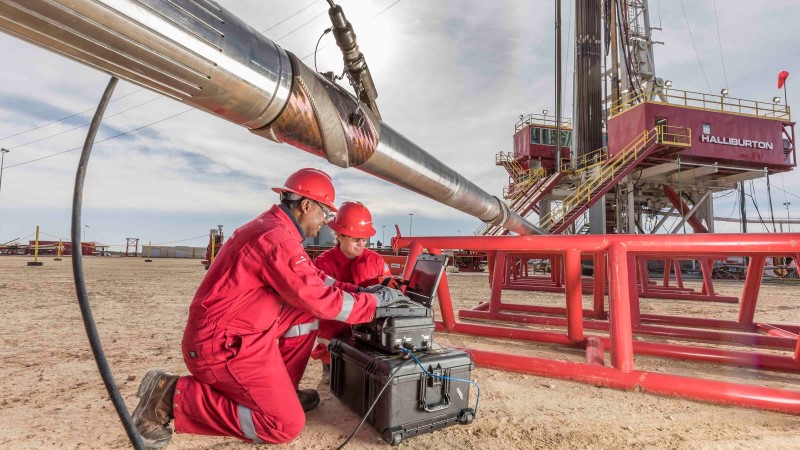
Venezuela’s Shifting Sands: A New Era for US Oil Investment?
The recent cancellation of an auction for assets seized from Halliburton Co. in Venezuela marks a pivotal moment for US oil companies eyeing a return to the resource-rich South American nation. This strategic intervention by the US administration, following direct engagement with industry executives, signals a concerted effort to normalize operations for American firms and potentially unlock significant new crude supplies. For investors, this development is more than just a diplomatic maneuver; it represents a tangible shift in the risk-reward calculus for Venezuelan oil and gas, warranting close attention to both the immediate market implications and the long-term operational hurdles that lie ahead.
US Diplomacy Paves the Way for Halliburton’s Return
The decision by Venezuela to halt the planned sale of Halliburton’s previously seized assets, valued at nearly $6.6 million, is a direct outcome of high-level US government pressure. Following a meeting between a Halliburton executive and President Trump in January, the administration actively engaged with Venezuela’s new leadership to secure the cancellation. This move is specifically designed to clear the path for the Houston-based oilfield services giant to resume operations, which were largely suspended in 2020 when US sanctions against the Maduro regime tightened. The significance for investors cannot be overstated: it illustrates a proactive US foreign policy aimed at leveraging its influence to support domestic energy companies and, by extension, global energy security.
Halliburton’s Chief Executive Officer, Jeff Miller, has previously expressed a readiness to remobilize “in weeks” once US government approval and robust payment protections are secured. This readiness, coupled with the recent visit by a Halliburton team to facilities in Zulia and Monagas states where they maintain assets, underscores the company’s preparedness. The ongoing lawsuit filed by Halliburton against Venezuela at the World Bank’s international arbitration court, initiated shortly after the initial court order for the asset auction in December, highlights the complex legal landscape that accompanies such re-entries. However, the latest diplomatic success suggests a thawing in relations that could expedite resolutions, reducing legal and operational uncertainties for Halliburton and potentially other US-based firms contemplating similar moves.
Market Response and Future Supply Dynamics
The prospect of increased oil output from Venezuela, facilitated by the return of experienced operators like Halliburton, introduces an interesting dynamic to a global market already reacting to various supply and demand signals. As of today, Brent Crude trades at $93.81, showing a modest daily gain of 0.61% within a range of $93.52-$94.21. Similarly, WTI Crude stands at $90.27, up 0.67% on the day. This current stability, however, follows a significant period of volatility; our proprietary data shows Brent declined by nearly 20% over the last 14 days, from $118.35 on March 31st to $94.86 yesterday. This sharp correction underscores market sensitivity to supply changes and geopolitical developments.
While the actual ramp-up of Venezuelan production will be gradual, the symbolic significance of the US clearing the path for its companies could have a psychological impact on prices. US Energy Secretary Chris Wright’s recent visit to Venezuela, where he met acting President Delcy Rodriguez and spoke of “tremendous opportunities,” further reinforces the strategic intent to boost the nation’s oil industry. For investors assessing the long-term trajectory of crude prices, the potential for Venezuelan barrels to re-enter the market more robustly could act as a bearish counterweight to any bullish drivers, especially if global demand growth moderates. The key will be monitoring the pace of infrastructure repair and investment, as years of underinvestment have severely hampered Venezuela’s production capacity.
Navigating Investor Concerns and Upcoming Catalysts
Our first-party intent data from investors this week reveals a strong focus on future price direction, with common queries including “is WTI going up or down” and “what do you predict the price of oil per barrel will be by end of 2026?” The developments in Venezuela directly feed into these long-term outlooks. While Halliburton’s re-entry is a positive step, the journey to significantly increase Venezuelan output from its current low levels will be protracted, requiring substantial capital, expertise, and a stable operating environment.
Investors should calibrate their expectations while closely monitoring a series of upcoming energy events that will provide more immediate market signals. Today, the **OPEC+ JMMC Meeting** is taking place, offering crucial insights into the cartel’s near-term supply strategy. This will be followed by the **EIA Weekly Petroleum Status Report on April 22nd**, which will update inventory levels and demand trends in the critical US market. Further data points like the **Baker Hughes Rig Count on April 24th** and the subsequent **EIA Weekly Petroleum Status Report on April 29th** will continue to shape short-term sentiment. Looking slightly further out, the **EIA Short-Term Energy Outlook on May 2nd** will be particularly influential for those formulating their end-of-year price forecasts. These scheduled events, combined with any further updates on US-Venezuela relations and Halliburton’s operational progress, will be essential for investors making informed decisions in this evolving oil and gas landscape.