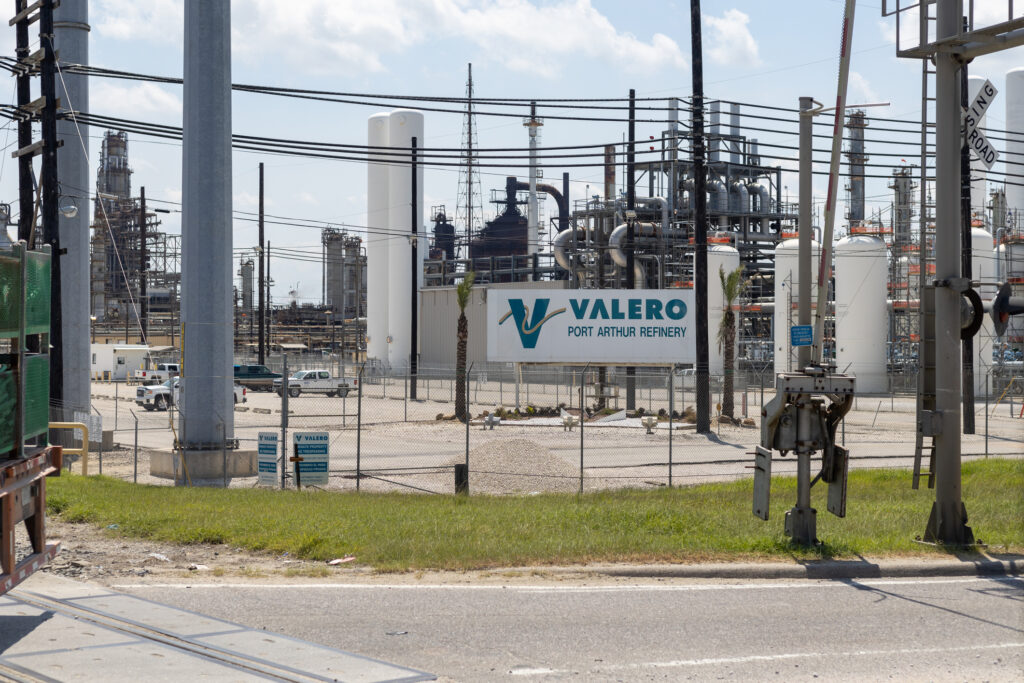
Valero Energy Corporation (NYSE: VLO) delivered an exceptional third quarter for 2025, significantly surpassing Wall Street’s consensus with an adjusted net income of $1.1 billion, or $3.66 per share. This performance represents a dramatic improvement from $371 million, or $1.16 per share, in Q3 2024, easily eclipsing the $3.05 EPS estimate. The core driver? A staggering 44% year-over-year surge in refining margin per barrel of throughput, reaching $13.14, far outpacing the 29% average increase seen across the broader U.S. refining sector. This deep dive into Valero’s operational prowess and the underlying market dynamics provides critical insights for investors navigating the energy landscape.
Valero’s Q3 Outperformance: A Masterclass in Margin Capture
Valero’s third-quarter results were a testament to both robust market conditions and superior operational execution. The company’s refining margin per barrel of throughput soared to $13.14, a substantial increase from $9.09 in the same period last year. This 44% jump not only drove the earnings beat but also demonstrated Valero’s ability to capitalize more effectively than its peers, considering the average U.S. refining margin increased by a still-impressive but comparatively lower 29%. Beneath the top-line numbers, adjusted refining operating income per barrel of throughput more than doubled, reaching $5.86 from $2.14 a year earlier, highlighting significant leverage from the margin expansion.
Operational excellence played a critical role in these stellar results. Valero’s refining throughput volumes averaged 3.1 million barrels per day (bpd) in the third quarter of 2025, up from 2.9 million bpd for the same period of 2024. CEO Lane Riggs underscored the efficiency, noting a robust 97 percent refinery throughput utilization. Specifically, the Gulf Coast and North Atlantic regions set new all-time highs for throughput, building on previous record performances. This combination of elevated margins and optimized throughput allowed Valero to convert favorable market conditions into exceptional shareholder value, significantly outperforming analyst expectations.
The Cracks That Defined Q3: Diesel and Gasoline Strength
The impressive margin expansion at Valero was underpinned by robust product demand and tightening inventories, particularly for middle distillates and gasoline. Our analysis of proprietary market indicators reveals that diesel crack spreads at New York Harbor ascended to levels not seen since February 2024 by July, nearly doubling year-over-year. This surge indicates strong demand for diesel, a critical fuel for industrial activity and transportation, which naturally benefits refiners with significant distillate output.
Similarly, gasoline crack spreads in early September more than doubled their prior-year levels, pushing the gasoline refinery margin above its five-year average for the first time since April within mid-August. This confluence of strong product pricing and sustained demand created an optimal environment for refiners with efficient operations like Valero to maximize their profitability. The tight inventories for both gasoline and diesel, alongside resilient consumer and industrial demand, were key factors in sustaining these elevated crack spreads throughout the third quarter, allowing Valero to capture a premium for its refined products.
Navigating Current Headwinds: A Volatile Crude Landscape
While Valero celebrated a stellar Q3, the current crude market presents a more volatile picture for investors assessing future refining profitability. As of today, Brent crude trades at $90.38, marking a significant 9.07% drop within the day’s range of $86.08 to $98.97. WTI crude mirrors this decline, settling at $82.59, down 9.41% from its daily high. Our proprietary market tracking shows a pronounced 14-day downtrend for Brent, plummeting from $112.78 on March 30th to today’s $90.38 – a $22.4 or 19.9% decline. This sharp correction in crude prices naturally leads to questions from our readership, particularly regarding the sustainability of refining margins. Investors are rightly asking, “What do you predict the price of oil per barrel will be by the end of 2026?”
Lower crude feedstock costs *could* theoretically boost refining margins if product prices remain firm, as refiners benefit from a wider spread between input and output. However, the accompanying decline in gasoline prices, currently at $2.93 (-5.18%), suggests a softening demand outlook or increased supply, which could temper the benefit of cheaper crude. The key for refiners like Valero will be managing this price volatility and maintaining product demand in an environment where both crude and refined product prices are seeing significant daily fluctuations. The recent dip in prices may indicate broader economic concerns or a rebalancing of supply and demand, factors that will heavily influence refining economics moving forward.
Forward Outlook: Key Events Shaping Refining Profitability
Looking ahead, a series of critical energy events over the next 14 days will undoubtedly shape the crude oil landscape and, by extension, refining economics. The impending OPEC+ Joint Ministerial Monitoring Committee (JMMC) meeting on April 19th, followed immediately by the full OPEC+ Ministerial Meeting on April 20th, looms large. Our readers are keenly interested in “OPEC+ current production quotas,” and these meetings will provide crucial clarity on potential supply adjustments. Any decision to alter production levels could significantly impact crude prices, either providing support amidst the recent downturn or exacerbating the decline, directly affecting refiners’ feedstock costs.
Further insights into market fundamentals will come from the API Weekly Crude Inventory reports on April 21st and 28th, alongside the EIA Weekly Petroleum Status Reports on April 22nd and 29th. These reports offer vital data on U.S. inventory levels and demand trends for crude and refined products. Significant inventory builds could signal weakening demand or oversupply, potentially compressing crack spreads and refining margins. Conversely, drawdowns would indicate robust demand, providing a positive signal for refiners. For Valero, maintaining high throughput utilization and robust margins will depend heavily on the delicate balance between crude supply management by OPEC+ and sustained product demand signaled by inventory movements.
Investor Takeaway: Valero’s Resilience Amidst Shifting Tides
Valero’s Q3 2025 performance underscores its operational strength and ability to capitalize on favorable market conditions. The company’s exceptional margin capture and efficient throughput utilization demonstrate a well-managed operation capable of delivering superior results when market tailwinds are present. However, the current macro environment, characterized by sharp crude price corrections and upcoming pivotal OPEC+ decisions, demands careful monitoring from investors. While lower feedstock costs can initially appear as a tailwind, sustained profitability hinges on product demand resilience and the stability of crack spreads.
Investors should watch inventory data and OPEC+ actions closely for signals on the trajectory of refining margins and Valero’s potential to replicate its exceptional Q3 success in the quarters to come. Valero’s strategic positioning and efficient asset base provide a strong foundation, suggesting a degree of resilience even in volatile markets. However, external market forces remain a dominant factor in the investment outlook, and active management of positions based on ongoing market developments will be crucial.