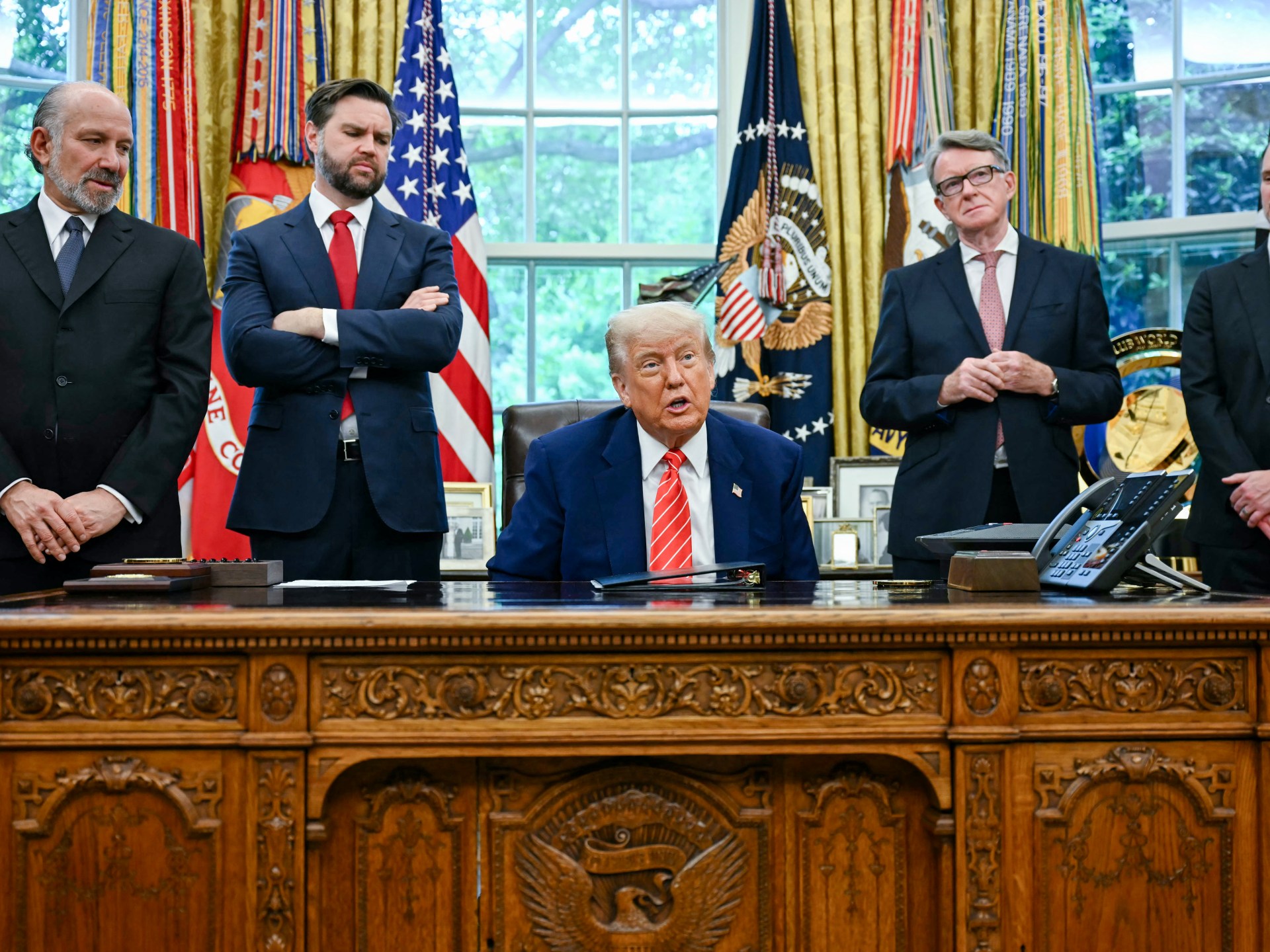
In a significant move reshaping transatlantic economic ties, the United States and the United Kingdom have unveiled a bilateral trade agreement, signaling a new era for capital flows and supply chain resilience. While initially spotlighting sectors like aluminum, steel, and pharmaceuticals, this accord carries broader implications for global trade dynamics, with nuanced effects for energy investors closely monitoring market stability and investment opportunities.
President Donald Trump underscored the foundational principles of “reciprocity and fairness” guiding this landmark pact, emphasizing enhanced market access for American agricultural products. Although the granular details are still being finalized, a comprehensive announcement is anticipated in the coming weeks. This agreement marks the first bilateral trade deal for the US since the implementation of its expansive tariff regime, a policy that has redefined international commerce over recent years and prompted significant adjustments in global supply chains.
Financial Framework and Market Access Expansion
The terms of the agreement are engineered to streamline bureaucratic processes for British companies exporting goods to the US. Concurrently, the White House projects a notable increase in US beef and ethanol shipments to the UK, alongside more efficient customs procedures for American products entering the British market. From a revenue standpoint, existing 10% US tariffs are expected to continue generating approximately $6 billion in external revenue annually. Crucially, the deal is forecast to unlock an additional $5 billion in new export opportunities for American businesses, representing a tangible boost to economic activity.
In a reciprocal move, the United Kingdom has committed to a substantial reduction in its tariffs on US goods, scaling them down from an average of 5.1% to a more modest 1.8%. This significant adjustment is set to broaden market access for American imports, fostering a more competitive environment. This favorable negotiation climate was likely aided by the existing US trade surplus in goods with the UK, which stands at a robust $11.9 billion. This dynamic aligns with President Trump’s broader strategy of addressing perceived trade imbalances through targeted agreements. British Prime Minister Keir Starmer, participating in the announcement via telephone, echoed the sentiment that this agreement would stimulate trade and foster job creation across both economies, driving demand and industrial output.
Global Trade Context and Geopolitical Significance for Energy
This bilateral arrangement emerges against a backdrop of complex and often contentious global trade dynamics initiated by the Trump administration. These policies commenced with universal 10% levies and expanded to include 25% tariffs on specific imports such as cars, steel, and aluminum. Key trading partners like Canada and Mexico also faced 25% tariffs, while China has been subject to a substantial 145% tariff on certain goods. The timing of this US-UK pact is particularly relevant, coinciding with ongoing critical discussions between US and Chinese officials slated for Switzerland this Saturday. These broader geopolitical shifts profoundly impact global energy markets, influencing supply routes, commodity prices, and investor confidence.
For oil and gas investors, these evolving trade relationships are not merely tangential. A more stable and predictable trade environment between two major economies like the US and UK can de-risk cross-border capital flows, potentially freeing up investment for the energy sector. Increased industrial activity spurred by reduced tariffs and enhanced market access will inevitably drive demand for crude oil, natural gas, and refined products. Furthermore, the focus on securing supply chains, as evidenced by the pharmaceutical component of the deal, highlights a broader strategic imperative that extends to energy security. Nations are increasingly prioritizing resilient supply lines for critical resources, a trend that directly benefits domestic energy production and infrastructure investment.
Implications for Energy Capital and Supply Chain Resilience
The establishment of clearer trade pathways and reduced friction between the US and UK offers a compelling narrative for energy investors. Capital previously hesitant due to trade uncertainties may now find more attractive entry points into energy infrastructure, exploration, and production projects within these stable jurisdictions. Enhanced customs processing and reduced tariffs on goods, even if not directly energy commodities, contribute to overall economic efficiency. This efficiency translates into lower operational costs for energy companies involved in manufacturing equipment, pipeline construction, or logistics, thereby improving project economics.
Moreover, the emphasis on establishing a dedicated trading zone for aluminum and steel directly impacts the energy sector. These materials are fundamental to constructing pipelines, drilling rigs, processing facilities, and renewable energy infrastructure. A stable and predictable supply of these critical inputs, free from punitive tariffs, can significantly reduce project lead times and costs, making large-scale energy developments more viable and attractive to institutional capital. The agreement thus indirectly supports the broader energy transition by facilitating the construction of new energy assets, whether they be traditional hydrocarbon infrastructure or emerging clean energy projects. Investors should view this pact as a signal of intent to foster economic stability and growth, which are crucial preconditions for sustained energy investment.
Investment Outlook: Navigating the New Trade Currents
As global trade continues its complex evolution, bilateral agreements like the US-UK pact serve as critical signposts for investors. While this deal doesn’t directly address oil and gas trade, its macroeconomic ripple effects are undeniable. Improved economic sentiment, bolstered by reduced trade barriers and increased export opportunities, generally correlates with higher industrial output and, consequently, greater energy demand. Energy investors should scrutinize these developments for their potential to foster an environment conducive to long-term capital deployment.
The focus on supply chain fortification also underscores a strategic shift towards securing critical resources, a narrative that resonates deeply within the energy sector. Companies with robust supply chains, diversified market access, and a presence in stable trading blocs stand to benefit. Investors should monitor how this and future bilateral agreements influence commodity prices, logistics costs, and the overall investment climate for energy projects, particularly those involving cross-border capital or critical raw material inputs. This agreement, while specific in its immediate scope, is a powerful indicator of the ongoing re-calibration of global economic partnerships, requiring a vigilant and informed approach from energy market participants.