The global oil market remains a crucible of geopolitical tension and economic uncertainty, a reality starkly highlighted by recent events impacting critical supply arteries. Investors are grappling with the complex interplay of Middle East instability, Washington’s policy responses, and shifting market fundamentals. While initial surges in crude prices underscored the fragility of global supply chains, particularly concerning the Strait of Hormuz, the market’s dynamic nature demands a nuanced, data-driven approach. OilMarketCap.com’s proprietary insights offer a clearer lens through which to assess the current landscape and anticipate future movements, moving beyond mere headlines to deliver actionable intelligence for informed investment decisions.
Geopolitical Risk Premiums and Current Market Dynamics
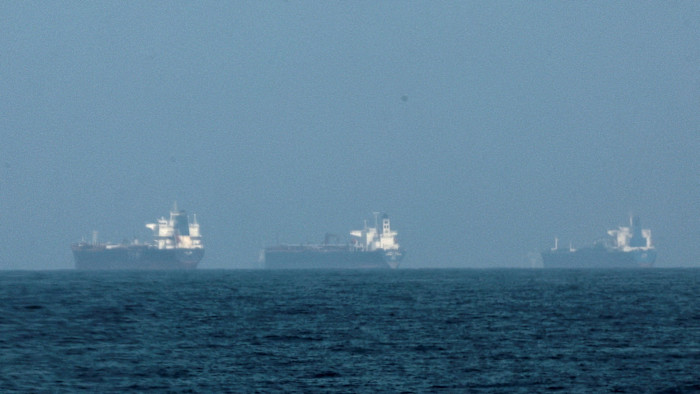
The specter of disrupted crude flows through the Strait of Hormuz continues to cast a long shadow over the energy markets. This narrow chokepoint, through which a staggering one-fifth of global oil supply transits daily, remains a focal point for geopolitical risk. Following a period of intense upward pressure driven by threats to maritime traffic, the market has seen some recalibration, though volatility persists. As of today, Brent Crude trades at $92.77 per barrel, marking a modest decline of 0.5% within a daily range of $92.57 to $94.21. Similarly, West Texas Intermediate (WTI) Crude stands at $89.24 per barrel, down 0.48%, fluctuating between $88.76 and $90.71. Gasoline prices have also seen a slight dip, currently at $3.1 per gallon, a 0.96% decrease for the day.
While the immediate sentiment points to some easing, the underlying risk premium from the Strait of Hormuz remains baked into prices. Our proprietary 14-day Brent trend data reveals a more significant movement: from $101.16 on April 1st to $94.09 on April 21st, representing a 7% decline. This indicates that while the initial geopolitical shock sent prices well over $100, the market has since absorbed some of that immediate fear, with traders evaluating the efficacy of potential countermeasures and the likelihood of sustained disruption. However, any escalation in the region could swiftly reverse this trend, sending crude back towards and potentially beyond recent highs, particularly if the flow of tankers is genuinely impeded for an extended period.
Washington’s Policy Toolkit: Limited Levers for Price Control
The current administration in Washington faces a challenging predicament in attempting to mitigate surging oil prices, especially with an election year on the horizon. Several strategies have been explored, each with varying degrees of potential impact. Plans to ensure and escort tankers through the Strait of Hormuz aim to directly address the immediate threat to supply. Concurrently, easing sanctions on Russian oil stranded at sea was intended to inject additional liquidity into global markets. Discussions have also included boosting domestic US production and potentially Venezuelan output, though a proposed plan to trade oil futures was reportedly dismissed.
However, investment analysts widely concur that these measures, while contributing marginally, are unlikely to provide the systemic stability required to fundamentally reverse a significant, geopolitically driven price surge. The American Petroleum Institute’s chief executive highlighted this sentiment, emphasizing that the primary focus must remain on ensuring the unimpeded flow through the Strait of Hormuz. Furthermore, Washington’s strategic flexibility is significantly hampered by the diminished state of its Strategic Petroleum Reserve (SPR). Following substantial drawdowns in 2022 to counter price spikes, the SPR now holds considerably less crude, limiting its capacity as a tool for market intervention. This leaves the US in a more vulnerable position, restricting its ability to douse prices in a crisis, a point of concern raised by lawmakers representing key oil-producing regions.
Navigating the Near-Term Outlook: Key Events for Investors
For investors charting their course in this volatile environment, closely monitoring upcoming market catalysts is paramount. OilMarketCap.com’s event calendar highlights several critical releases in the coming weeks that will offer fresh insights into supply and demand dynamics, potentially influencing short-term price movements. The EIA Weekly Petroleum Status Report, scheduled for April 22nd, April 29th, and May 6th, will provide crucial updates on US crude oil, gasoline, and distillate inventories, as well as refinery utilization rates. Any unexpected builds or draws in these inventories, particularly against a backdrop of geopolitical tension, could trigger significant market reactions.
Further insights into production trends will come from the Baker Hughes Rig Count reports on April 24th and May 1st. These figures offer a proxy for US drilling activity and future supply, giving investors an indication of how producers are responding to current price levels. Additionally, the API Weekly Crude Inventory reports on April 28th and May 5th provide an early look at inventory data, often preceding the official EIA releases. Finally, the EIA Short-Term Energy Outlook on May 2nd will offer broader forecasts for global and domestic supply, demand, and prices, providing a crucial framework for longer-term investment strategies. These events, occurring in rapid succession, necessitate agile portfolio adjustments and a keen eye on market data.
Addressing Investor Concerns: WTI Direction and 2026 Projections
Our proprietary reader intent data reveals a common thread among investors this week: a palpable uncertainty regarding crude oil’s immediate trajectory and longer-term outlook. Questions like “Is WTI going up or down?” underscore the market’s current indecision, while inquiries about “what do you predict the price of oil per barrel will be by end of 2026?” highlight the need for robust forward-looking analysis. The short-term direction of WTI, currently trading at $89.24, is inextricably linked to the geopolitical situation in the Middle East. Any de-escalation or successful implementation of measures to secure the Strait of Hormuz could see prices retreat further from recent highs, reflecting a reduction in risk premium. Conversely, an escalation of hostilities or a confirmed disruption to tanker traffic would almost certainly send WTI sharply higher, potentially challenging and surpassing the $100 mark that briefly materialized earlier this month.
Projecting crude prices to the end of 2026 is inherently complex, involving a multitude of variables beyond immediate geopolitical concerns. While no analyst can offer a definitive price, key drivers include the pace of global economic growth, which dictates demand; the willingness and capacity of OPEC+ to manage supply; the rate of US shale production; and the ongoing energy transition’s impact on long-term demand. Geopolitical stability or lack thereof will remain a significant wild card. A scenario of sustained high tensions and supply disruptions could see prices remain elevated, potentially averaging in the high $90s or even triple digits. Conversely, a period of relative calm, coupled with robust non-OPEC supply growth and a global economic slowdown, could push prices lower, potentially into the $70-$80 range. Investors must, therefore, build scenarios into their models, continuously re-evaluating these critical factors.