The US shale patch is presenting investors with a curious paradox. Despite a period marked by significant capital expenditure reductions from many of its leading operators, production continues its steady ascent. This seemingly contradictory trend underscores a fundamental shift in the industry: an aggressive pursuit of efficiency and technological innovation that allows companies to do more with less. For sophisticated oil and gas investors, understanding the drivers behind this phenomenon, the current market context, and the critical upcoming catalysts is essential for navigating what promises to be a dynamic investment landscape.
The Shale Paradox: Capex Trims Meet Production Peaks
In a strategic response to persistent oil price uncertainty, a notable trend has emerged among US shale producers. Major operators, excluding the integrated giants, have collectively trimmed over $1.8 billion in capital expenditures in the past two quarters alone. This disciplined approach reflects a broader industry sentiment of caution, with executives signaling a “wait-and-see” mode until crude prices establish a more definitive recovery. The focus is clear: preserve financial stability and maintain shareholder returns amidst fluctuating market conditions.
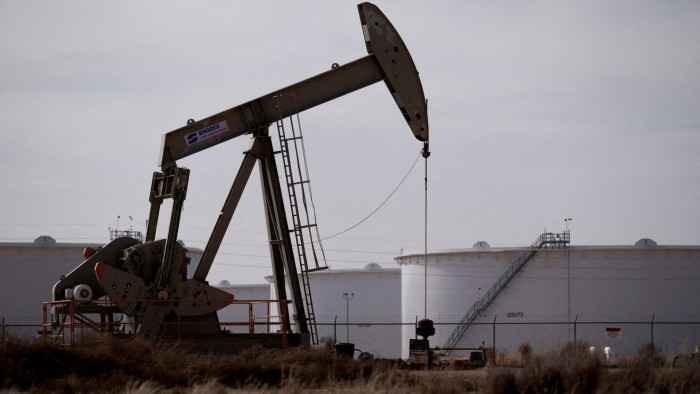
Yet, the surprising counterpoint to these capex cuts is an undeniable increase in production. This is not a result of increased drilling activity in terms of rig count, but rather a testament to the relentless drive for operational efficiency. Shale companies are drilling faster, utilizing longer laterals, and deploying advanced completion techniques at an unprecedented pace. What once took several weeks to drill a single shale well can now be accomplished in a matter of days. This technological and procedural evolution is particularly evident in the Permian Basin, which continues to set new drilling records and remains the engine of US oil output, accounting for more than half of the nation’s total production. This efficiency dividend allows producers to extract more barrels per dollar invested, fundamentally altering the unit economics of shale development.
Market Volatility and Investor Posture
The backdrop for this strategic maneuvering by shale producers is a volatile crude market. As of today, Brent Crude trades at $98.01 per barrel, marking a 3.24% increase on the day, with an intraday range of $94.42 to $99.84. WTI Crude mirrors this positive daily movement, standing at $89.65, up 1.72% within a range of $87.32 to $91.82. However, this recent uptick follows a period of significant downward pressure. Our proprietary market data indicates that Brent experienced a substantial decline from $108.01 on March 26 to $94.58 on April 15, representing a sharp 12.4% drop over just two weeks. This recent volatility has been exacerbated by a steady drumbeat of supply increases from the OPEC+ cartel in the prior quarter, which contributed to crimping earnings and driving WTI prices down by nearly 13 percent.
Such price swings naturally induce caution among shale executives. While the immediate impulse might be to ramp up activity during periods of higher prices, the recent memory of sharp declines fosters a more conservative investment strategy. Companies are optimizing existing drilling programs and prioritizing cash flow over aggressive growth, preferring to ride the wave and remain stable. This prudence is a direct reflection of investor expectations for consistent returns and financial resilience, even when the market sends mixed signals.
Upcoming Catalysts and Investor Insights
For investors seeking to understand the future trajectory of US shale and global oil prices, the coming weeks are packed with critical events. Our first-party reader intent data reveals a strong focus on market mechanics and transparency, with investors frequently asking about OPEC+ current production quotas and the models powering our real-time Brent crude price data. This keen interest underscores the significant influence of cartel decisions and market transparency on investment strategies.
The immediate spotlight will be on the OPEC+ Joint Ministerial Monitoring Committee (JMMC) meeting scheduled for April 18, followed swiftly by the full Ministerial meeting on April 20. These gatherings are pivotal, as any adjustments to production quotas could dramatically shift market sentiment and price expectations. A decision to maintain or further cut supply could provide the price stability shale producers are waiting for, potentially unlocking further investment. Conversely, an unexpected increase in supply could prolong the period of price uncertainty, reinforcing the current capex discipline.
Beyond OPEC+, investors will be closely monitoring key weekly indicators. The Baker Hughes Rig Count on April 17 and April 24 will offer real-time insights into drilling activity. Furthermore, the API Weekly Crude Inventory reports on April 21 and April 28, alongside the EIA Weekly Petroleum Status Reports on April 22 and April 29, will provide crucial data on US supply-demand balances, refinery runs, and inventory levels. These events collectively form a critical framework for forecasting market direction and assessing the responsiveness of US shale to evolving conditions.
Efficiency as a Strategic Imperative
The US shale industry’s ability to maintain or even increase production despite cutting capital expenditures is not merely a short-term reaction to price fluctuations; it represents a fundamental strategic pivot. The continuous improvement in drilling and completion technologies, coupled with operational optimization, has lowered breakeven costs for many producers, making them more resilient to price downturns. This relentless pursuit of efficiency transforms shale from a high-cost, boom-bust industry into a more agile and sustainable force in the global energy landscape.
For investors, this shift implies a focus on companies that demonstrate superior operational prowess and capital discipline. The ability to generate free cash flow and deliver shareholder returns through efficiency, rather than solely through aggressive production growth, will be a key differentiator. While the immediate outlook remains tied to global supply decisions and crude price stability, the underlying trend of technological advancement ensures that US shale will continue to be a dominant and increasingly efficient player, shaping the investment narrative for years to come.