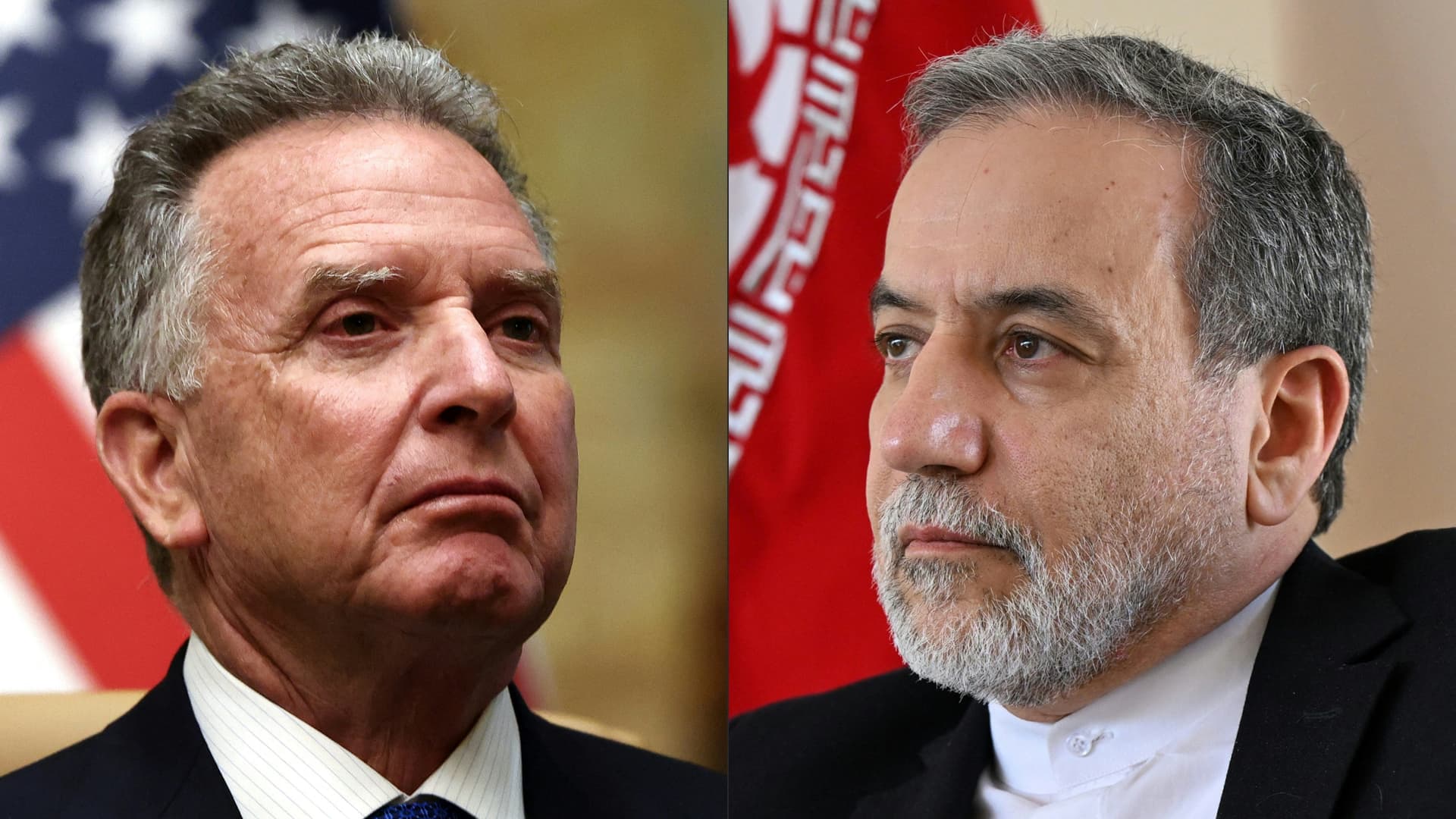
A year ago, a third round of crucial talks between the U.S. and Iran in Geneva captured global attention, raising significant questions for oil markets. Those discussions, involving U.S. Envoy Steve Witkoff, Trump’s son-in-law Jared Kushner, and Iran’s Foreign Minister Abbas Araghchi, underscored the deep divisions over Iran’s nuclear program and its ballistic missile development. While those specific discussions concluded without a definitive breakthrough, the underlying geopolitical tensions and their potential impact on global oil supply remain a paramount concern for investors today. In April 2026, the unresolved status of Iranian sanctions, the threat of renewed escalation, and the ongoing diplomatic tightrope walk continue to fundamentally shape oil price volatility and strategic positioning for energy portfolios.
The Enduring Shadow of Geopolitical Tensions on Oil Prices
The 2025 Geneva talks highlighted the immense pressure on Iran to curb its nuclear ambitions, particularly its uranium enrichment efforts, and to address its ballistic missile program. Statements from figures like U.S. Secretary of State Marco Rubio, who warned that Iran’s conventional weapons were “solely designed to attack America,” and President Trump’s assertion that “bad things” would happen if a deal wasn’t reached, painted a stark picture of the stakes involved. Despite Iran’s insistence that it would “under no circumstances ever develop a nuclear weapon,” the lack of a comprehensive agreement has left the market in a state of perpetual uncertainty regarding future Iranian oil supply.
As of today, Brent crude trades at $93.86, reflecting a modest daily gain of 0.66% within a day range of $89.11 to $95.53. Similarly, WTI crude stands at $90.22, up 0.61%, having moved between $85.5 and $92.23 today. However, this short-term stability belies a more volatile recent past. Brent has notably shed nearly 20% over the last two weeks, dropping from $118.35 on March 31st to $94.86 by April 20th. This significant correction underscores the market’s sensitivity to shifting supply-demand fundamentals and broader geopolitical narratives. The unresolved Iran situation introduces a fundamental uncertainty that could quickly reverse or accelerate these trends, rather than being the primary driver of the recent downtrend. Investors are keenly aware that any significant development, positive or negative, could trigger a rapid repricing of crude, influencing everything from gasoline prices, currently stable at $3.13, to long-term energy contracts.
Decoding Investor Sentiment: Supply, Sanctions, and Strategic Bets
Our proprietary reader intent data reveals a keen focus on price direction, with investors frequently asking whether WTI, currently at $90.22, is poised for upward or downward movement. There’s also significant interest in longer-term outlooks, with questions like “what do you predict the price of oil per barrel will be by end of 2026?” dominating discussions. The Iran situation is central to answering these questions. A major breakthrough in talks, leading to the lifting of sanctions, could potentially bring a significant volume of Iranian crude back to the global market. Pre-sanctions, Iran was a major exporter, and any return to that capacity would add substantial barrels, potentially creating a supply glut and suppressing prices. This scenario would impact the balance for global oil supply and could push WTI lower, challenging producers and refiners alike.
Conversely, a definitive breakdown of negotiations or an escalation of regional tensions would introduce a substantial risk premium into crude prices. The U.S. military presence in the Middle East, a point of emphasis during the 2025 talks, remains a factor. Such a scenario could lead to supply disruptions from the region, pushing Brent and WTI significantly higher. Investors are therefore positioning themselves carefully, weighing the prospects of a supply-driven downturn against the risks of a geopolitical supply shock. Understanding this binary outcome is critical for anyone managing an energy portfolio, from individual investors to institutional funds.
The Ballistic Missile Standoff: A Persistent Obstacle to Resolution
Beyond the nuclear program itself, Iran’s development of intercontinental ballistic missiles emerged as a significant stumbling block in the 2025 negotiations, as highlighted by Secretary Rubio. He explicitly stated that Iran “refuses – refuses – to talk about ballistic missiles to us or to anyone, and that’s a big problem.” President Trump’s past allegations about Tehran working on rockets that could “soon” reach the U.S., and Rubio’s warning of an “unsustainable threat” as ranges “continue to grow every single year exponentially,” underscore the gravity of this issue. While Iran maintains its right to develop defensive capabilities, this aspect of its military program remains a core point of contention for Western powers.
The persistence of this standoff means that even if a limited nuclear deal were to emerge, the broader security concerns would likely remain, perpetuating a degree of regional instability. This broader security context impacts more than just Iranian oil output; it influences the perception of risk for all oil production and transit routes in the Middle East. Any perceived threat to shipping lanes or neighboring producing nations, regardless of direct Iranian supply, has the potential to introduce a significant risk premium to global crude prices, affecting the entire oil and gas investment landscape. Oman’s continued mediating role in these complex discussions highlights the difficulty in finding common ground.
Key Upcoming Events and the Enduring Iran Variable
Looking ahead, the oil market calendar is packed with events that could amplify or mitigate the impact of the ongoing Iran dynamic. The OPEC+ JMMC Meeting scheduled for April 21st, for instance, could see producers adjust output strategies in anticipation of, or reaction to, any shifts in potential Iranian supply coming back online. Similarly, the EIA Weekly Petroleum Status Reports on April 22nd and April 29th will offer crucial insights into U.S. inventories, which would be immediately affected by the return of significant Iranian crude or any further tightening of existing supply. These reports provide a vital snapshot of immediate supply-demand balances that could quickly shift under new geopolitical developments.
The Baker Hughes Rig Count on April 24th and May 1st will signal future production trends, especially if sustained higher prices due to escalation risk or lower prices due to increased supply incentivize or disincentivize drilling activity. Perhaps most critically for longer-term outlooks, the EIA Short-Term Energy Outlook on May 2nd will provide a refreshed baseline for global supply and demand. Any major development regarding Iran – whether a breakthrough or a breakdown in the long-running diplomatic efforts – could necessitate a significant revision to these projections. Investors must therefore meticulously monitor both diplomatic signals and fundamental data points, as the intricate interplay between geopolitics and market fundamentals will continue to drive oil and gas investment decisions throughout 2026.