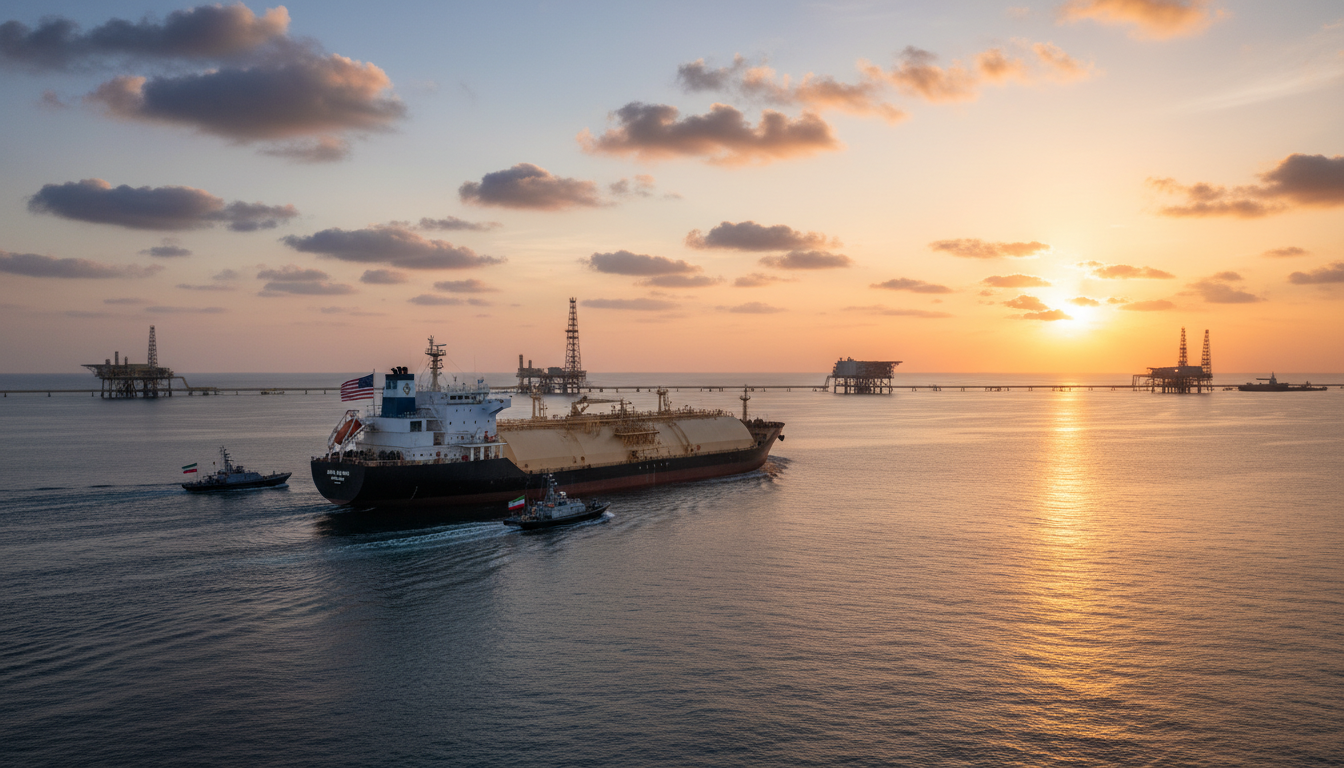
The highly volatile energy landscape recently offered a glimmer of cautious optimism as the India-flagged LPG tanker, Jag Vikram, successfully navigated the Strait of Hormuz. This critical transit, occurring between Friday night and Saturday morning, marks the first such movement by an Indian vessel since the temporary two-week ceasefire announcement between the United States and Iran. For investors meticulously tracking geopolitical risk and the stability of global supply chains, this event provides a fragile signal of potential de-escalation, yet it starkly underscores the enduring operational complexities and inherent fragility of Middle Eastern shipping lanes. While a single successful passage cannot erase months of heightened tensions, it offers crucial data for assessing the efficacy of diplomatic overtures and the resilience of vital energy corridors.
Hormuz Transit: A Fragile Signal Amidst Crude Market Volatility
The successful passage of the Jag Vikram through the Strait of Hormuz, laden with approximately 20,000 tonnes of liquefied petroleum gas, is more than just a routine shipping event; it serves as a critical barometer for assessing maritime security in a region historically prone to disruptive incidents. This transit, proceeding eastward into the Gulf of Oman, signals a momentary easing of the severe constraints that have plagued shipping through this vital chokepoint. While the immediate risk of a direct confrontation impacting this specific vessel type appears to have momentarily receded, the broader geopolitical backdrop remains complex.
As of today, Brent crude trades at $95.57, marking a robust +5.74% increase from yesterday’s close, within a daily range of $92.77 to $97.81. This significant daily rally, occurring concurrent with the Hormuz de-escalation news, suggests that while reduced transit risk is a positive factor, broader market dynamics are at play. Investors should note this rally follows a notable downturn in Brent crude over the past fortnight, with prices retreating from $112.78 on March 30th to $90.38 by April 17th, a significant nearly 20% contraction. Today’s upward movement could be interpreted as a technical rebound, a reaction to other bullish supply-side concerns, or a relief that one particular geopolitical flashpoint has not escalated further, thereby allowing underlying demand strength or other supply risks to take center stage. The transit of the Jag Vikram, therefore, acts as a risk mitigator rather than a price driver in isolation, preventing an even sharper rise that an outright blockage might have caused.
LPG Supply Chains and Persistent Bottlenecks for Investors
The journey of the Jag Vikram, a mid-sized gas carrier (MGC) owned by Mumbai-based Great Eastern Shipping Company, highlights the operational resilience demanded in volatile regions. This vessel, with a deadweight capacity exceeding 26,000 tonnes, represents a crucial asset in the transportation of refined petroleum products. However, its week-long wait for clearance underscores the persistent delays and uncertainties that have characterized regional shipping. For investors in the shipping sector, particular attention should be paid to companies with robust risk management strategies and diversified fleets capable of navigating such complex operational environments.
Despite this isolated success, the broader picture reveals ongoing challenges for India’s energy security and global LPG supply chains. The Jag Vikram is only the ninth Indian vessel to depart West Asia since early March, and a substantial fleet of 15 other India-flagged vessels remains in the region, awaiting their opportunity to exit. This backlog, comprising diverse energy and cargo carriers, paints a clear picture of persistent logistical bottlenecks that will not dissipate overnight. Our proprietary reader intent data reveals a keen interest in the future direction of oil prices, with many investors asking “is WTI going up or down?” and seeking predictions for crude oil by year-end 2026. The answer is deeply intertwined with these supply chain dynamics. Continued blockages or lengthy delays for these 15 vessels would undoubtedly contribute to tighter LPG and potentially refined product markets, placing upward pressure on prices, even as today’s crude market rallies on other factors.
Upcoming Events: Geopolitics Meets Fundamentals
The cautious optimism surrounding the Hormuz transit risk reduction must be viewed through the lens of critical upcoming energy events that will shape market trajectories. The market’s immediate focus shifts to the OPEC+ Joint Ministerial Monitoring Committee (JMMC) meeting scheduled for April 20th, followed by the full OPEC+ Ministerial Meeting on April 25th. While the successful passage of a single tanker does not fundamentally alter global supply-demand balances, a perceived de-escalation of transit risks in a major chokepoint could subtly influence the group’s discussions on production quotas. A less acute perceived geopolitical risk might, hypothetically, ease pressure for deeper cuts, though OPEC+ typically prioritizes market stability and price targets over immediate geopolitical shifts. Any decision from these meetings will be a significant catalyst for crude oil prices.
Beyond OPEC+, investors must continue to monitor fundamental data. The API Weekly Crude Inventory reports on April 21st and 28th, alongside the EIA Weekly Petroleum Status Reports on April 22nd and 29th, will offer crucial insights into U.S. supply and demand dynamics. These reports, coupled with the Baker Hughes Rig Count on April 24th and May 1st, will provide the underlying context against which all geopolitical developments, including the fragile de-escalation in Hormuz, are interpreted. Persistent draws in inventories or a slowdown in drilling activity could amplify any bullish sentiment, irrespective of Middle Eastern transit stability, and answer investor questions about the direction of WTI and broader crude prices.
Investor Outlook: Navigating Risk and Opportunity
The successful transit of the Jag Vikram offers a tactical win in the ongoing battle for maritime security in the Strait of Hormuz. It signals that diplomatic efforts, however temporary, can yield operational results. However, investors must remain vigilant. The presence of 15 other India-flagged vessels still awaiting transit highlights the lingering operational challenges and the potential for renewed disruptions. This is not a resolution, but a temporary reprieve. For investors, this environment necessitates a nuanced approach to portfolio management.
Consideration should be given to the resilience of shipping companies operating in the region, particularly those with diversified fleets and robust contingency plans. Furthermore, the interplay between geopolitical events and fundamental market data will continue to drive volatility across crude oil, natural gas, and refined product markets. While the immediate risk of an Hormuz-induced supply shock may have slightly receded, the broader geopolitical landscape remains fraught with uncertainty. Prudent investors will focus on companies with strong balance sheets, strategic asset deployment, and those well-positioned to benefit from either continued volatility or a eventual, more stable, supply chain environment. Monitoring the upcoming OPEC+ meetings and inventory reports will be key to understanding how these intertwined forces ultimately shape the energy market in the coming weeks and months.


