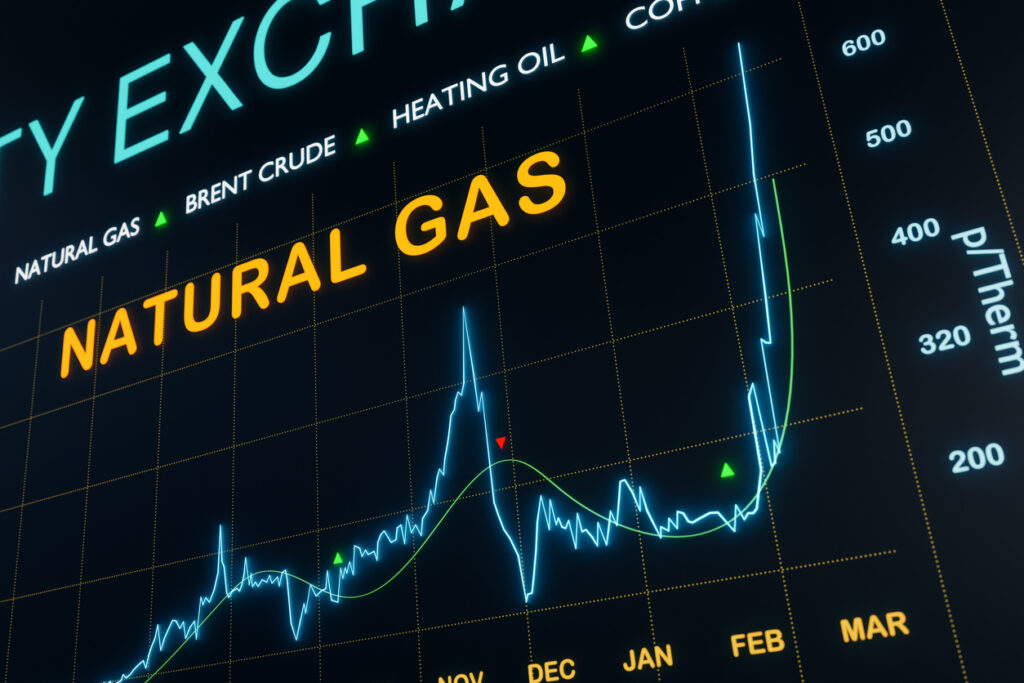
US natural gas futures have surged, climbing nearly 4% as robust demand from liquefied natural gas (LNG) export facilities converges with increasingly bullish forecasts for colder winter weather. This significant upward movement in December futures, reaching $4.539 per million British thermal units (mmBtu) on the New York Mercantile Exchange, presents a compelling narrative for energy investors. While crude oil markets are experiencing a downturn, with Brent trading at $90.71 today, down 8.73%, and WTI crude at $82.9, a 9.07% decline, natural gas is charting its own course, driven by distinct supply-demand dynamics and strategic global energy shifts. This divergence underscores the importance of nuanced analysis in a complex energy landscape, prompting investors to re-evaluate their positions in the gas sector.
The Bullish Momentum in US Natural Gas
The immediate drivers behind the natural gas price rally are clear: relentless demand from LNG export terminals and a decisive shift in meteorological outlooks. Average gas flows to the eight major US LNG export plants have climbed to an impressive 18.0 billion cubic feet per day (bcfd) so far in November, a substantial increase from October’s record of 16.6 bcfd. This near-record export activity signals strong international pull, bolstering domestic prices. Concurrently, updated weather forecasts project a shift from warmer-than-normal conditions through November 26th to colder-than-normal temperatures across the country from November 28th to December 4th. Such a meteorological pivot typically translates into heightened demand for heating, tightening the supply-demand balance. The combination of sustained export strength and an impending cold snap has injected significant bullish sentiment into the market, pushing prices higher despite a broader bearish trend observed in crude oil. For instance, our proprietary data indicates Brent crude has fallen from $112.57 on March 27th to $98.57 by April 16th, a 12.4% decrease over 14 days, highlighting the unique strength currently seen in the gas market.
US LNG Dominance and Future Capacity Expansion
The United States solidified its position as the world’s largest LNG producer in 2023, a testament to its abundant shale gas resources and strategic investments in export infrastructure. This global leadership is further evidenced by the ongoing expansion of capacity. A key development on the horizon is the commissioning of the Exxon Mobil/QatarEnergy 2.4-bcfd Golden Pass LNG export plant in Texas. The Imsaikah LNG vessel is currently traversing the Atlantic, expected to arrive at Golden Pass around November 29th. This vessel is carrying LNG from Qatar, which will be used to cool equipment as part of the plant’s critical commissioning phase. The facility is slated to commence LNG production later this year or early next year. This upcoming capacity will further cement the US’s role in global energy markets, providing additional avenues for domestic gas to meet international demand. The strong global appetite for LNG is reflected in international benchmarks, with gas trading near $11 per mmBtu at Europe’s Dutch Title Transfer Facility and reaching a two-month high of $12 per mmBtu at the Japan Korea Marker benchmark in Asia. This robust global pricing provides a significant incentive for US producers to maintain and even expand export capabilities, a trend investors are closely monitoring for long-term growth.
Navigating Production, Storage, and Demand Shifts
Despite record-setting production levels, the market is demonstrating a bullish reaction to demand forecasts. Average gas output in the Lower 48 states has risen to 109.1 bcfd so far in November, surpassing October’s 107.3 bcfd and even the previous monthly record of 108.3 bcfd set in August. This robust supply has enabled energy companies to stockpile more gas than usual, resulting in approximately 4% more gas in storage than the seasonal norm. However, this ample supply has not deterred the recent price surge. The crucial factor is demand: average gas demand in the Lower 48 states, including exports, is projected to hold around 116.6 bcfd this week and next. This forecast represents an upward revision from previous outlooks, suggesting that while production is high, the pace of demand growth, particularly from exports and anticipated winter heating, is expected to outstrip the available surplus. Investors are therefore weighing the current storage cushion against the accelerating demand trajectory, recognizing that even with healthy inventories, a colder winter could quickly draw down reserves and sustain price strength.
Investor Outlook: Beyond the Short-Term Spike
For investors, the recent natural gas rally raises critical questions about the broader energy market outlook. Our proprietary reader intent data reveals a keen interest in long-term price predictions for crude oil and the performance of major energy players like Repsol. While the immediate focus of the upcoming OPEC+ Joint Ministerial Monitoring Committee (JMMC) meeting on April 17th and the full Ministerial meeting on April 18th will be crude production quotas – a frequent query from our readers – their decisions will undoubtedly ripple through the entire energy complex. Any shifts in crude supply could influence capital allocation across the energy sector, indirectly impacting gas investments. Furthermore, the consistent stream of EIA Weekly Petroleum Status Reports and API Weekly Crude Inventory data throughout late April will provide crucial insights into inventory builds or draws, influencing not just crude but also the broader sentiment toward energy commodities, including natural gas. The Baker Hughes Rig Count reports on April 24th and May 1st will be pivotal in assessing drilling activity, offering a forward-looking glimpse into future supply capabilities across both oil and gas fields. Investors should consider the structural demand growth for US LNG, the sensitivity of gas prices to seasonal weather patterns, and the broader macro-economic factors influencing global energy consumption when positioning their portfolios. The current environment suggests a strong tailwind for natural gas, but ongoing monitoring of supply-side responses and global energy policy remains paramount for informed investment decisions.