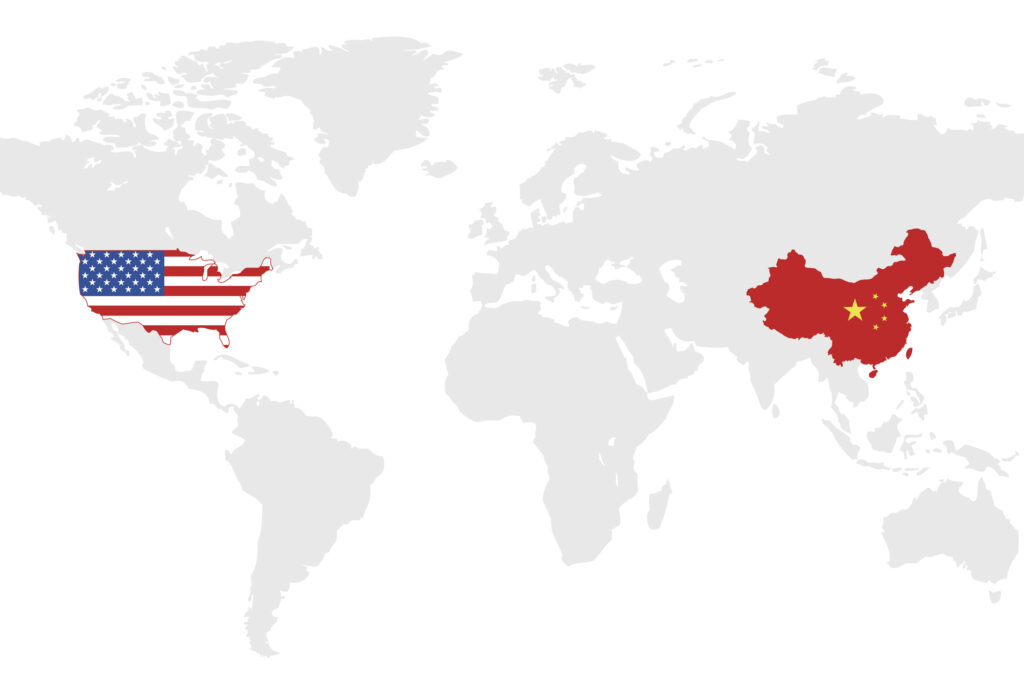
The recent meeting between U.S. President Donald Trump and China’s Xi Jinping, described as “amazing” by Trump, has yielded a tentative agreement that broadly unwinds recent trade escalations. While the immediate optics suggest a de-escalation of tensions, energy investors must look beyond the diplomatic pleasantries. Our analysis at OilMarketCap.com indicates that this is a tactical pause, a fragile truce designed to offer a reprieve, rather than a fundamental reset of the deep-seated economic and geopolitical issues between the two global powers. For the oil and gas sector, this implies that while short-term sentiment may improve, the underlying volatility driven by structural challenges and demand uncertainties remains firmly in play.
Market Dynamics and the Illusion of Stability
The framework announced includes China resuming soybean purchases, a suspension of rare earths export curbs for a year, and the U.S. reducing tariffs on China by 10%. These measures effectively revert trade relations to their pre-“Liberation Day” status, offering a temporary breathing room for multinational corporations. However, a critical look reveals that the core issues cited by Trump when he initiated tariffs – China’s industrial policies, manufacturing over-capacity, and its export-led growth model – were notably absent from the discussions. This fundamental mismatch between what Washington demands and what Beijing is prepared to concede means the root causes of the trade friction are still unresolved.
Despite the positive headlines, the crude oil market reflects persistent underlying concerns. As of today, Brent Crude trades at $90.38, having experienced a significant -9.07% drop within the day, with WTI Crude similarly affected at $82.59, down -9.41%. This daily volatility is exacerbated by a broader trend; Brent Crude has declined by $22.4, or -19.9%, over the past 14 days, falling from $112.78 on March 30 to its current level. Such a pronounced downward trajectory in prices suggests that while a trade truce might offer a glimmer of hope for global economic activity, broader supply-demand imbalances, inventory builds, or macroeconomic headwinds are exerting a far greater influence on investor sentiment and price discovery than this diplomatic handshake alone.
Investor Focus: Beyond Geopolitics to Fundamental Drivers
Our proprietary reader intent data reveals that oil and gas investors are less focused on the immediate political theater and more concerned with the foundational elements driving the market. A key question emerging this week is, “What do you predict the price of oil per barrel will be by end of 2026?” This highlights a desire for long-term clarity that a tactical truce simply cannot provide. While a de-escalation of trade tensions theoretically supports global economic growth and thus oil demand, the absence of discussion around China’s industrial policies leaves a significant cloud over future manufacturing output and energy consumption trajectories.
Furthermore, investors are actively inquiring about “OPEC+ current production quotas.” This indicates a keen understanding that supply-side management, particularly from major producers, often holds more sway over immediate and medium-term price movements than geopolitical gestures. The current truce, while a positive sentiment booster, does not alter the fundamental supply-demand equation or the strategic decisions of global oil cartels. Savvy investors are looking for concrete data points and policy shifts that will genuinely impact the balance of the oil market, rather than just the rhetoric of international relations.
Upcoming Catalysts: Supply Decisions and Inventory Insights
While the US-China truce offers a welcome pause in a protracted dispute, the energy market’s attention is quickly shifting to a series of critical upcoming events that will provide more tangible direction for oil prices. The immediate future holds significant catalysts, starting with the OPEC+ Joint Ministerial Monitoring Committee (JMMC) Meeting on April 19, swiftly followed by the full OPEC+ Ministerial Meeting on April 20. These gatherings are paramount for investors, as decisions regarding production quotas directly impact global supply and can significantly alter price trajectories, especially after the recent sharp declines in Brent and WTI.
Following these crucial OPEC+ discussions, market participants will closely scrutinize weekly inventory data from the U.S. The API Weekly Crude Inventory report on April 21 and the EIA Weekly Petroleum Status Report on April 22 will offer fresh insights into U.S. supply and demand dynamics, including crude oil, gasoline, and distillate stockpiles. Gasoline prices, currently at $2.93 and down -5.18% today, are particularly sensitive to these reports, reflecting consumer demand and refinery activity. Further insights into U.S. production will come from the Baker Hughes Rig Count on April 24. These events, far more than the recent diplomatic overtures, are poised to be the primary drivers of oil and gas market sentiment and price action in the coming fortnight, dictating whether the recent price slide continues or finds a floor.
A Stepping Stone, Not a New Path
The Chinese side reportedly viewed this encounter with realistic expectations, seeing it as a “stepping stone to a bigger meeting” aimed at stabilizing the relationship, rather than a fundamental reset. This perspective underscores Beijing’s evolving approach to dealing with the U.S., characterized by a broad and swiftly deployed “toolbox” of measures. While President Trump emerged “glowing,” framing the meeting as a positive “G2” interaction and praising Xi, this tactical engagement doesn’t resolve the deep structural issues that define the Sino-American rivalry. For energy investors, this means that while the immediate risk of further trade-related demand destruction may have receded, the potential for future escalations remains, albeit perhaps in different forms.
The long-term implications for global supply chains and economic growth, and consequently for oil demand, are still subject to the unresolved tensions. Corporations have received a much-needed reprieve, but the strategic landscape remains unchanged. Smart investors will continue to monitor the underlying economic indicators, production data, and geopolitical developments, understanding that a truce is merely a pause, and the core challenges influencing the long-term energy outlook persist.