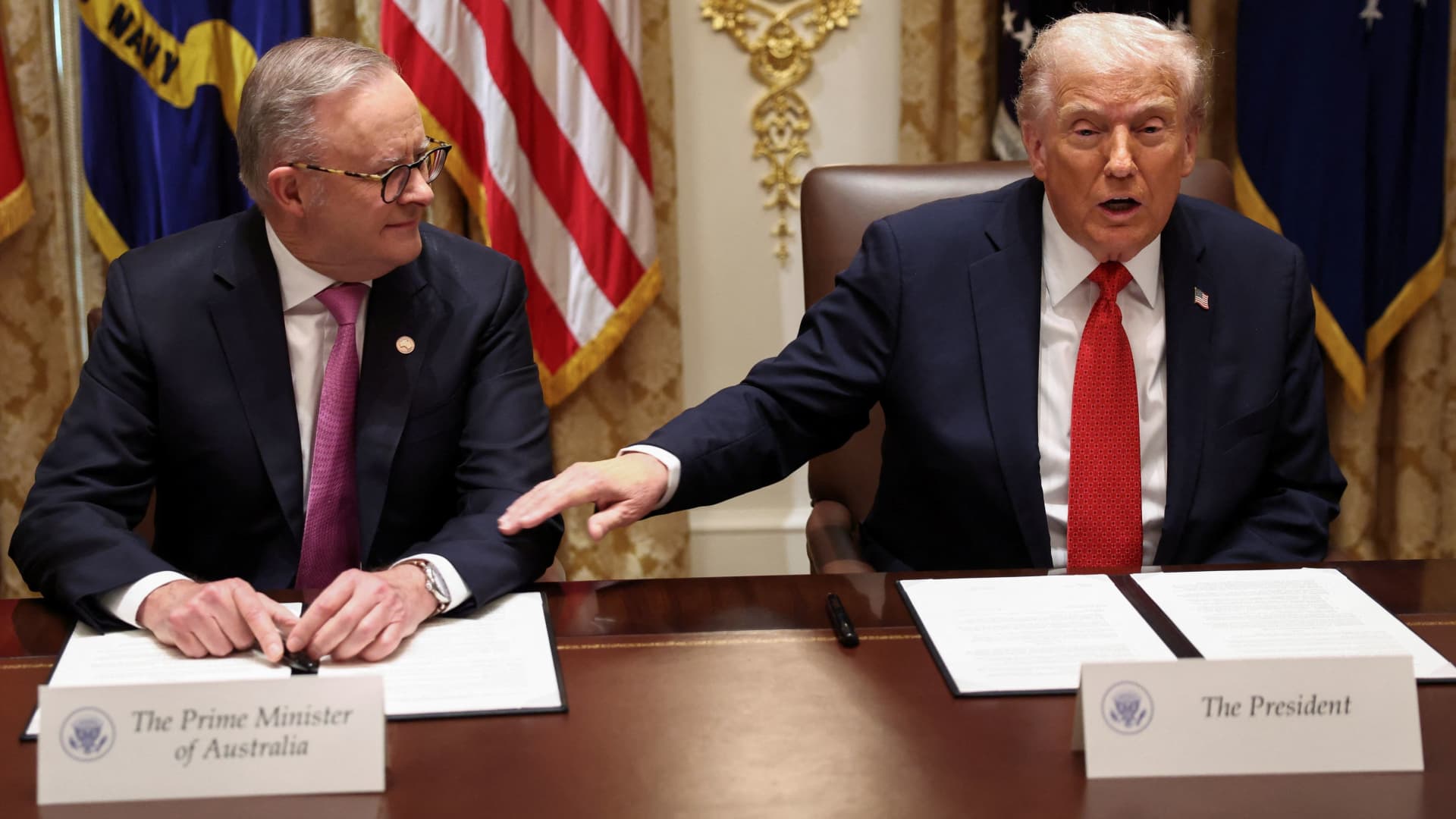
The recent agreement between the United States and Australia on critical minerals marks a significant strategic pivot, aimed at fortifying global supply chains and reducing dependence on single-source nations. With commitments totaling up to $8.5 billion, including an immediate $1 billion injection over the next six months, this pact is more than just a diplomatic handshake; it represents a tangible effort to de-risk access to essential resources like rare earths. For investors, this evolving geopolitical landscape creates both challenges and distinct opportunities, particularly within the materials and energy sectors as nations prioritize resource security amidst ongoing market volatility and heightened trade tensions.
Geopolitical Rebalancing and Critical Mineral Security
The US-Australia critical minerals agreement is a direct response to the escalating strategic importance of these resources, especially rare earths, which are vital for everything from advanced electronics to renewable energy technologies. China’s entrenched control over the rare earths value chain, particularly in refining and processing, has long been a point of vulnerability for Western economies. The recent imposition of stricter export controls by Beijing has underscored this dependency, pushing Washington and its allies to accelerate diversification efforts. This new pact, involving joint projects and direct US investment in Australian rare earths processing, aims to create resilient alternative supply routes. The inclusion of a three-way joint venture with Japan further illustrates a concerted multinational effort to build a robust, diversified critical minerals ecosystem. For investors, this signals a long-term commitment to developing new mining, processing, and refining capabilities outside of traditional hubs, opening avenues in companies positioned to capitalize on these strategic initiatives.
Navigating Market Volatility: A Broader Energy Sector Context
While the critical minerals pact focuses on long-term supply stability, investors operate within a broader energy market characterized by significant short-term volatility. As of today, Brent crude trades at $90.38 per barrel, reflecting a sharp 9.07% decline from its opening, with a day range between $86.08 and $98.97. Similarly, WTI crude has seen a substantial drop, now at $82.59 per barrel, down 9.41% on the day, moving within a range of $78.97 to $90.34. Gasoline prices have also followed suit, currently at $2.93, a 5.18% decrease. This daily plunge follows a significant bearish trend, with Brent having fallen from $112.78 just two weeks ago to its current level, representing a nearly 20% contraction. This pronounced market fluctuation highlights the unpredictable nature of global energy demand and supply dynamics. While critical minerals offer a strategic long-term play, investors must remain acutely aware of these immediate market conditions, as broad economic sentiment and geopolitical shifts impacting crude oil inevitably ripple through the entire commodity complex.
Upcoming Events Shaping the Energy Investment Outlook
The coming weeks are packed with pivotal events that could further influence energy markets and investor sentiment. Later this week, the OPEC+ Joint Ministerial Monitoring Committee (JMMC) will convene on April 19th, immediately followed by the full OPEC+ Ministerial Meeting on April 20th. These gatherings are crucial, as decisions regarding production quotas directly impact global oil supply and, consequently, prices. Our readers are keenly watching this, with many asking about “OPEC+ current production quotas” and what this means for future oil prices. Any adjustments, or even a strong affirmation of current policies, will set the tone for the market. Beyond OPEC+, weekly data releases like the API and EIA crude inventory reports on April 21st and 22nd, respectively, provide essential insights into US supply and demand fundamentals. The Baker Hughes Rig Count on April 24th will further inform on drilling activity and future production trends. These data points, coupled with the potential high-level meeting between the US and Chinese presidents later this month, carry significant weight. The outcome of such discussions could either de-escalate trade tensions, benefiting broader commodity flows, or exacerbate them, particularly concerning critical minerals where China holds immense leverage.
Strategic Investment Opportunities Amidst Shifting Priorities
Given the confluence of geopolitical maneuvering, supply chain re-evaluation, and market volatility, investors are actively seeking clarity and actionable insights. Questions such as “what do you predict the price of oil per barrel will be by end of 2026?” reflect a deep-seated desire to understand long-term trends beyond daily fluctuations. The US-Australia agreement provides a clear signal for a shift in investment focus. Companies involved in rare earths exploration, mining, and particularly processing in Australia and allied nations stand to benefit significantly from this strategic initiative. Firms like Alcoa, specifically mentioned in the context of joint projects, could see enhanced opportunities. The push to diversify away from concentrated supply chains means that capital will increasingly flow into developing new projects and technologies that bolster resource security. This creates a compelling narrative for investors looking beyond traditional oil and gas plays, seeking exposure to the foundational elements of the energy transition and advanced manufacturing. Identifying companies with strong resource bases, technological capabilities in refining, and strategic partnerships will be key to unlocking value in this evolving critical minerals landscape.