The global energy landscape is undergoing a profound transformation, with nuclear power quietly re-emerging as a critical, strategic asset. For years, the industry grappled with public skepticism and economic headwinds, particularly after the Fukushima disaster in 2011. However, a confluence of factors – surging electricity demand from advanced technologies like artificial intelligence, the push for reshoring domestic manufacturing, and the urgent imperative for energy independence – has thrust nuclear energy back into the spotlight. This renewed focus places a distinct emphasis on the entire nuclear fuel cycle, from mining to enrichment, creating significant investment opportunities and challenging the traditional energy investment thesis. As seasoned investors navigate the volatility of fossil fuel markets, understanding the resurgence of baseload nuclear power and its strategic implications is paramount.
The Nuclear Revival Amidst Energy Volatility
The narrative around nuclear power has shifted dramatically. A decade ago, following the Fukushima incident, public support waned, leading to the closure of a dozen reactors in the U.S. and a significant downturn in demand for enriched uranium. Facilities like Urenco’s New Mexico plant, which had just opened in 2010, found expansion plans put on hold as uranium prices “went through the floor.” Fast forward to today, and the situation is a stark reversal. The U.S. is projecting an unprecedented surge in electricity demand, primarily driven by the build-out of AI infrastructure and a national drive to expand domestic manufacturing capabilities. This demand requires reliable, carbon-free baseload power that intermittent renewables often struggle to provide consistently. This newfound appreciation for nuclear stability comes at a time when other energy markets remain highly dynamic. As of today, Brent crude trades at $90.38, reflecting a significant 9.07% decline within the day, while WTI crude sits at $82.59, down 9.41% from its daily high. This sharp downturn, contrasting with Brent’s 14-day trend from $112.78 to its current level, underscores the inherent volatility in global fossil fuel markets. This instability makes the promise of consistent, predictable nuclear power even more attractive for national energy security and long-term utility planning.
Securing the Fuel Chain: The Urgency of Domestic Enrichment
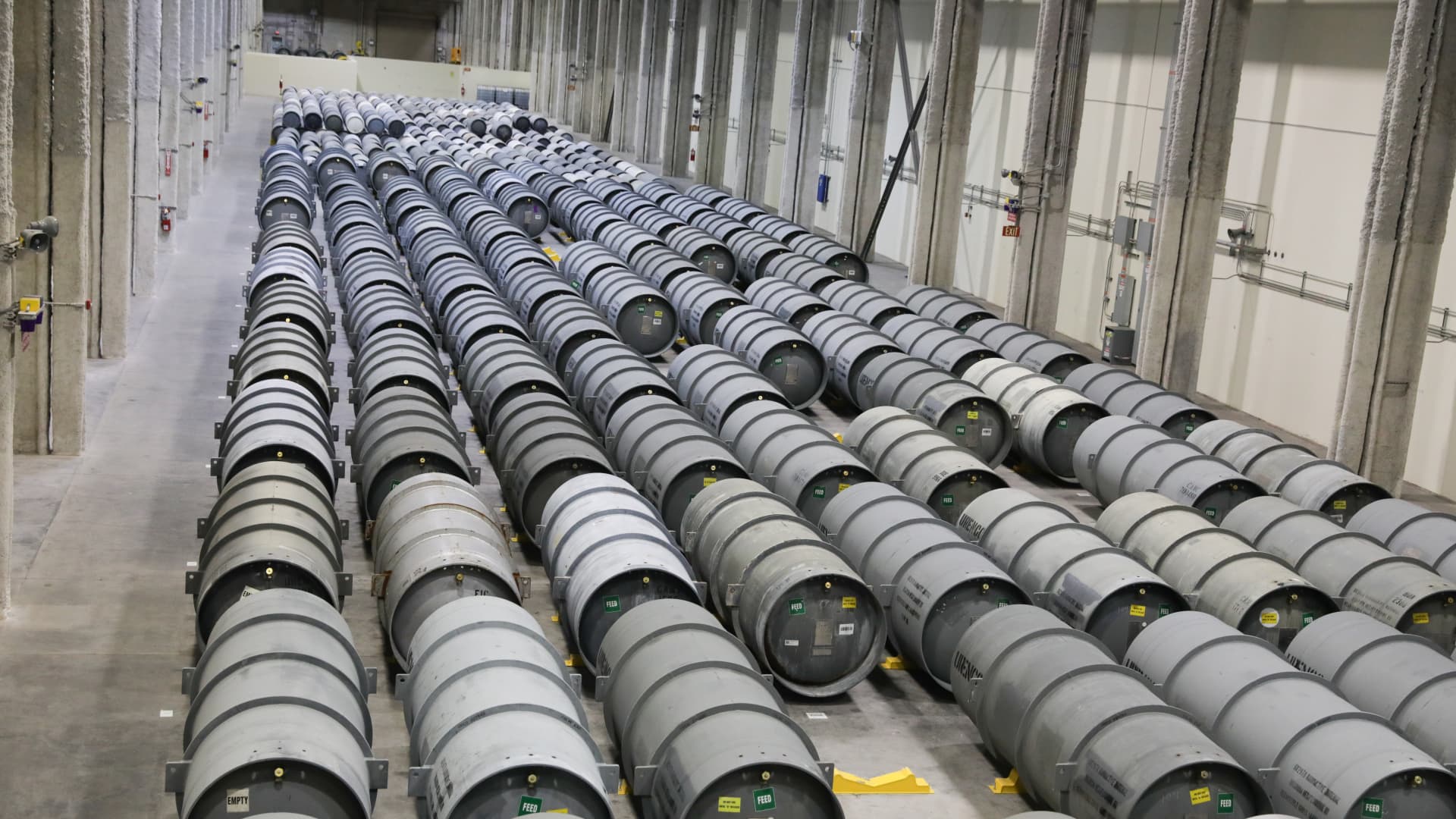
At the heart of the U.S. nuclear renaissance lies a critical vulnerability: the supply chain for enriched uranium. The U.S. currently hosts only one commercial enrichment facility, Urenco USA in Eunice, New Mexico. This facility is now racing to expand its capacity, a stark contrast to the period following the 2013 closure of the last U.S.-owned commercial enrichment plant in Paducah, Kentucky. This urgency is exacerbated by geopolitical realities. In 2024, the U.S. still imported a troubling 20% of its enriched uranium from Russia. However, in response to Moscow’s aggression, the U.S. has mandated a complete ban on Russian uranium imports by 2028. This creates a looming supply deficit precisely when Washington, utilities, and the tech sector are embarking on the most ambitious reactor expansion and restart plans in decades. The strategic imperative to onshore and expand domestic enrichment capacity cannot be overstated. Investors should recognize the Urenco USA facility as a cornerstone of future U.S. energy independence, with its expansion plans presenting a direct play on national security and clean energy infrastructure growth. The long-term contracts that insulated Urenco during past downturns also highlight a critical element of stability in this sector.
Investor Focus: Navigating the Nuclear Renaissance
Our proprietary reader intent data reveals a strong focus among investors on the immediate dynamics of crude oil prices, with common questions including “what do you predict the price of oil per barrel will be by end of 2026?” and inquiries about OPEC+ production quotas. While these remain critical considerations for the broader energy market, a forward-thinking investment strategy must also account for the foundational shifts in electricity generation. The resurgence of nuclear power offers a compelling diversification for energy portfolios, providing a hedge against the very volatility seen in fossil fuel markets. Investment in the nuclear fuel cycle, including enrichment facilities like Urenco USA, offers exposure to a sector driven by long-term structural demand, government policy, and national security mandates, rather than short-term supply-demand imbalances or geopolitical shocks impacting crude. The stability offered by nuclear power’s baseload capabilities directly impacts the long-term demand curve for other energy sources, making it a crucial, if often overlooked, piece of the comprehensive energy investment puzzle.
Forward Momentum: Upcoming Catalysts and the Path Ahead
While the immediate horizon is dominated by oil and gas market events, such as the upcoming OPEC+ Ministerial Meeting on April 19th and the regular API and EIA inventory reports on April 21st, 22nd, 28th, and 29th, the momentum for nuclear power is built on a different, more strategic timeline. These oil-centric events will continue to drive short-term market fluctuations, but the long-term value proposition of nuclear energy is anchored in policy, infrastructure development, and project execution. The absence of specific, short-term nuclear fuel cycle events on the immediate calendar means investors should focus on legislative developments, utility announcements regarding new reactor construction, and the progress of existing restart projects. Several plants, including Palisades in Michigan, Crane Clean Energy Center in Pennsylvania, and Duane Arnold in Iowa, are planning to restart operations this decade, signaling tangible progress in expanding the U.S. nuclear fleet. The expansion efforts at Urenco USA are a direct response to this anticipated growth and the 2028 Russian import ban. Investors should monitor capital expenditure announcements, regulatory approvals, and government funding initiatives for nuclear infrastructure, as these will be the true catalysts for the sector’s continued expansion and provide clear signals for long-term investment opportunities.